A series of reports from Berkeley's Terner Center assess the potential of commercial-to-residential conversions to help ease the housing crisis.


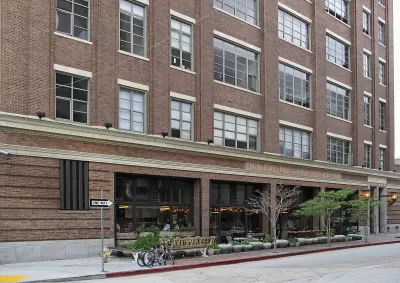
The University of California, Berkeley's Terner Center for Housing Innovation has released "a series of reports that explore the potential for commercial land to be converted to residential use" which could guide planners and officials in adapting underutilized land to new uses and increasing housing options.
As more cities implement policies designed to encourage commercial conversions and high-density housing development, the reports identify "possible and profitable" conversion types, estimate how many new units redevelopment could add, and assess the potential and limitations of rezoning as a solution for skyrocketing housing costs. "The housing crisis, an ongoing transition from brick-and-mortar retail to e-commerce, and a growing utilization of telework have contributed to the mounting popularity of this solution," the article notes.
The papers include an inventory of commercially zoned land, a paper estimating the potential impact of conversions on housing supply, and a report on residential adaptive reuse.
FULL STORY: Commercial Zoning Paper Series


San Francisco Mayor’s ‘Family Zoning’ Plan Faces Pushback, Displacement Concerns
Newly proposed legislation aims to protect long-term tenants from displacement caused by Mayor Lurie’s proposed zoning reform plan, which would allow for more housing construction in parts of the city.

Texas Legislature’s Surprising Pro-Housing Swing
Smaller homes on smaller lots, office to apartment conversions, and 40% less say for NIMBYs, vote state lawmakers.
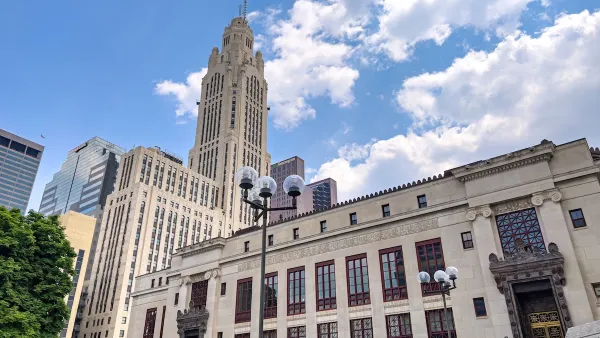
Columbus Zoning Changes Aimed at Increasing Housing Supply, Affordability
The Columbus city council approved 17 zoning changes that could result in over 800 new housing units.

Planetizen Federal Action Tracker
A weekly monitor of how Trump’s orders and actions are impacting planners and planning in America.

The state-sanctioned urbicide of Austin
People don’t kill cities. Freeways do.

US to reduce Colorado River water deliveries to Mexico
A new Colorado Treaty amendment reduces Mexico’s Colorado River water allocation by 250,000 acre feet.

5 New England states march closer to 800 megawatt wind energy project
Securing federal approval for the project may be complicated under the Trump administration, which has historically been hostile towards domestic wind power.

Baltimore to break ground on $50 million Transit Priority Project
The project will bring faster bus trips, safer streets and better bike connections to Baltimore.

Airbnb launches $250 million 'last-dollar financing' housing accelerator, makes first investment in Austin
The company will put $6.4 million towards affordable housing development in Texas’ capital.

FREE Course: Walkable City 1: Why Walkability?
After describing his path towards focusing on walkability as the essence of good planning, Jeff Speck marches through his five principal reasons for making more walkable places.
Reinventing Malls: Planning Alchemy—Turning Gray Fields Into Gold
The course focuses on the opportunities and imperatives that shape reinvention of mall sites.


Eagle County Government
Harvard University Graduate School of Design
Nashville Planning Department
The Architects Foundation
University of Cincinnati Online
The Pocatello Development Authority
The Urban Renewal Agency of the City of Pocatello
Journal of the American Planning Association