Asians were the only major racial group in increase in population in all five boroughs of New York City since 2010. Long Island City in Queens saw a fivefold increase of Asian residents.


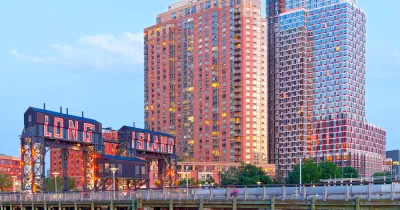
Nicole Hong reports on the booming population of Asian Americans in New York City—particularly in the neighborhood of Long Island City.
"Asian residents were the driving force behind an unexpected 7.7 percent increase in New York City’s overall population since 2010, according to Census Bureau data released in August, upending predictions by demographers that the city’s population was shrinking," writes Hong.
"The census data also showed that among New York City neighborhoods, Long Island City experienced the fastest growth in residents who identified as Asian, a fivefold increase since 2010," adds Hong. "The nearly 11,000 Asians who live in the neighborhood make up about 34 percent of its population."
While this story focuses on New York and Long Island City, people identifying as Asian are also moving to cities and metropolitan areas as disparate as Los Angeles and Houston as well as states like North Dakota and Indiana, according to the article.
At the neighborhood level, the influx of Asian Americans has had an obvious impact in New York City, with the potential to reshape numerous facts of life in the nation's largest city—from the housing market to the small business economy to political representation.
The signs of the demographic influx are obvious in Long Island City, explains Hong. "Local businesses are racing to meet the demands of the changing demographics. Along Jackson Avenue, a main commercial corridor, signs on vacant storefronts advertise new businesses opening soon: Dun Huang, a hand-pulled Chinese noodle chain; Paris Baguette, a Korean bakery chain; and Mito, a sushi lounge."
FULL STORY: Inside the N.Y.C. Neighborhood With the Fastest Growing Asian Population

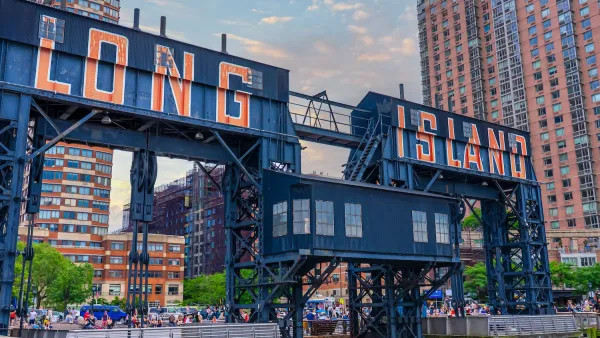
Upzoning Could Bring 15K New Homes to Queens
A rezoning plan for Long Island City opens up prime waterfront land for residential development, but some critics say new housing could be prone to flooding and should be built farther inland.

Mahjong Game Highlights Displacement of Seniors in NYC’s Chinatown
‘Aging Out of Place’ explores the mechanisms that displace vulnerable seniors, and how the community can help preserve key resources and institutions.
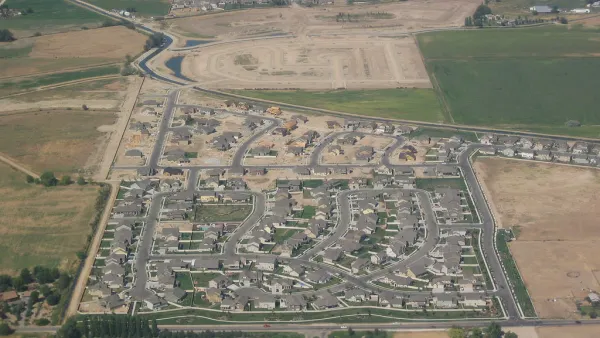
Idaho’s Growth Obscures Massive Demographic Turnover, Study Says
Quick population growth is remaking Idaho, but focusing only on raw population numbers masks the demographic changes at work.

Planetizen Federal Action Tracker
A weekly monitor of how Trump’s orders and actions are impacting planners and planning in America.

The state-sanctioned urbicide of Austin
People don’t kill cities. Freeways do.

US to reduce Colorado River water deliveries to Mexico
A new Colorado Treaty amendment reduces Mexico’s Colorado River water allocation by 250,000 acre feet.

Baltimore to break ground on $50 million Transit Priority Project
The project will bring faster bus trips, safer streets and better bike connections to Baltimore.

Airbnb launches $250 million 'last-dollar financing' housing accelerator, makes first investment in Austin
The company will put $6.4 million towards affordable housing development in Texas’ capital.

Guerilla urbanists are building DIY bus stop benches in Chicago
A before-and-after of one of the bus stops with a new bench. The new benches are not officially sanctioned or permitted, but the residents who placed them hope they will be the start of a network of DIY benches across the city.

FREE Course: Walkable City 1: Why Walkability?
After describing his path towards focusing on walkability as the essence of good planning, Jeff Speck marches through his five principal reasons for making more walkable places.
Reinventing Malls: Planning Alchemy—Turning Gray Fields Into Gold
The course focuses on the opportunities and imperatives that shape reinvention of mall sites.

Eagle County Government
Harvard University Graduate School of Design
Nashville Planning Department
The Architects Foundation
University of Cincinnati Online
The Pocatello Development Authority
The Urban Renewal Agency of the City of Pocatello
Journal of the American Planning Association