County officials claim the region has not seen improved transit service despite the infusion of federal funding aimed at increasing service in small urbanized areas.


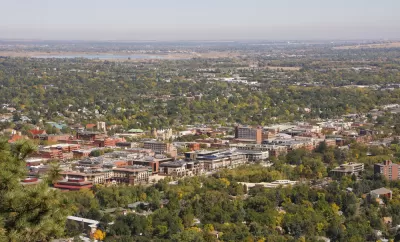
Colorado's Boulder County is asking the Regional Transportation District (RTD) for a binding contract to provide more transit service to the area, reports Nathaniel Minor. "The Boulder County commission sent RTD leaders a letter last week expressing frustration over the lack of service to the area despite the transit agency’s receipt of more than $700 million in federal stimulus money."
According to the letter, the county is "not seeing any results from that money" even as commuters return to work. "RTD executives said recently that they are offering about 70 percent of its pre-pandemic service levels but don’t have enough employees to restore more. They are also facing a long-term financial squeeze between a $300 million maintenance backlog, massive debt payments, and continued political pressure — from places like Boulder — to keep expanding its rail network."
The county is asking for "an inter-governmental agreement between local governments, RTD and the state Department of Transportation that would guide some of the federal bailout money to Boulder County transit service." Some of the funding would go toward "'high priority' RTD services like the Flatiron Flyer rapid bus line between Denver and Boulder" as well as "non-RTD transit services in smaller communities like Gunbarrel and Lafayette."
In a statement, Colorado Department of Transportation executive director Shoshana Lew said "it's 'especially critical' that small urbanized areas like Boulder quickly see the benefits of the federal money." However, "the state legislature and governor have also declined to give RTD any dedicated new revenue. RTD is an independent agency mostly funded through sales taxes and, to a lesser extent, fare revenue."
FULL STORY: Boulder County Pushes RTD For A Binding Agreement To Provide More Transit Service

Why Saving Transit Matters
Jarrett Walker argues that letting transit systems die has impacts that go far beyond transit riders.
Denver Transit Board Approves $1.2 Billion Budget
The 2025 budget for the Regional Transportation District is the largest in the agency’s 55-year history.
New Colorado Fossil Fuel Fee Will Fund Transit
Lawmakers say the agreement prevents a drawn-out legislative battle and establishes a new source of transit funding.

The state-sanctioned urbicide of Austin
People don’t kill cities. Freeways do.

US to reduce Colorado River water deliveries to Mexico
A new Colorado Treaty amendment reduces Mexico’s Colorado River water allocation by 250,000 acre feet.

New Jersey’s second-largest city bans standalone data centers
Jersey City will continue to allow co-location facilities, such as those meant for research institutions that store their own data.

Amtrak not solely to blame for New Jersey commuter rail's unreliability, report finds
A new study from the Garden State Initiative found that NJ Transit’s budget grew 20% across a 4 year period, but reliability declined significantly over the same period.

EPA erases limits on planet-warming pollution from power plants
Under Monday’s plan, power plants would still have some limits on how much mercury, arsenic and other contaminants they can emit.

Phoenix announces new on-demand transit service, more frequent RAPID buses
Both new services will launch in October, and are part of Phoenix's Project Effective Access Solutions for Easing Congestion.

FREE Course: Walkable City 1: Why Walkability?
After describing his path towards focusing on walkability as the essence of good planning, Jeff Speck marches through his five principal reasons for making more walkable places.
Reinventing Malls: Planning Alchemy—Turning Gray Fields Into Gold
The course focuses on the opportunities and imperatives that shape reinvention of mall sites.

Eagle County Government
Harvard University Graduate School of Design
Nashville Planning Department
The Architects Foundation
University of Cincinnati Online
The Pocatello Development Authority
The Urban Renewal Agency of the City of Pocatello
Journal of the American Planning Association