The Green New Deal for Cities, a bill introduced in April by reps. Cori Bush (D-MO) and Alexandria Ocasio-Cortez (D-NY), includes among the list of projects eligible for funding those that "build capacity for communities to endure extreme weather."


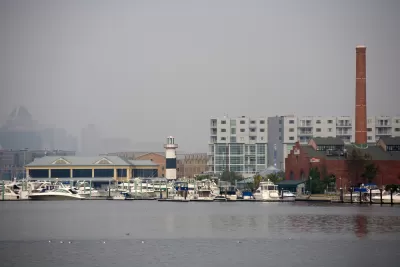
At the beginning of 2017, Pastor Michael Martin left Los Angeles for a chance to lead Stillmeadow Community Fellowship, a small congregation in Southwest Baltimore near the Howard County line. Martin had spent some years in Baltimore a few decades prior, and his wife, Gail, was raised there. Over the years, the neighborhood around Stillmeadow had gradually transitioned from a mostly white neighborhood to a primarily Black one, and many Black families had moved across the county line as well. Historically, Martin says, the church had not been very involved with the surrounding community.
“They asked me to consider pastoring, and the idea was to refurbish and renew, all of that,” Martin says. “And part of their vision for the church was to be a place where people got to see Christianity at work.” In the spring and summer of 2018, the neighborhood was hit with a series of floods that caused major damage to many homes in the area. The spring floods also devastated a business corridor in Ellicott City, Maryland, across the Howard County line, and made national news.
But little attention was paid to the damage in Southwest Baltimore, compounding a sense among residents that the authorities didn’t consider their community to be important. “They have a strong sense of being ignored,” Martin says. “They have a strong sense that Southwest doesn’t matter, it doesn’t count, it gets no love.”
In the wake of the floods, Martin says, the Stillmeadow Community Fellowship started hosting weekly cookouts in the neighborhood and helping to coordinate the flood response with the Red Cross and other service providers. Sometime that fall, someone from Baltimore’s Office of Sustainability approached the congregation about joining the city’s nascent Community Resiliency Hub Program.
FULL STORY: Resiliency Hubs Help Baltimore Plan for Climate Emergency in Vulnerable Neighborhoods


Austin Scores Highest on Pandemic Recovery; Bay Area and Baltimore Lowest
The Bay Area Council and CBRE created an economic tracker to measure how well the nation's 25 largest metropolitan areas have recovered from the public health restrictions imposed on their regions at the onset of the pandemic.

How Cities Plan for Cold Winter Days
Planning for snow, and for cold days, is a professional practice unto itself.
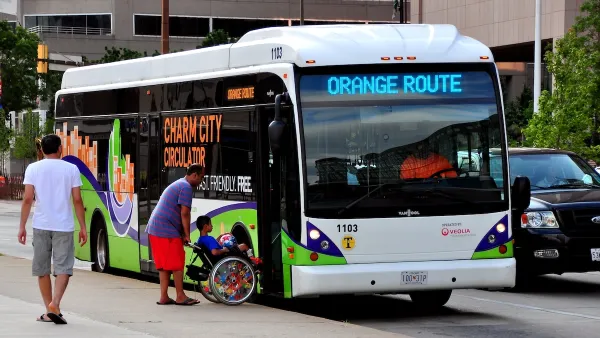
Baltimore to break ground on $50 million Transit Priority Project
The project will bring faster bus trips, safer streets and better bike connections to Baltimore.

Planetizen Federal Action Tracker
A weekly monitor of how Trump’s orders and actions are impacting planners and planning in America.

The state-sanctioned urbicide of Austin
People don’t kill cities. Freeways do.

US to reduce Colorado River water deliveries to Mexico
A new Colorado Treaty amendment reduces Mexico’s Colorado River water allocation by 250,000 acre feet.

5 New England states march closer to 800 megawatt wind energy project
Securing federal approval for the project may be complicated under the Trump administration, which has historically been hostile towards domestic wind power.

Baltimore to break ground on $50 million Transit Priority Project
The project will bring faster bus trips, safer streets and better bike connections to Baltimore.

Airbnb launches $250 million 'last-dollar financing' housing accelerator, makes first investment in Austin
The company will put $6.4 million towards affordable housing development in Texas’ capital.

FREE Course: Walkable City 1: Why Walkability?
After describing his path towards focusing on walkability as the essence of good planning, Jeff Speck marches through his five principal reasons for making more walkable places.
Reinventing Malls: Planning Alchemy—Turning Gray Fields Into Gold
The course focuses on the opportunities and imperatives that shape reinvention of mall sites.

Eagle County Government
Harvard University Graduate School of Design
Nashville Planning Department
The Architects Foundation
University of Cincinnati Online
The Pocatello Development Authority
The Urban Renewal Agency of the City of Pocatello
Journal of the American Planning Association