Transit planners in Duluth, Minnesota have released the details of a new plan to concentrate bus transit service on high frequency corridors.


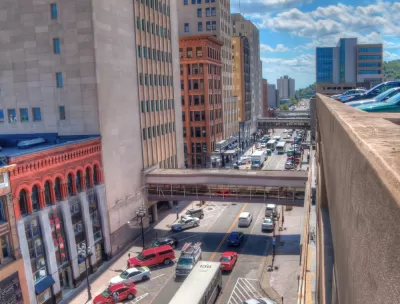
"A plan to simplify and invigorate public transit in Duluth, Minn., would reduce the number of bus routes by more than half, while creating two high-frequency routes to serve as workhorses in the rebuilt network," reports Brady Slater.
Chris Belden, the Duluth Transit Authority (DTA) director of planning and grants, is quoted in the article saying the coming changes could be the most substantial in the DTA's history.
"There would be no decrease in service hours. Instead, the new network would expand its well-utilized weekend service by 25%, and prioritize connecting more people to key destinations over having widespread geographic coverage," explains Slater. Two high frequency routes connecting to the Miller Hill Mall and the University of Minnesota Duluth would run on ten- to 15-minute headways.
"Other high-density areas of focus include the Spirit Valley neighborhood in West Duluth, Lincoln Park, downtown Duluth, and Superior, where riders would see marked improvements in wait times," adds Slater.
FULL STORY: Duluth Transit Authority eyes better service, mainline buses every 15 minutes

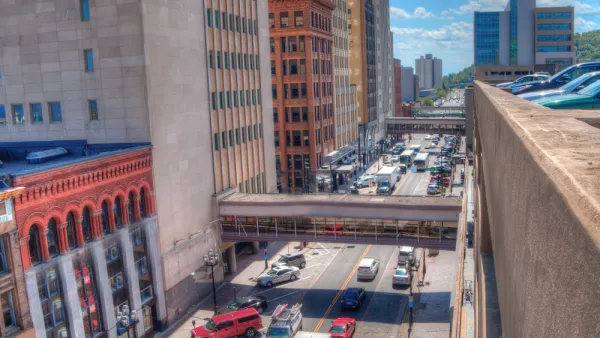
New High-Frequency Bus Service Dubbed 'Go Lines' in Duluth
The city of Duluth's reimagined bus transit system will go into effect in Summer 2022 along green and blue "Go Lines."
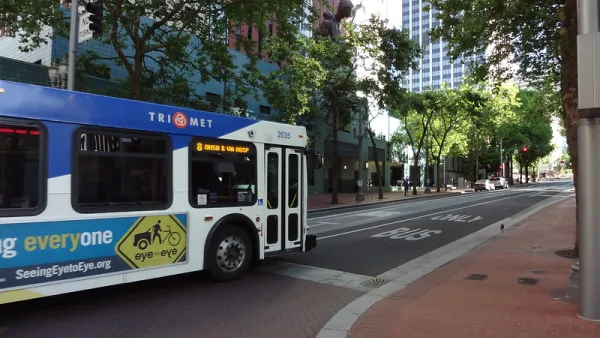
‘Forward Together’ Bus System Redesign Rolling Out in Portland
Portland is redesigning its bus system to respond to the changing patterns of the post-pandemic world—with twin goals of increasing ridership and improving equity.
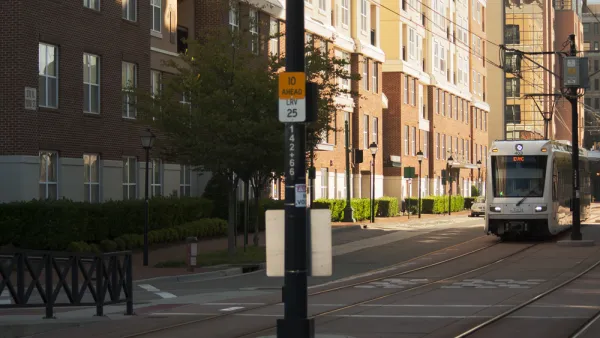
Next Up for Bus System Redesign: Norfolk, Virginia
The Norfolk City Council will vote in February on a draft transit system redesign organized around the principle of a high frequency grid, similar to system redesigns in other cities in recent years.

The state-sanctioned urbicide of Austin
People don’t kill cities. Freeways do.

US to reduce Colorado River water deliveries to Mexico
A new Colorado Treaty amendment reduces Mexico’s Colorado River water allocation by 250,000 acre feet.

New Jersey’s second-largest city bans standalone data centers
Jersey City will continue to allow co-location facilities, such as those meant for research institutions that store their own data.

Amtrak not solely to blame for New Jersey commuter rail's unreliability, report finds
A new study from the Garden State Initiative found that NJ Transit’s budget grew 20% across a 4 year period, but reliability declined significantly over the same period.

EPA erases limits on planet-warming pollution from power plants
Under Monday’s plan, power plants would still have some limits on how much mercury, arsenic and other contaminants they can emit.

Phoenix announces new on-demand transit service, more frequent RAPID buses
Both new services will launch in October, and are part of Phoenix's Project Effective Access Solutions for Easing Congestion.

FREE Course: Walkable City 1: Why Walkability?
After describing his path towards focusing on walkability as the essence of good planning, Jeff Speck marches through his five principal reasons for making more walkable places.
Reinventing Malls: Planning Alchemy—Turning Gray Fields Into Gold
The course focuses on the opportunities and imperatives that shape reinvention of mall sites.

Eagle County Government
Harvard University Graduate School of Design
Nashville Planning Department
The Architects Foundation
University of Cincinnati Online
The Pocatello Development Authority
The Urban Renewal Agency of the City of Pocatello
Journal of the American Planning Association