The nonprofit developer of a transitional housing project in Dorchester, Massachusetts argues that most residents of the proposed project won't own cars, but neighbors worry the added density will put a strain on local parking.


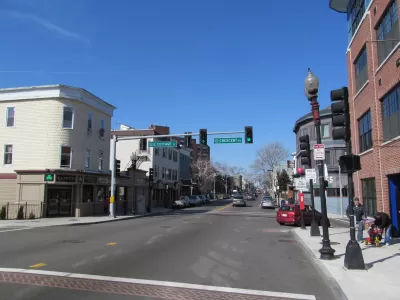
The Zoning Board of Appeal for Dorchester, Massachusetts "rejected a proposal by the non-profit Heading Home to replace a crumbling 10-unit apartment building at 37 Wales St. in Dorchester with 23 new apartments rented to families trying to get out of homelessness," arguing that the lack of parking provided in the building would put strain on street parking in the surrounding neighborhood.
According to Adam Gaffin in Universal Hub, the nonprofit had proposed a building without parking, citing the fact that the building's residents "would be 'transitioning out of homelessness' and allowed to earn no more than 30% of the Boston-area median income," making it unlikely that they will own cars. The project was funded as part of a $34 million initiative to bring more affordable housing to the greater Boston area.
Read the full story: Dorchester apartment building aimed at homeless families rejected over parking concerns
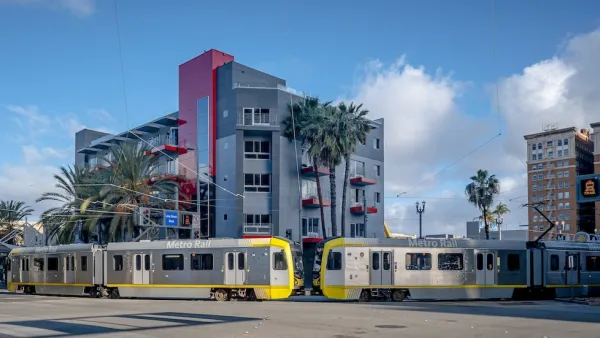
California Law Bars Parking Mandates Near Transit
Local governments are prohibited from requiring parking spaces at new developments where transit is readily available.
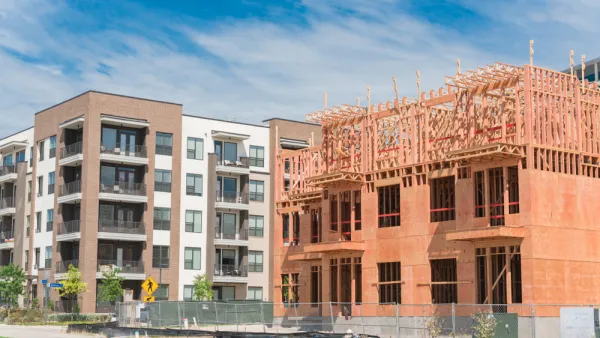
Updated: Proposed Parking Reforms Spark Controversy in Dallas
An ordinance under consideration by the Dallas City Council would change the parking requirements in the zoning code to allow for more density in exchange for affordable housing.
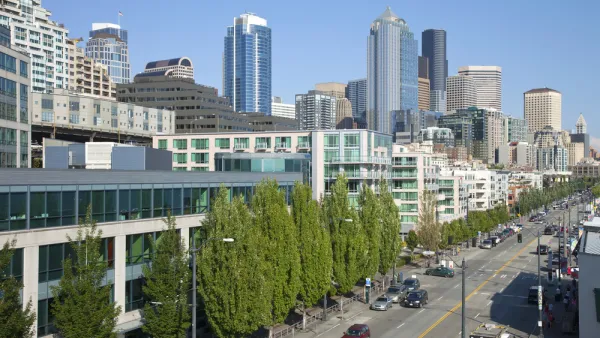
Researchers Flaunt the Benefits of Reduced Minimum Parking Requirements
Seattle is one of the U.S. cities shrinking minimum parking requirements to allow for denser, more affordable development near transit.

Planetizen Federal Action Tracker
A weekly monitor of how Trump’s orders and actions are impacting planners and planning in America.

Washington state to charge fee to drivers with fuel-efficient cars
Revenue from the fee will go towards supporting the state’s highways.

Illinois considers spending $1 billion in taxpayer money on data center
A quantum computing campus and data center are currently under construction in Chicago.

Did data centers change how voters cast their ballots?
Texas, Ohio, and Georgia all flipped party control. But in rural counties, the effect of local data centers was mixed.

Amtrak invests in eight new Airo trainsets
The new trainsets will begin serving passengers in 2031.

HUD to end aid for mixed-immigration-status households
The new rule is projected to impact 80,000 people, nearly half of whom are children.

FREE Course: Walkable City 1: Why Walkability?
After describing his path towards focusing on walkability as the essence of good planning, Jeff Speck marches through his five principal reasons for making more walkable places.
Reinventing Malls: Planning Alchemy—Turning Gray Fields Into Gold
The course focuses on the opportunities and imperatives that shape reinvention of mall sites.


City of Charlotte
City of Rosemead
Rutgers University, Edward J. Bloustein School of Planning and Public Policy
University of Michigan School for Environment and Sustainability (SEAS)
Hunter College, City University of New York (CUNY)
The Architects Foundation
University District Partnership