The California city has received complaints about overcrowding even as the program sought to create more outdoor public space during the pandemic.


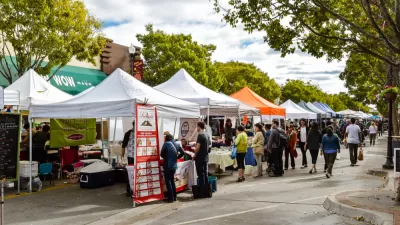
In move that signals the debate brewing over the future of "pandemic streets," the city of San Carlos, California is poised to end the outdoor dining program on its main commercial corridor, Laurel Street, citing concerns about "lack of social distancing and congestion from pedestrian overcrowding" as the state looks to a full reopening in the coming months.
Although the program, which "has been successful economically and is supported by many downtown businesses," was instituted to provide more safe spaces for residents to socialize outdoors and patronize local businesses, "residents have complained to the city about nighttime activities and overcrowded parklets." If the city council decides to end it, the move "would return 150 parking spaces in the downtown area and open up the roads to vehicular traffic, and would allow for the return of downtown community events such as the farmers’ market, San Carlos Block Party and Goblin Walk, the city said."
FULL STORY: San Carlos to consider ending Laurel St. outdoor dining program

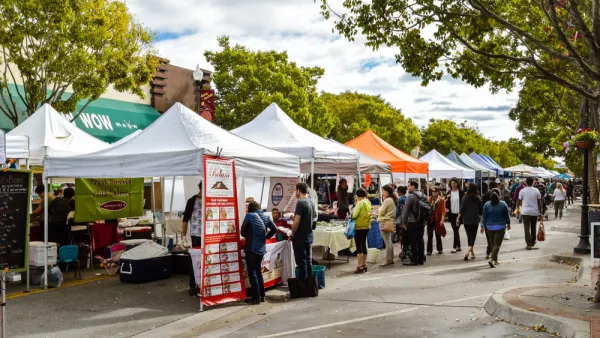
Pandemic Street to Outlast Pandemic in California (By 2.5 Months)
Gov. Newsom's unexpected announcement that the pandemic would end on June 15 led one city to consider reopening its al fresco street and parklets to motor vehicles. After hearing from the public, the city council sided with diners over drivers.
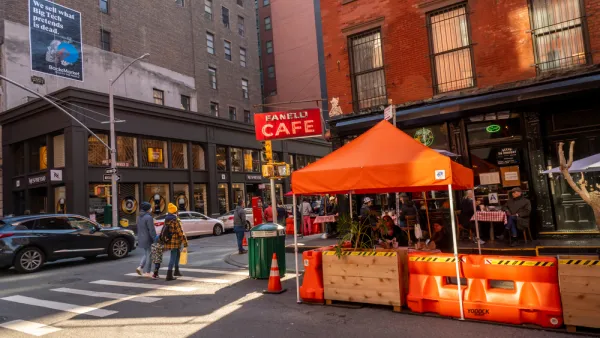
Opinion: Keep Outdoor Dining Without Thwarting Creativity
While New York City's effort to make its outdoor dining program permanent is a welcome reimagining of public space, some worry that regulations will reduce design diversity and increase costs for small restauranteurs.
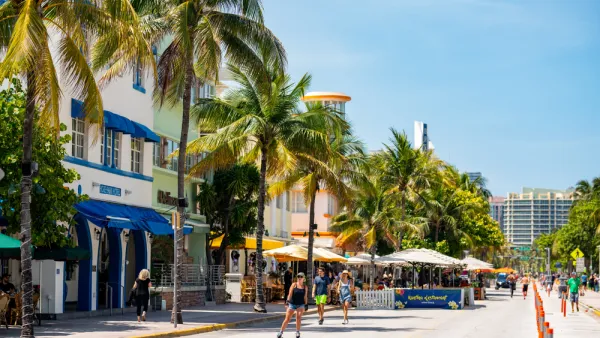
Miami Beach to Reopen Ocean Drive to Cars
The famous cruising strip was off-limits to cars during the pandemic. Now, the city is letting vehicles return with some pedestrian-oriented compromises.

Planetizen Federal Action Tracker
A weekly monitor of how Trump’s orders and actions are impacting planners and planning in America.

The state-sanctioned urbicide of Austin
People don’t kill cities. Freeways do.

US to reduce Colorado River water deliveries to Mexico
A new Colorado Treaty amendment reduces Mexico’s Colorado River water allocation by 250,000 acre feet.

Baltimore to break ground on $50 million Transit Priority Project
The project will bring faster bus trips, safer streets and better bike connections to Baltimore.

Airbnb launches $250 million 'last-dollar financing' housing accelerator, makes first investment in Austin
The company will put $6.4 million towards affordable housing development in Texas’ capital.

Guerilla urbanists are building DIY bus stop benches in Chicago
A before-and-after of one of the bus stops with a new bench. The new benches are not officially sanctioned or permitted, but the residents who placed them hope they will be the start of a network of DIY benches across the city.

FREE Course: Walkable City 1: Why Walkability?
After describing his path towards focusing on walkability as the essence of good planning, Jeff Speck marches through his five principal reasons for making more walkable places.
Reinventing Malls: Planning Alchemy—Turning Gray Fields Into Gold
The course focuses on the opportunities and imperatives that shape reinvention of mall sites.

Eagle County Government
Harvard University Graduate School of Design
Nashville Planning Department
The Architects Foundation
University of Cincinnati Online
The Pocatello Development Authority
The Urban Renewal Agency of the City of Pocatello
Journal of the American Planning Association