Nevada Governor Steve Sisolak recently proposed on Innovation Zones program that will allow tech companies to form separate governments.



"If you’ve got enough money, acres upon acres of undeveloped land and an 'innovative technology,' you soon could form a new local government in Nevada," reports Colton Lochhead for a paywalled article published by the Las Vegas Review-Journal.
If you lack a subscription to the Revie-Journal, the Associated Press also has the story. Companies would require a large portion of land to be granted the same authority as county governments in the state, which includes the ability to impose taxes, create school districts, and provide public service.
According to the Associated Press, the idea has yet to take legislative form, so the Innovation Zones program is still a long way from realization.
An article by Ray Dubicki picks up on the idea from Nevada and imagines the possibility of a similar program in Washington State, in the process offering a lot more insight and context for the idea as implemented int he past (company towns) and present (homeowners' associations).
FULL STORY: Bill would allow tech companies to create local governments

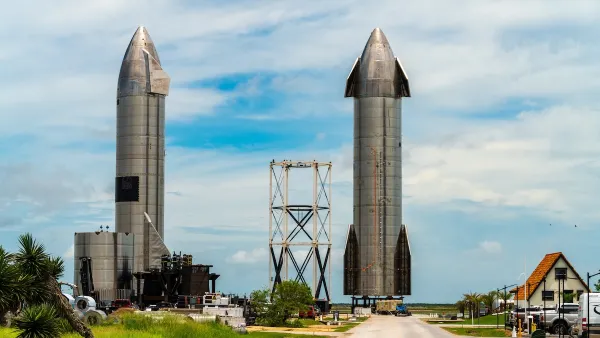
Company Towns: A Fraught 19th Century Idea is Getting a Second Life
From Lowell to Elon Musk’s Starbase, we trace the rise, fall, and resurgence of company towns.
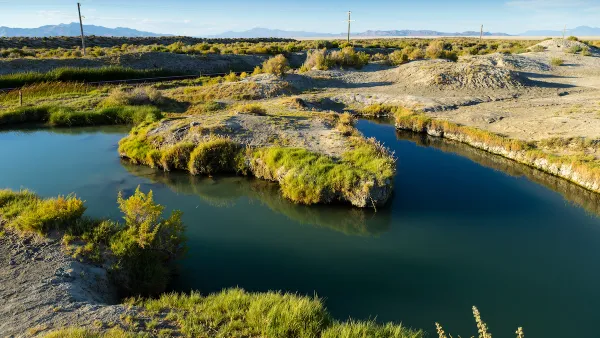
Blockchains Inc Wanted a Massive ‘Smart City’ in Nevada but Couldn’t Muster the Water Rights
California Forever isn’t the only tech-investor-driven mega-project to make news in recent weeks. Blockchains Inc had designs on remaking a massive swath of land near Reno until water got in the way.

Mountain View Goes Big on Google Expansion, Approves 10,000 Housing Units
Could the approval of a massive redevelopment plan for Google property in the city of Mountain View pave the way for a new development-friendly approach to planning in the Silicon Valley and the greater Bay Area?

Planetizen Federal Action Tracker
A weekly monitor of how Trump’s orders and actions are impacting planners and planning in America.

The state-sanctioned urbicide of Austin
People don’t kill cities. Freeways do.

US to reduce Colorado River water deliveries to Mexico
A new Colorado Treaty amendment reduces Mexico’s Colorado River water allocation by 250,000 acre feet.

5 New England states march closer to 800 megawatt wind energy project
Securing federal approval for the project may be complicated under the Trump administration, which has historically been hostile towards domestic wind power.

Baltimore to break ground on $50 million Transit Priority Project
The project will bring faster bus trips, safer streets and better bike connections to Baltimore.

Airbnb launches $250 million 'last-dollar financing' housing accelerator, makes first investment in Austin
The company will put $6.4 million towards affordable housing development in Texas’ capital.

FREE Course: Walkable City 1: Why Walkability?
After describing his path towards focusing on walkability as the essence of good planning, Jeff Speck marches through his five principal reasons for making more walkable places.
Reinventing Malls: Planning Alchemy—Turning Gray Fields Into Gold
The course focuses on the opportunities and imperatives that shape reinvention of mall sites.

Eagle County Government
Harvard University Graduate School of Design
Nashville Planning Department
The Architects Foundation
University of Cincinnati Online
The Pocatello Development Authority
The Urban Renewal Agency of the City of Pocatello
Journal of the American Planning Association