The weight of the pandemic is hanging around millions of renters' necks.


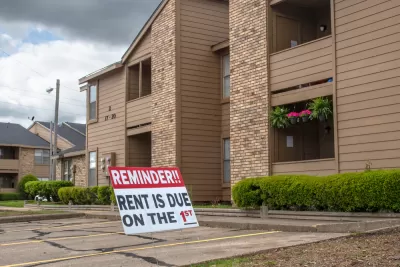
"California’s back rent is projected to reach nearly $1.7 billion by the end of the year, or almost a fourth of the total rental debt nationwide," according to a new report by the Federal Reserve bank of Philadelphia, cited in an article by Jeff Collins.
"In all, nearly 240,000 renter households in the state have fallen behind on rent, with an average debt of $6,953 per household, the study by the Federal Reserve Bank of Philadelphia found."
The report includes findings for the rest of the nation as well. In the entire country, rent debt is project to hit the eyepopping figure of $7.2 billion. "The Philadelphia Fed determined 1.34 million American households will owe an average of $5,400 apiece in unpaid rent," explains Collins.
An article by Davin Reed and Eileen Divringi wrote an article for the Federal Reserve in October to provide insight into the report's findings.
FULL STORY: Back rent in California nearing $1.7 billion, Fed study finds

CDC's Eviction Moratorium Extended
The CDC's eviction moratorium will stay in place until at least June 30, 2021.

Haves and Have Nots: Planning and the Deep Divides of the Pandemic
The latest in a series of compendia gathering news and analysis about the effects of the COVID-19 on the built and natural environments—now and long into the future.
Emergency Rental Relief Gaining Momentum in Some States
Rental assistance spending in June surpassed the entire year's total so far, but there's still a long way to go.

Planetizen Federal Action Tracker
A weekly monitor of how Trump’s orders and actions are impacting planners and planning in America.

The state-sanctioned urbicide of Austin
People don’t kill cities. Freeways do.

US to reduce Colorado River water deliveries to Mexico
A new Colorado Treaty amendment reduces Mexico’s Colorado River water allocation by 250,000 acre feet.

5 New England states march closer to 800 megawatt wind energy project
Securing federal approval for the project may be complicated under the Trump administration, which has historically been hostile towards domestic wind power.

Baltimore to break ground on $50 million Transit Priority Project
The project will bring faster bus trips, safer streets and better bike connections to Baltimore.

Airbnb launches $250 million 'last-dollar financing' housing accelerator, makes first investment in Austin
The company will put $6.4 million towards affordable housing development in Texas’ capital.

FREE Course: Walkable City 1: Why Walkability?
After describing his path towards focusing on walkability as the essence of good planning, Jeff Speck marches through his five principal reasons for making more walkable places.
Reinventing Malls: Planning Alchemy—Turning Gray Fields Into Gold
The course focuses on the opportunities and imperatives that shape reinvention of mall sites.

Eagle County Government
Harvard University Graduate School of Design
Nashville Planning Department
The Architects Foundation
University of Cincinnati Online
The Pocatello Development Authority
The Urban Renewal Agency of the City of Pocatello
Journal of the American Planning Association