The 2020 Census is sorely lacking in leadership, but planners can help.


"Planners must embrace their roles as facilitators of effective outreach to ensure that an undercount of the nation’s younger, lower-income, and black and brown residents is avoided in the 2020 Census," according to an article by Emily Pasi, posted on the American Planning Association's blog, which both makes the case for the importance of an accurate Census for the field of professional planning and also explains how planners can work to ensure an accurate count.
The Census needs all the help it can get after being delayed and frustrated by the pandemic as well as aborted and obstructed by the dubious political motivations of the Trump administration, the communities most in need of an accurate count are the least likely to achieve an accurate count.
With knowledge of these challenges as context, the article provides four recommendations for planners to take a leadership role in improving this challenged Census. With more details in the article, the four "low-cost" recommendations are as follows:
- Work with the municipality to help Census takers gain access to apartment and condominium buildings.
- Help your complete count committee identify places frequented by residents without homes.
- Tap trusted community influencers to talk Census.
- Meet people where they are.
FULL STORY: 4 Cost-Effective Ways Planners Can Boost Census Response

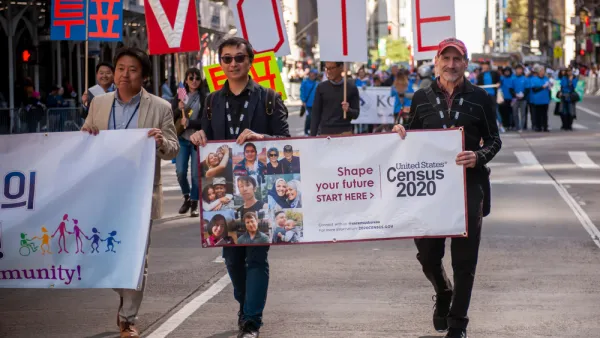
Another Delay for the Census: Now Expected for September Delivery
The pandemic and political mismanagement are continuing to have an effect on the 2020 Census.

The Census Missed its Dec. 31 Deadline
The pandemic didn't help, but this moment has been a long time coming, and the delay is bad news for President Trump efforts to exclude undocumented immigrants from the count.
The U.S. Has a New Center: Hartville, Missouri
The center cannot hold.

Planetizen Federal Action Tracker
A weekly monitor of how Trump’s orders and actions are impacting planners and planning in America.

The state-sanctioned urbicide of Austin
People don’t kill cities. Freeways do.

US to reduce Colorado River water deliveries to Mexico
A new Colorado Treaty amendment reduces Mexico’s Colorado River water allocation by 250,000 acre feet.

5 New England states march closer to 800 megawatt wind energy project
Securing federal approval for the project may be complicated under the Trump administration, which has historically been hostile towards domestic wind power.

Baltimore to break ground on $50 million Transit Priority Project
The project will bring faster bus trips, safer streets and better bike connections to Baltimore.

Airbnb launches $250 million 'last-dollar financing' housing accelerator, makes first investment in Austin
The company will put $6.4 million towards affordable housing development in Texas’ capital.

FREE Course: Walkable City 1: Why Walkability?
After describing his path towards focusing on walkability as the essence of good planning, Jeff Speck marches through his five principal reasons for making more walkable places.
Reinventing Malls: Planning Alchemy—Turning Gray Fields Into Gold
The course focuses on the opportunities and imperatives that shape reinvention of mall sites.

Eagle County Government
Harvard University Graduate School of Design
Nashville Planning Department
The Architects Foundation
University of Cincinnati Online
The Pocatello Development Authority
The Urban Renewal Agency of the City of Pocatello
Journal of the American Planning Association