An urban designer argues that protecting the U.S. Postal Service is crucial for maintaining civic values, social ties, and urban life.


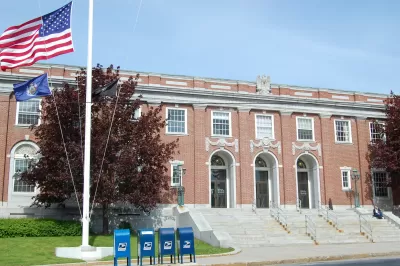
“The post office is what urban designers call a 'local public anchor institution.' These are the shared civic buildings, services, and spaces accessible by all and benefiting all, and they also include public schools, libraries, and parks. They support the population without discrimination, through economic downturns and even during pandemics,” writes Patty Heyda.
Post offices do far more than just provide mail service and ensure voting rights, as important as those aspects of the postal service might be. “The post office shapes American public and private life in cities and towns, large and small. A dismantled USPS erodes American social ties, neighborhoods, and even families,” says Heyda.
The architecture of postal buildings reflects the government’s view of people and society, argues Heyda. When post offices go from stately buildings to branch offices in strip malls, the message is clear that public life is not a priority.
In addition, post offices maintain important social connections, says Heyda. From postal carriers who know the residents on their routes to post offices that double as social and informational hubs, the postal service is an institution that plays an essential role in American life.
Read the full story: What dismantling the Postal Service will do to American cities

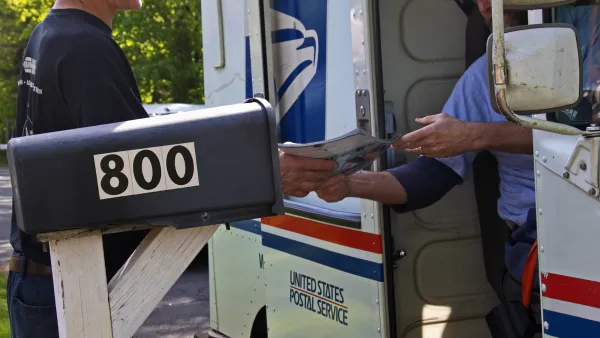
US Census Starts Using Postal Workers as Census Takers
A test program is using postal carriers to administer Census questionnaires.
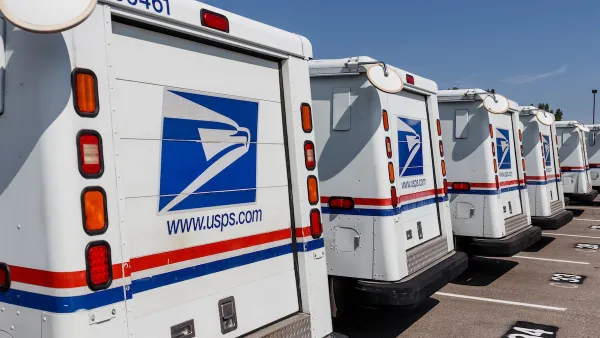
USPS Electrification Project Far Behind Schedule
The manufacturer of the electric mail trucks ordered by the Postal Service is plagued by problems that are slowing production to around one truck per day.
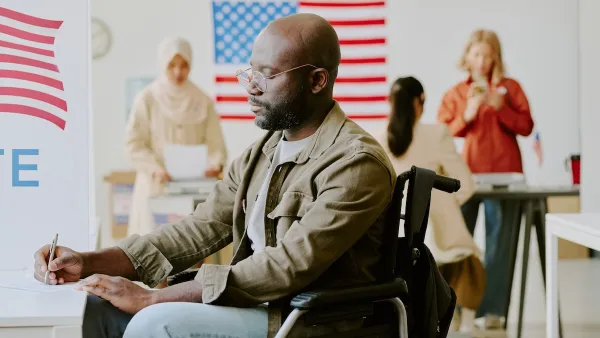
Making Voting Accessible to Everyone
Voters with disabilities often have a hard time getting to the polls. Mail-in voting helps, but some states are limiting it.

Planetizen Federal Action Tracker
A weekly monitor of how Trump’s orders and actions are impacting planners and planning in America.

The state-sanctioned urbicide of Austin
People don’t kill cities. Freeways do.
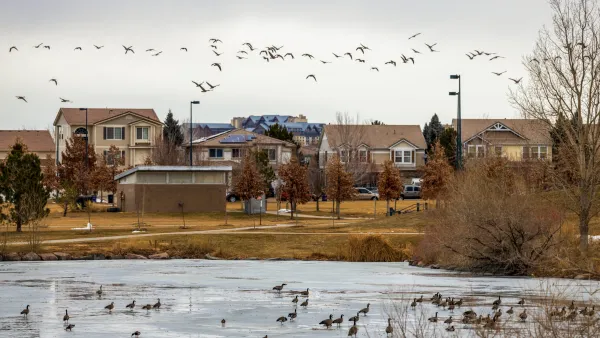
Colorado’s Largest Data Center Could Rise Next to Homes — Without a Public Hearing
The proposed campus would consume 11 times the power of Denver International Airport; as it has across the country, opposition mounts.

Judges permit Denver to divert 77,000 acre feet from the Colorado River for reservoir expansion
Overuse and climate change have caused the Colorado River’s water levels to plummet.
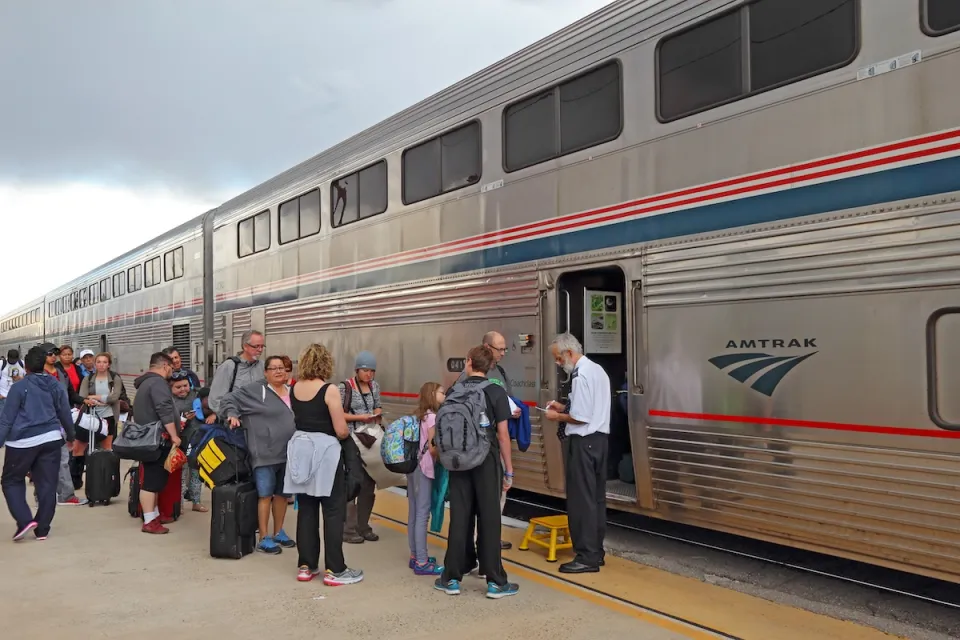
Amtrak, CN end decades-long dispute with eight-year agreement
The new operating agreement establishes an updated framework for the companies to work together, including processes to resolve disputes.
Raised interest rates may kill financially vulnerable construction projects
The chief economist at ConstructConnect warns that if construction project owners are negatively impacted by the raised rates, it could result in delayed payments to contractors.

FREE Course: Walkable City 1: Why Walkability?
After describing his path towards focusing on walkability as the essence of good planning, Jeff Speck marches through his five principal reasons for making more walkable places.
Reinventing Malls: Planning Alchemy—Turning Gray Fields Into Gold
The course focuses on the opportunities and imperatives that shape reinvention of mall sites.

Greater Baltimore Committee
Eagle County Government
Harvard University Graduate School of Design
The Architects Foundation
University of Cincinnati Online
The Pocatello Development Authority
The Urban Renewal Agency of the City of Pocatello
Journal of the American Planning Association