California is the first state to require manufacturers to produce zero-emission medium- and heavy-duty trucks.


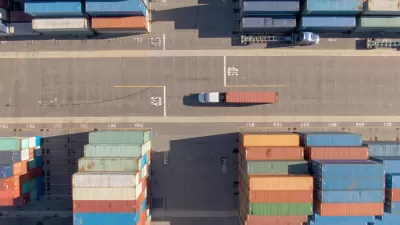
"In a groundbreaking win, the California Air Resources Board (CARB) unanimously adopted the world’s first zero-emission commercial truck requirement, the Advanced Clean Trucks rule," reports Patricio Portillo.
"The final rule will dramatically shift California’s medium- and heavy-duty truck market away from dirty fossil fuels to zero-emission technology," according to Portillo. "Beginning in 2024, manufacturers must increase their zero-emission truck sales to between 30-50% by 2030 and 40-75% by 2035."
The new rule is presented as a victory for environmental justice, eventually reducing pollution and harmful emissions from communities located near freeways. "Many of these communities, which are predominantly communities of color and low-income communities, have over 1,000 diesel trucks rumbling through per hour," according to Portillo.
Additional coverage, written right before CARB's approval of the new rule, is also available from Ruben Aronin, who focuses on the historic significance of the new rule: "This rule promises to provide a critical market signal necessary to transform one of the most polluting industries — dirty truck transportation — into one of the cleanest and greenest."
FULL STORY: California Makes History with Clean Trucks Rule


Electrifying Trucks: Will California Ban Diesel Power?
Five days after approving a landmark rule to phase out the sale of new light duty vehicles powered by internal combustion engines, the California Air Resource Board released a rule that applies to the sale of new medium and heavy duty ICE vehicles.
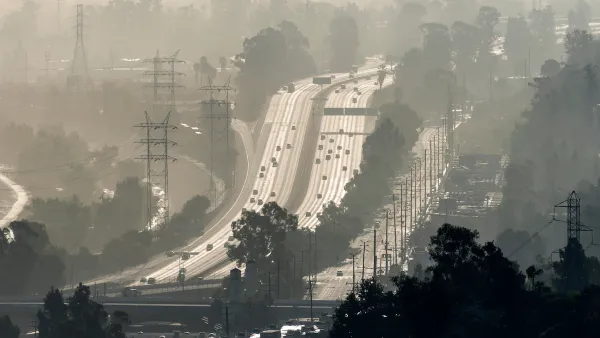
Study: Air Pollution Disproportionately Impacts Communities of Color
The negative effects of poor air quality occur at higher rates in low-income neighborhoods and communities of color, according to new research.
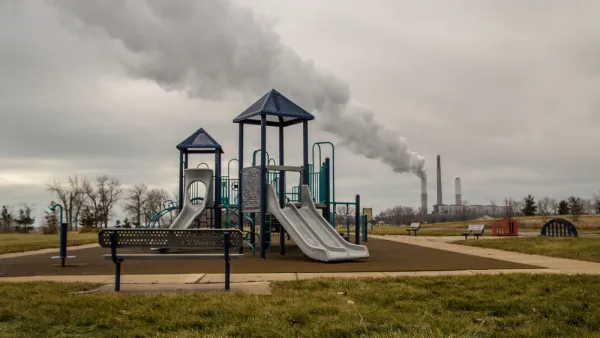
Democrats Call for Stronger Action on Environmental Justice
The Justice40 initiative could make a major difference for communities burdened by pollution, but only if funds are spent on projects that maintain a focus on equity.

The state-sanctioned urbicide of Austin
People don’t kill cities. Freeways do.

US to reduce Colorado River water deliveries to Mexico
A new Colorado Treaty amendment reduces Mexico’s Colorado River water allocation by 250,000 acre feet.

New Jersey’s second-largest city bans standalone data centers
Jersey City will continue to allow co-location facilities, such as those meant for research institutions that store their own data.

Amtrak not solely to blame for New Jersey commuter rail's unreliability, report finds
A new study from the Garden State Initiative found that NJ Transit’s budget grew 20% across a 4 year period, but reliability declined significantly over the same period.

EPA erases limits on planet-warming pollution from power plants
Under Monday’s plan, power plants would still have some limits on how much mercury, arsenic and other contaminants they can emit.

Phoenix announces new on-demand transit service, more frequent RAPID buses
Both new services will launch in October, and are part of Phoenix's Project Effective Access Solutions for Easing Congestion.

FREE Course: Walkable City 1: Why Walkability?
After describing his path towards focusing on walkability as the essence of good planning, Jeff Speck marches through his five principal reasons for making more walkable places.
Reinventing Malls: Planning Alchemy—Turning Gray Fields Into Gold
The course focuses on the opportunities and imperatives that shape reinvention of mall sites.

Eagle County Government
Harvard University Graduate School of Design
Nashville Planning Department
The Architects Foundation
University of Cincinnati Online
The Pocatello Development Authority
The Urban Renewal Agency of the City of Pocatello
Journal of the American Planning Association