Bay Area municipalities need to work together to enable a comprehensive plan to protect against sea-level rise. Communities may be submerged as early as 2030.


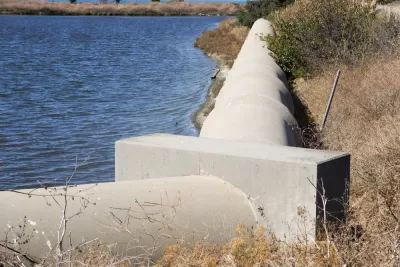
The nine counties and 101 municipalities that span the water in the San Fransisco Bay Area have two common issues: the threat of sea-level rise and the lack of a regional plan to address rising sea levels. "Sea-level rise already threatens the bay shore, which, at about 500 miles, is half the length of the entire California coast. The worst is yet to come: The Bay Area needs to plan for a 2-foot rise by 2050 and up to 7 feet by 2100," warns Robin Meadows.
Foster City, a community with a population of 34,000 people became the first municipality to build a levee large enough to protect the city's shoreline in 2018. Great for the City of Foster City, but what about their neighbors? As Meadows explains, "When seawalls are taller in one part of the bay, water can surge over lower walls in a completely different part."
Jessica Fain is the planner hoping to change the situation and unite municipalities under a cohesive plan. Even if her agency comes up with what they consider to be the ideal plan, they have no authority to implement. Without local coordination, the least wealthy cities and communities could be submerged by 2030. Fain hopes to give each community a voice and all stakeholders a say in the planning process.
Read the full story: Bay Area towns need to address sea-level rise. Will they?

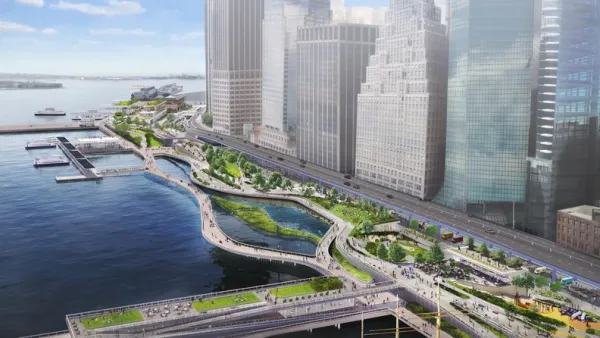
Lower Manhattan Climate Resilience Plan Released
The Financial District and Seaport Climate Resilience Master Plan will extend the shoreline in Lower Manhattan by up to 200 feet.
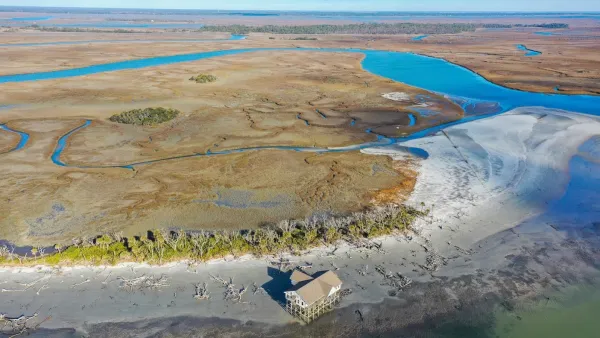
An Open Space Plan for Cultural Landscapes, Resilience, and Growth in the Coastal Southeast
The Beaufort County Greenprint Plan, completed in 2020, offers an innovative model of open space planning integrated within a larger planning framework.
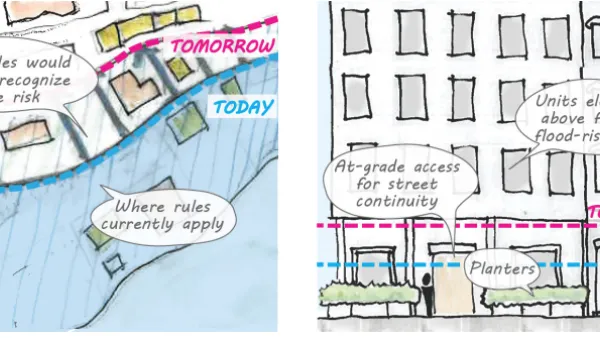
Proposed Citywide Rezoning Would Layer Resilience in New York City
With 520 miles of coastline, New York City is ready to implement the lessons of Hurricane Sandy in the zoning code for the entire city.

Planetizen Federal Action Tracker
A weekly monitor of how Trump’s orders and actions are impacting planners and planning in America.

The state-sanctioned urbicide of Austin
People don’t kill cities. Freeways do.

US to reduce Colorado River water deliveries to Mexico
A new Colorado Treaty amendment reduces Mexico’s Colorado River water allocation by 250,000 acre feet.

Nation's most wind-powered state turns to coal as data centers increase energy demand
For the first time in decades, Iowa has increased its generation of coal power.

NYC cools commuters with city's first rain garden above a bus stop
New York City officials say the plants in the rain garden can absorb 16 gallons of rainwater during heavy storms.

Brightline West’s future may rely on $6 billion federal loan
The company has until Nov. 2 to make a $400 million equity investment into its proposed high-speed rail line.

FREE Course: Walkable City 1: Why Walkability?
After describing his path towards focusing on walkability as the essence of good planning, Jeff Speck marches through his five principal reasons for making more walkable places.
Reinventing Malls: Planning Alchemy—Turning Gray Fields Into Gold
The course focuses on the opportunities and imperatives that shape reinvention of mall sites.

Greater Baltimore Committee
Eagle County Government
Harvard University Graduate School of Design
The Architects Foundation
University of Cincinnati Online
The Pocatello Development Authority
The Urban Renewal Agency of the City of Pocatello
Journal of the American Planning Association