In the 1960s-70s, a group of artists called the Compton Communicative Arts Academy renovated buildings across Compton and transformed vernacular, underutilized structures into venues for and objects of art.


Jenise Miller writes:
Before NWA, there was the CAA. Decades before young rap artists blasted a tough city image onto the world stage, a group of artists in Compton established the Communicative Arts Academy (CAA), a vital arts program in the era of the Black Arts Movement in Southern California in the 1960s and 70s. During the height of their operation from 1969 to 1975, the CAA invigorated Compton with art inspired by life and possibility in California’s first majority black city. As a community-based arts nonprofit and artist collective which included Judson Powell, John Outterbridge, Elliott Pinkney, Charles Dickson and Willie Ford, to name a few, they held Compton as canvas and muse, renovated buildings across the city, and transformed vernacular, underutilized structures into venues for and objects of art. The CAA made art in a city destined to capture the world’s imagination.
Read the full story: How Compton's Communicative Arts Academy Rebuilt the City for Artists and Community Life

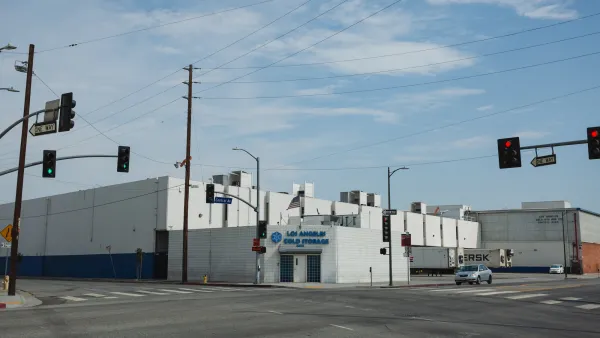
LA approves $2B 'urban village' plan for former cold storage facilities
The project promises an interconnected neighborhood with a focus on public space.
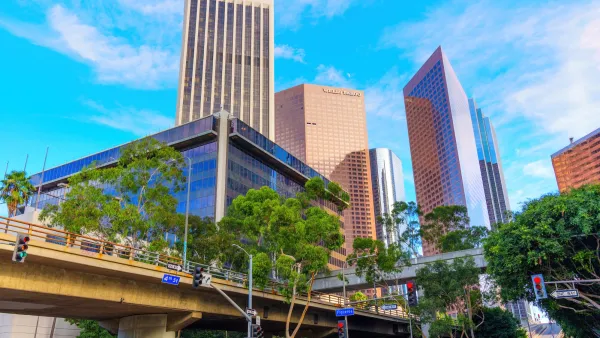
Vacant downtown LA office building will be transformed into 512 affordable homes
The World Trade Center will create hundreds of new apartments with rents starting as low as $937.
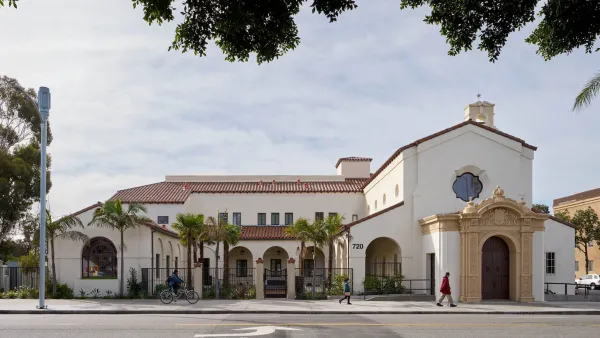
Developer Transforms Historic LA Mortuary Into 122 Senior Housing Units
The former Pierce Brothers Mortuary served as a church before being partially destroyed in a fire in 2018.

Planetizen Federal Action Tracker
A weekly monitor of how Trump’s orders and actions are impacting planners and planning in America.

California plans to bury El Niño’s downpour
If the state plays its cards right, it may be able to store a billion acre-feet of El Niño’s water in aquifers.

Chicago breaks ground on $3 billion megadevelopment
The new neighborhood, titled Foundry Park, will one day host 3,700 residences.

Satanic place names
From streams and lakes to valleys and canyons, I mapped more than 1,000 places named after the Devil.

California High-Speed Rail Authority CEO resigns after $600,000 scandal
Under Ian Choudri, the authority used taxpayer dollars to fund first class flights and trips to nightclubs.

Want to study the Missouri River? Soon, you may need unanimous approval from 10 states
Legislation would require 10 governors’ permission to study or build projects moving water outside the basin.

FREE Course: Walkable City 1: Why Walkability?
After describing his path towards focusing on walkability as the essence of good planning, Jeff Speck marches through his five principal reasons for making more walkable places.
Reinventing Malls: Planning Alchemy—Turning Gray Fields Into Gold
The course focuses on the opportunities and imperatives that shape reinvention of mall sites.

City of Rosemead
Rutgers University, Edward J. Bloustein School of Planning and Public Policy
One Hundred Miles
Hunter College, City University of New York (CUNY)
The Architects Foundation
University of Cincinnati Online
City of Cambridge
Montrose County
The Pocatello Development Authority