Need some work-at-home tips from a veteran? Hazel Borys has eight to consider.



"In this time of social distancing without a clear timeframe, I’m feeling the need to share some of the things I’ve learned over 17 years of working from a home office. It’s clear that the novel coronavirus will disrupt our previous ways of doing business, but it’s possible some parts of that may be good, eventually. For people who are able to return to near former levels of productivity while COVID-19 runs its course, you may be able to contribute to economic stability, and save yourself much of the roughly 6 weeks every year that the average North American spends commuting to work. That’d be a serious bump in productive hours available with major reductions in transportation costs and green house gas emissions."
Borys goes on to share eight strategies for city planners to consider that have helped her home office productivity and made it viable long term.
FULL STORY: Shelter in Place: Working in a time of isolation


Serpentine Maze: Pop-Up Parks in the Pandemic
If the combined effects of winter's cold and the pandemic has you bummed, check out this community-building exercise in the frozen North.
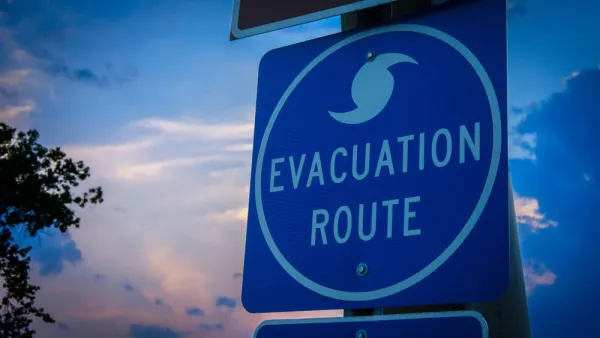
The Compounding Dangers of the Virus and Natural Disasters
As Hurricane Laura intensified into a Category 4 storm, public officials had to make decisions about evacuation during a time of sheltering in place. Researchers at Texas A&M University developed a risk index to guide decisionmaking processes.

Five Actions to Combat COVID-19 in Hawaii
A data-driven approach is needed to figure out how the disease has spread in the islands and what can be done to contain it.

Planetizen Federal Action Tracker
A weekly monitor of how Trump’s orders and actions are impacting planners and planning in America.

The state-sanctioned urbicide of Austin
People don’t kill cities. Freeways do.

US to reduce Colorado River water deliveries to Mexico
A new Colorado Treaty amendment reduces Mexico’s Colorado River water allocation by 250,000 acre feet.

Airbnb launches $250 million 'last-dollar financing' housing accelerator, makes first investment in Austin
The company will put $6.4 million towards affordable housing development in Texas’ capital.

Guerilla urbanists are building DIY bus stop benches in Chicago
A before-and-after of one of the bus stops with a new bench. The new benches are not officially sanctioned or permitted, but the residents who placed them hope they will be the start of a network of DIY benches across the city.

Mamdani overhauls NYC's Vision Zero plan with 100 new policy goals
The overhaul aims to reduce traffic deaths and make streets safer for pedestrians, cyclists and drivers through lower speed limits, new safety infrastructure and more.

FREE Course: Walkable City 1: Why Walkability?
After describing his path towards focusing on walkability as the essence of good planning, Jeff Speck marches through his five principal reasons for making more walkable places.
Reinventing Malls: Planning Alchemy—Turning Gray Fields Into Gold
The course focuses on the opportunities and imperatives that shape reinvention of mall sites.

Eagle County Government
Harvard University Graduate School of Design
Nashville Planning Department
The Architects Foundation
University of Cincinnati Online
The Pocatello Development Authority
The Urban Renewal Agency of the City of Pocatello
Journal of the American Planning Association