Black homeownership climbed in 2019, but still lags far behind homeownership rates for the entire country.


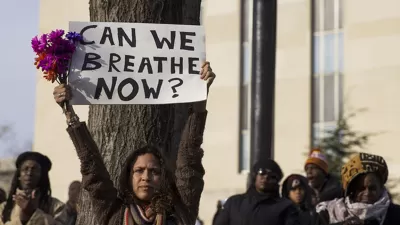
Recent data from the U.S. Census Bureau’s Housing Vacancy Survey [pdf] show a sudden reversal of the trend of black homeownership—which increased from 40.6 percent in Q2 of 2019 to 42.7 percent in Q3 and 44 percent in Q4. The increase in black homeownership still lags far behind the country's total homeownership rate of 65.1 percent in Q4, which reached the highest rate since 2013.
Sarah Strochak, Laurie Goodman, and Sheryl Prado provide analysis of the recent data, focusing specifically about the sudden improvements in black homeownership, which they describe as, "the highest recorded level since 2012 [which] represents an 8 percent increase (or 3.4 percentage points) over six months."
The ongoing crisis of black homeownership has been well documented, including by other researchers from the Urban Institute, so what should the public make of this sudden improvement? The article presents a methodology for understanding the implications of the data, before presenting the conclusion that despite the improvement in black homeownership rates, the numbers still lag far behind, and require "much work" to be done.
FULL STORY: Is the Sudden Increase in Black Homeownership Too Good to Be True?

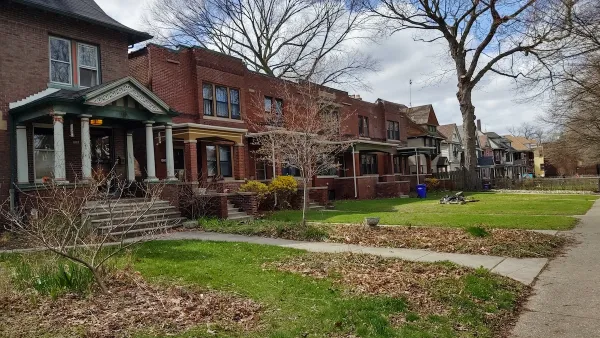
Detroit Says Problems With Property Tax Assessments are Fixed. Advocates Disagree.
With higher-valued properties under assessed and lower-valued properties over assessed, advocates say there's still a problem with Detroit's property tax system.
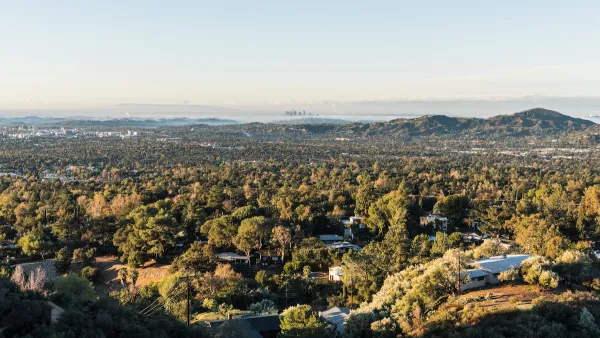
Half of Altadena’s Black Homes Lost or Damaged in Eaton Fire
The community has higher Black homeownership rates than most of Los Angeles, but now faces an uncertain future as residents struggle to rebuild.
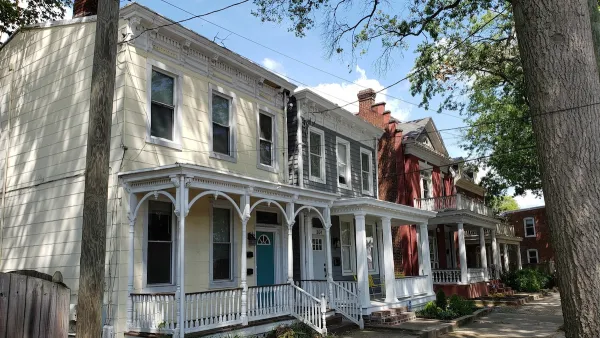
Richmond Program Promotes Black Homeownership
Economic Mobility and Black Homeownership Pilot identified barriers to homeownership and provides homebuyers with down payment assistance and counseling.

The state-sanctioned urbicide of Austin
People don’t kill cities. Freeways do.

US to reduce Colorado River water deliveries to Mexico
A new Colorado Treaty amendment reduces Mexico’s Colorado River water allocation by 250,000 acre feet.

New Jersey’s second-largest city bans standalone data centers
Jersey City will continue to allow co-location facilities, such as those meant for research institutions that store their own data.

Amtrak not solely to blame for New Jersey commuter rail's unreliability, report finds
A new study from the Garden State Initiative found that NJ Transit’s budget grew 20% across a 4 year period, but reliability declined significantly over the same period.

EPA erases limits on planet-warming pollution from power plants
Under Monday’s plan, power plants would still have some limits on how much mercury, arsenic and other contaminants they can emit.

Phoenix announces new on-demand transit service, more frequent RAPID buses
Both new services will launch in October, and are part of Phoenix's Project Effective Access Solutions for Easing Congestion.

FREE Course: Walkable City 1: Why Walkability?
After describing his path towards focusing on walkability as the essence of good planning, Jeff Speck marches through his five principal reasons for making more walkable places.
Reinventing Malls: Planning Alchemy—Turning Gray Fields Into Gold
The course focuses on the opportunities and imperatives that shape reinvention of mall sites.

Eagle County Government
Harvard University Graduate School of Design
Nashville Planning Department
The Architects Foundation
University of Cincinnati Online
The Pocatello Development Authority
The Urban Renewal Agency of the City of Pocatello
Journal of the American Planning Association