The city of Phoenix will either have to raise the rate for waste removal int he city or cut programs like recycling.


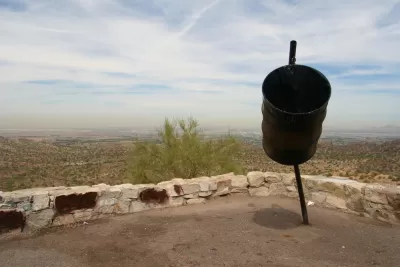
"Disposing of trash, recyclables and yard waste is getting more expensive for Phoenix, and the city likely will have to start passing that cost onto customers or discontinue its recycling and compost programs altogether," reports Jessica Boehm.
The cost of waste removal for single-family residences in Phoenix has held steady for ten years, at $26.80 a month, but that rate is no longer enough to cover expense for the services of Phoenix Public Works.
"Just to continue curbside trash pickup in Phoenix, the city will need to raise the rate by $4.75 per month. If it wants to keep its recycling and green organics programs as well, the city will have to bump the rate by $6.40," according to Boehm.
The article includes more details about the four rate change proposals under consideration before the City Council, which will vote on the issue in January.
FULL STORY: Phoenix could end its recycling, composting programs to keep trash costs low

Colorado Ramps Up Rural Recycling Program
The state is creating a framework for building better access to recycling facilities and services for rural residents and businesses.
Striving for a Zero-Waste Future
A number of U.S. cities have set ambitious zero-waste goals, but reaching targets has been challenging. Turning waste into a viable commodity is one strategy to get materials out of the waste stream.
An Illustrated Explanation of the Crisis in Recycling
A global shift in the market has upended the recycling industry. The story of recycling's past provides direction for the future.

Planetizen Federal Action Tracker
A weekly monitor of how Trump’s orders and actions are impacting planners and planning in America.

The state-sanctioned urbicide of Austin
People don’t kill cities. Freeways do.

US to reduce Colorado River water deliveries to Mexico
A new Colorado Treaty amendment reduces Mexico’s Colorado River water allocation by 250,000 acre feet.

5 New England states march closer to 800 megawatt wind energy project
Securing federal approval for the project may be complicated under the Trump administration, which has historically been hostile towards domestic wind power.

Baltimore to break ground on $50 million Transit Priority Project
The project will bring faster bus trips, safer streets and better bike connections to Baltimore.

Airbnb launches $250 million 'last-dollar financing' housing accelerator, makes first investment in Austin
The company will put $6.4 million towards affordable housing development in Texas’ capital.

FREE Course: Walkable City 1: Why Walkability?
After describing his path towards focusing on walkability as the essence of good planning, Jeff Speck marches through his five principal reasons for making more walkable places.
Reinventing Malls: Planning Alchemy—Turning Gray Fields Into Gold
The course focuses on the opportunities and imperatives that shape reinvention of mall sites.

Eagle County Government
Harvard University Graduate School of Design
Nashville Planning Department
The Architects Foundation
University of Cincinnati Online
The Pocatello Development Authority
The Urban Renewal Agency of the City of Pocatello
Journal of the American Planning Association