The Virginia County of Chesterfield is planning six so-called "superstreet" treatments for junctions in the county. One junction, where Route 10 meets Rivers Bend Boulevard, will cost $64 million.



Wyatt Gordon reports on transportation planning efforts from Chesterfield County in Virginia, which stands as a counterpoint of car-centric priorities compared to the recent public transit successes of the neighboring city of Richmond.
"Over the next decade Chesterfield plans to transform at least six of its widest junctions into so-called 'superstreets,' multi-lane behemoths that shift the flow of traffic from perpendicular designs to 15-lane-wide, swooping intersections," writes Gordon.
One of those junctions planned for the superstreet treatment also sets a lofty standard for expense, pricing out an estimated $64 million, which has some in the state questioning the wisdom of this kind of road engineering.
The relationship between Richmond and Chesterfield County is more than just a question of proximity: Both own half of the Greater Richmond Transit Company (GRTC), and the price tag for one $64 million intersection outpaces the entire region's spending on the GRTC, reports Gordon.
Read the full story: Chesterfield County plans one intersection with a monster price tag

My provocative proposal: Want a roadway safety movement? Ditch the engineers.
A PE license has long been a requirement for most roadway safety jobs. It’s time to pave the way for movement-making professionals.
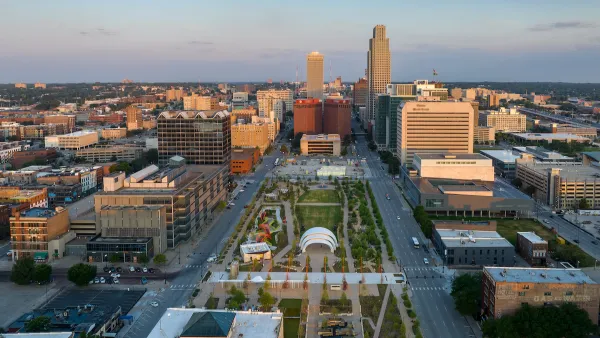
Downtown Omaha Planning for its Post-One-Way-Streets Era
The Omaha City Council has decided to reverse the transportation model adopted in the city in the 1950s, for the benefit of traffic safety and local retail activity.
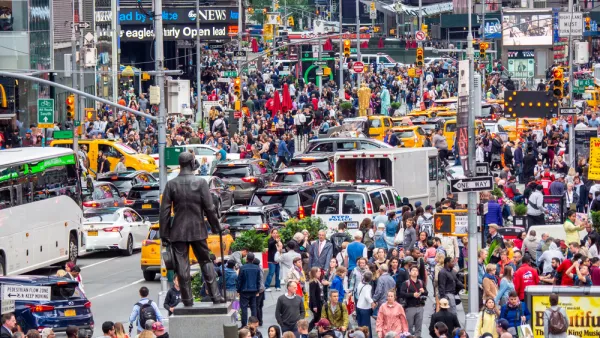
Redesigning Streets for Livability: A Global View
An excerpt from the introduction of the recent book, “Streets For All: 50 Strategies for Shaping Resilient Cities,” edited by Vinayak Bharne and Shyam Khandekar.

Planetizen Federal Action Tracker
A weekly monitor of how Trump’s orders and actions are impacting planners and planning in America.

California plans to bury El Niño’s downpour
If the state plays its cards right, it may be able to store a billion acre-feet of El Niño’s water in aquifers.

Desperate measures: Advocates weigh draining Lake Powell to fill Colorado River
Draining the reservoir could reduce evaporation losses by a couple hundred thousand acre-feet.

In Texas, data centers are swallowing promised parkland
Residents who moved to Taylor, Texas for a rural community now have to contend with three data centers in their backyard.

How a Chicago-sized wind farm beat the odds and powered on
The project spanned five presidential administrations and a standoff with a U.S. military base.

MTA gives itself 30 days to transform pit into basketball court
The site has been under construction since 2022; the city originally estimated it would finish the court in 2024.

FREE Course: Walkable City 1: Why Walkability?
After describing his path towards focusing on walkability as the essence of good planning, Jeff Speck marches through his five principal reasons for making more walkable places.
Reinventing Malls: Planning Alchemy—Turning Gray Fields Into Gold
The course focuses on the opportunities and imperatives that shape reinvention of mall sites.

City of Rosemead
Rutgers University, Edward J. Bloustein School of Planning and Public Policy
One Hundred Miles
Hunter College, City University of New York (CUNY)
The Architects Foundation
University of Cincinnati Online
City of Cambridge
Montrose County
The Pocatello Development Authority