Residents of the neighborhood of Soulard started a trend at the beginning of the decade that has changed the face of the neighborhood, and started to catch on in other parts of the city of St. Louis as well.


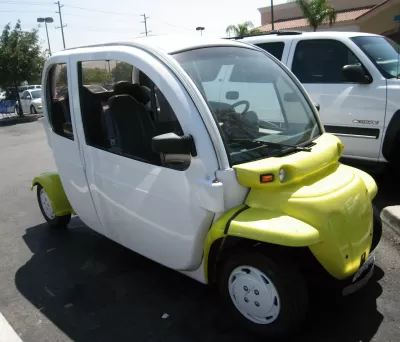
"In St. Louis, [golf carts are] somewhat synonymous with Soulard, where many residents use the vehicles for everyday purposes around the neighborhood — and the carts have become a common sight in some other St. Louis areas as well," according to an article by Evie Hemphill.
The trend of residents are choosing golf carts for transportation was the subject of an episode ofSt. Louis on the Air, featuring host Sarah Fenske in conversation with St. Louis transportation planner Scott Ogilvie and Midwest Golf Car manager and mechanic Kurt Hagen.
If you missed the show, see also an article on the same subject written by Mike McHugh in September 2017, who confirms, as objectively as possible, the existence of a neighborhood located nowhere near a golf course that is nonetheless filled with golf carts. Another 2010 article written by Doug Moore for the St. Louis Post-Dispatch also corroborates the trend.
As for why people are making the rare choice to downsize their automotive transportation in Soulard and beyond, Moore speaks to residents who say the vehicles are environmentally friendly and encourage social interaction.
FULL STORY: Tuesday: What's Driving The Proliferation Of Golf Carts In Soulard And Beyond

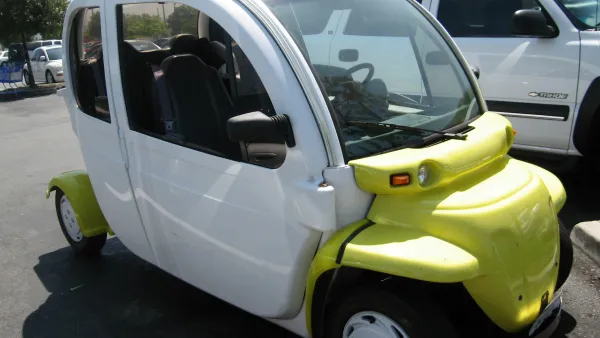
Mainstreaming the Golf Cart
Seniors are on the cutting edge of a movement to make Neighborhood Electric Vehicles (NEVs), otherwise known as golf carts, a viable form of everyday transportation.
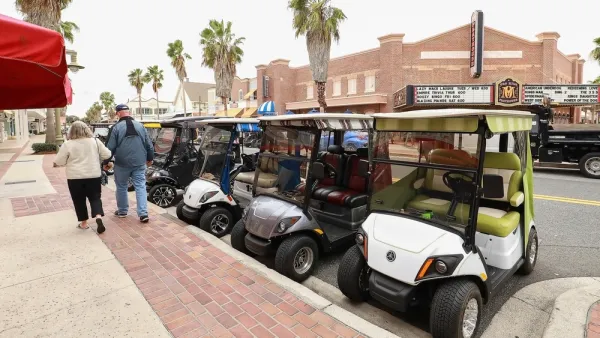
The Disruptive Power of ‘Minimobility’
Small, lightweight vehicles similar to golf carts could eliminate many Americans’ need for a second car and make roads safer for all users.
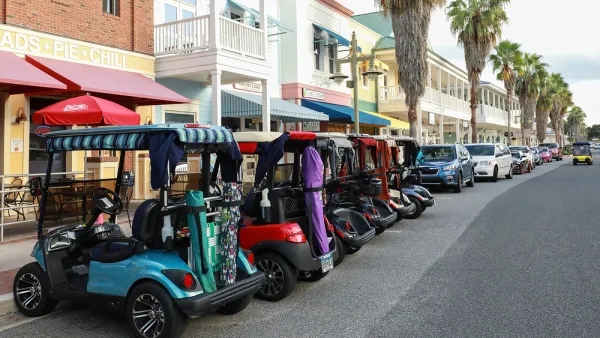
Why Golf Carts Could Quietly Revolutionize Transportation
More communities are catching on to the benefits of golf carts as a safe, low-emissions mode of transport for neighborhood trips.

Planetizen Federal Action Tracker
A weekly monitor of how Trump’s orders and actions are impacting planners and planning in America.

The state-sanctioned urbicide of Austin
People don’t kill cities. Freeways do.

US to reduce Colorado River water deliveries to Mexico
A new Colorado Treaty amendment reduces Mexico’s Colorado River water allocation by 250,000 acre feet.

5 New England states march closer to 800 megawatt wind energy project
Securing federal approval for the project may be complicated under the Trump administration, which has historically been hostile towards domestic wind power.

Baltimore to break ground on $50 million Transit Priority Project
The project will bring faster bus trips, safer streets and better bike connections to Baltimore.

Airbnb launches $250 million 'last-dollar financing' housing accelerator, makes first investment in Austin
The company will put $6.4 million towards affordable housing development in Texas’ capital.

FREE Course: Walkable City 1: Why Walkability?
After describing his path towards focusing on walkability as the essence of good planning, Jeff Speck marches through his five principal reasons for making more walkable places.
Reinventing Malls: Planning Alchemy—Turning Gray Fields Into Gold
The course focuses on the opportunities and imperatives that shape reinvention of mall sites.

Eagle County Government
Harvard University Graduate School of Design
Nashville Planning Department
The Architects Foundation
University of Cincinnati Online
The Pocatello Development Authority
The Urban Renewal Agency of the City of Pocatello
Journal of the American Planning Association