Improvements to the commuter rail connections between Los Angeles and Orange counties are among the possibilities for the future of rail planning in California as uncertainty about high-speed rail continues.


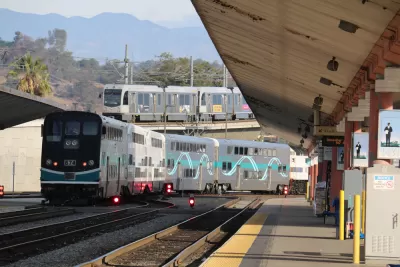
The Metrolink regional commuter rail system is exploring the possibility of shifting $5.5 billion in funding from the stalled California High-Speed Rail project to the corridor connecting Burbank to Anaheim in Southern California, according to an article by Ralph Vartabedian.
Ridership on Metrolink would double between Burbank and Anaheim, relieving freeway congestion, and new high-speed electric trains would slash emissions along the route under a plan that would shift up to $5.5 billion from the bullet train project in the Central Valley to Southern California.
Metrolink outlined these improvements to the commuter rail system in an internal report it submitted to the California High-Speed Rail Authority, which is weighing a decision over the next several months to direct some of the $20.5 billion in funding for the bullet train to Southern California and the Bay Area.
Because the Burbank to Anaheim route is part of the plan for the California High-Speed Rail project, this shift in funding priority would keep money for the mode and region originally intended, just in the form of a different project.
Ideas like the investment along the Metrolink corridors are gaining traction, but the future of high-speed rail in California is still very much in flux after California Governor Gavin Newsom threw a wrench into plans earlier this year, and President Donald Trump took the opportunity to score points with conservatives in the state's Central Valley.
Read the full story: Metrolink proposes new trains from Burbank to Anaheim, using billions from bullet train
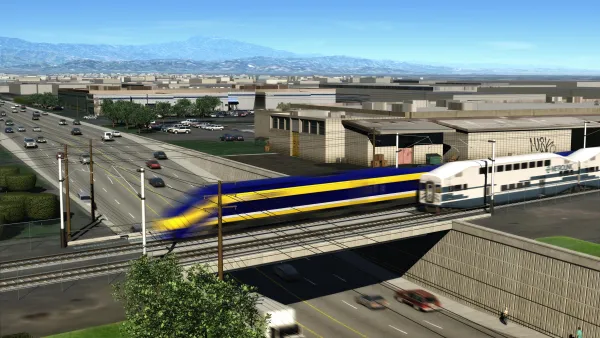
California High-Speed Rail Recommits to Bakersfield-to-Merced Segment
The California High-Speed Rail Authority also certified the Final Environmental Impact Report/Environmental Impact Statement for the San Francisco to San Jose section of the route in August.
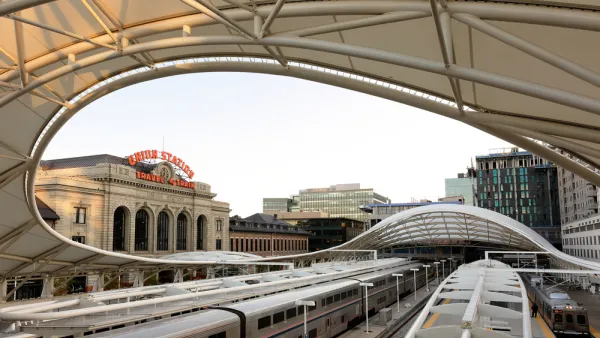
B Line Commuter Rail Extension Gets a Green Light in Colorado
The Board of Directors for the Regional Transportation District has given a preliminary green light to accelerate planning work on the B Line extension from Denver to Boulder and Longmont.
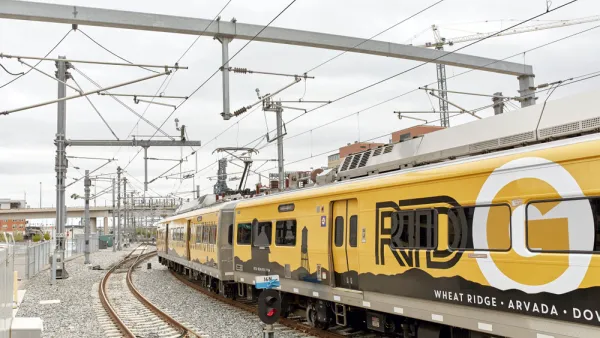
Political Pressure Reinvigorates B Line Extension Plans in Colorado
The CEO of the Regional Transportation District speculated recently about whether a planned extension of the B Line to Boulder was necessary or desirable. The governor doesn't think the speculation was necessary or desirable.

Desperate measures: Advocates weigh draining Lake Powell to fill Colorado River
Draining the reservoir could reduce evaporation losses by a couple hundred thousand acre-feet.

Eastern Nebraska is running out of electricity
Data centers and electrification are straining eastern Nebraska’s grid, throttling economic development.

Move over, LA: St. Louis gears up for Olympics, invests millions in downtown redevelopment
The Missouri city will host the 2028 Olympic soccer group stage and knockout matches.

Mass. votes against statewide minimum lot size for single-family homes
Over 2 million residents voted on Question 7; it was decided by just over 30,000 votes.

Maryland’s $15 billion bridge project gains key approval
The Maryland Transit Authority said the project will create over 60,000 jobs and add $23 billion to the local economy.

‘No clear next steps’ for Chicago's permanent festival grounds
Eleventh Ward Ald. Nicole Lee has suggested Soldier Field as a possible location for the permanent event space.

FREE Course: Walkable City 1: Why Walkability?
After describing his path towards focusing on walkability as the essence of good planning, Jeff Speck marches through his five principal reasons for making more walkable places.
Reinventing Malls: Planning Alchemy—Turning Gray Fields Into Gold
The course focuses on the opportunities and imperatives that shape reinvention of mall sites.

City of Rosemead
Rutgers University, Edward J. Bloustein School of Planning and Public Policy
One Hundred Miles
University of Michigan School for Environment and Sustainability (SEAS)
Hunter College, City University of New York (CUNY)
The Architects Foundation
City of Cambridge
The Pocatello Development Authority
The Urban Renewal Agency of the City of Pocatello