After Madison Mayor Satya Rhodes-Conway proposed a $40 "wheel tax," otherwise known as a vehicle registration fee, the debate heated up about what the revenue could fund, or whether it's necessary at all.


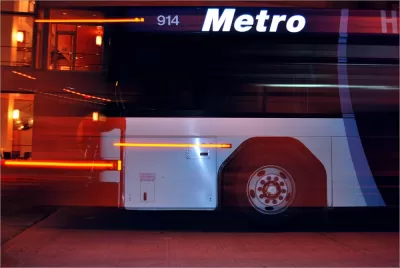
Madison Mayor Satya Rhodes-Conway included a proposal for a $40 vehicle registration fee in the city's draft 2020 budget, calling the fee essential to fund projects in a city hamstrung by limits on property taxes.
"The vehicle registration fee is expected to generate $7.8 million, and that money has to go toward transportation services, as required by state law," according to an article explaining the proposal by Rose Schmidt.
The proposal immediately proved controversial, and some councilmembers have questioned the necessity of the proposed tax.
A follow up article by Jamie Perez provides more insight into that debate, especially about the potential for the new tax to reduce congestion by contributing revenue to the city's transit system. Madison's Metro Transit and the Madison Area Transit Planning Board already have public transit plans in mind, releasing a study for an East-West Bus Rapid Transit line earlier this year.
FULL STORY: Transportation expert says new bus rapid transit system would help decrease Madison's congestion

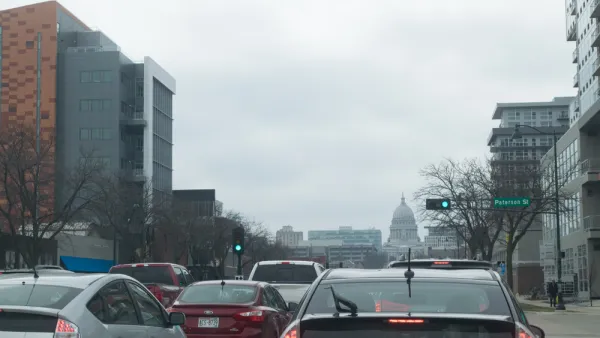
Madison Common Council Narrowly Approves Unpopular $40 Wheel Tax
Despite major opposition by residents, the Madison Common Council approved a $40 motor vehicle registration fee (aka 'wheel tax') on an 11-8 vote on Oct. 29 to help fund the city's new East-West Bus Rapid Transit system.
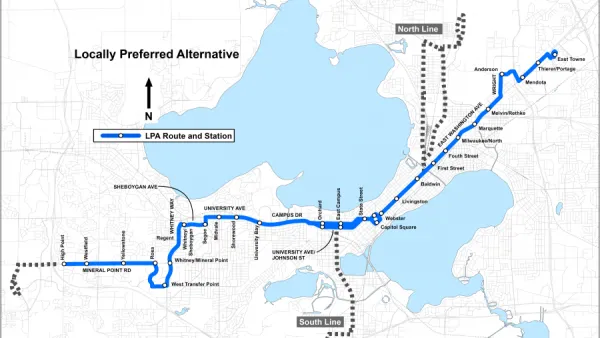
Dedicated Center Lane Planned for Madison Bus Rapid Transit
Some portions of the bus rapid transit (BRT) system planned for Madison, Wisconsin will resemble the fully realized BRT systems more common in other parts of the world.
Excerpt: How Individualism Harms Public Transit
Jarrett Walker calls for a more social approach to transit planning.

Planetizen Federal Action Tracker
A weekly monitor of how Trump’s orders and actions are impacting planners and planning in America.

The state-sanctioned urbicide of Austin
People don’t kill cities. Freeways do.

US to reduce Colorado River water deliveries to Mexico
A new Colorado Treaty amendment reduces Mexico’s Colorado River water allocation by 250,000 acre feet.

5 New England states march closer to 800 megawatt wind energy project
Securing federal approval for the project may be complicated under the Trump administration, which has historically been hostile towards domestic wind power.

Baltimore to break ground on $50 million Transit Priority Project
The project will bring faster bus trips, safer streets and better bike connections to Baltimore.

Airbnb launches $250 million 'last-dollar financing' housing accelerator, makes first investment in Austin
The company will put $6.4 million towards affordable housing development in Texas’ capital.

FREE Course: Walkable City 1: Why Walkability?
After describing his path towards focusing on walkability as the essence of good planning, Jeff Speck marches through his five principal reasons for making more walkable places.
Reinventing Malls: Planning Alchemy—Turning Gray Fields Into Gold
The course focuses on the opportunities and imperatives that shape reinvention of mall sites.

Eagle County Government
Harvard University Graduate School of Design
Nashville Planning Department
The Architects Foundation
University of Cincinnati Online
The Pocatello Development Authority
The Urban Renewal Agency of the City of Pocatello
Journal of the American Planning Association