Besides addressing mobility needs, activists hope a new transit option will make more of the city accessible for the disabled.


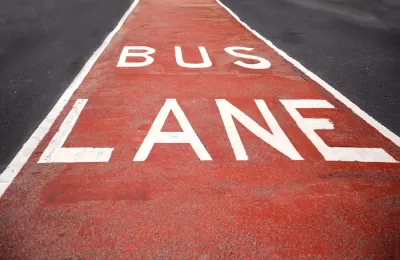
Madison, Wisconsin is growing. Regional Transportation Planner David Trowbridge says the city needs funding for Bus Rapid Transit to keep up with the city's increasing population. "Madison is currently transitioning from a mid-sized city to a large city, and if investments in transit are not made now, the city will suffer from congestion," according to an article by Molly Devore.
The city of Madison's Metro Transit and the Madison Area Transit Planning Board are already working on a "Madison East-West BRT Planning Study."
"As explained on BRT’s website, the transit line is a high frequency, limited-stop transit system that is faster and can transport more riders than current buses. Furthermore, BRT uses dedicated lanes to avoid traffic and would compliment Madison’s current metro system," explains Devore.
Activists from the disabled community want the service to be more accommodating for the disabled, Devore reports. “According to their website, BRT is currently planning on leveling and widening boarding platforms and improving accessibility by adding additional doorways."
Read the full story: Bus Rapid Transit seeks to advance inclusivity in Madison public transportation
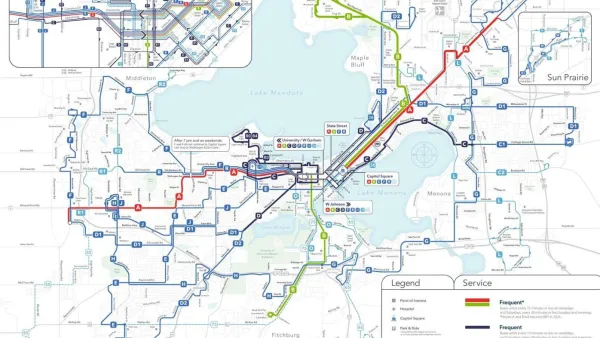
Madison Launches Redesigned Transit System
Transit riders in Madison, Wisconsin are navigating an entirely new system this week.
Madison Redesigning its Transit System, BRT Included
Transit service in the Wisconsin State Capital has been redesigned on a high-frequency grid.
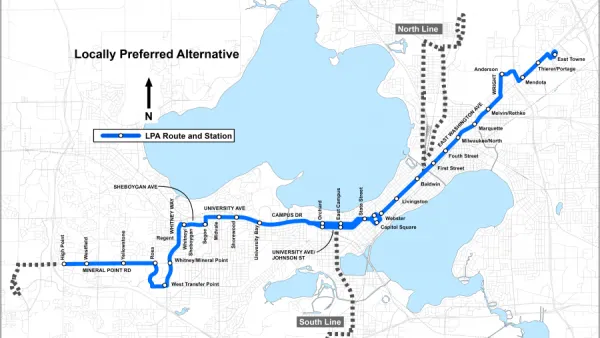
Dedicated Center Lane Planned for Madison Bus Rapid Transit
Some portions of the bus rapid transit (BRT) system planned for Madison, Wisconsin will resemble the fully realized BRT systems more common in other parts of the world.

Planetizen Federal Action Tracker
A weekly monitor of how Trump’s orders and actions are impacting planners and planning in America.

Eastern Nebraska is running out of electricity
Data centers and electrification are straining eastern Nebraska’s grid, throttling economic development.

Washington state to charge fee to drivers with fuel-efficient cars
Revenue from the fee will go towards supporting the state’s highways.

Instead of building new housing, LA developers are turning mansions into mega-mansions
In the richest areas, the number of houses valued at $30 million with demolition permits has skyrocketed since 2018.

Illinois considers spending $1 billion in taxpayer money on data center
A quantum computing campus and data center are currently under construction in Chicago.

As development costs rise, Boston moves to lessen affordable housing requirements
The Boston Zoning Commission and the City Council still need to approve Boston Mayor Michelle Wu’s proposed changes

FREE Course: Walkable City 1: Why Walkability?
After describing his path towards focusing on walkability as the essence of good planning, Jeff Speck marches through his five principal reasons for making more walkable places.
Reinventing Malls: Planning Alchemy—Turning Gray Fields Into Gold
The course focuses on the opportunities and imperatives that shape reinvention of mall sites.

City of Charlotte
City of Rosemead
Rutgers University, Edward J. Bloustein School of Planning and Public Policy
University of Michigan School for Environment and Sustainability (SEAS)
Hunter College, City University of New York (CUNY)
The Architects Foundation
University District Partnership
City of Cambridge
The Pocatello Development Authority