The recently formed Atlanta-Region Transit Link Authority released a new regional transit plan.


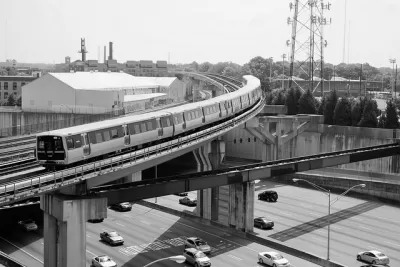
"Efforts to improve transit across metro Atlanta took a step forward Tuesday when a state agency released a tentative list of projects for a regional transit plan," reports David Wickert.
The 76 projects on the Atlanta-Region Transit Link Authority's list include "major rail projects such as the Clifton Corridor and the Beltline in Atlanta, a MARTA extension to Norcross and a commuter rail line to Clayton County," as well as "bus rapid transit lines in DeKalb, Fulton and Gwinnett counties and other improvements across 12 metro counties."
As noted by Wickert, many of the projects still require funding from sources outside the region to move forward.
If you've never seen the name Atlanta-Region Transit Link Authority before, you're probably not alone. The new agency was created by the state General Assembly last year, as documented by Wickert at the time. In all, the agency oversees transit in 13 counties in the Atlanta region.
Wickert followed up coverage of the list's release with another article that shares the entire list.
"The agency plans to roll out the details to the public at a series of public hearings beginning in October," writes Wickert in the final article linked here.
FULL STORY: Metro Atlanta transit plan takes a step forward

Suburban Atlanta Rejects Transit, Again
The third time was not the charm for a transit sales tax in Gwinnett County, Georgia.
Voters Considering Game Changing 'Connect Gwinnett Transit Plan'
Suburban Gwinnett County could change the course of its history by finally voting to connect to the Atlanta region's transit network.
Changing the Transportation Narrative in the Atlanta Region
Regional transportation officials gathered recently in Atlanta to tout a new era of regional cooperation, focused on delivering public transit improvements.

Planetizen Federal Action Tracker
A weekly monitor of how Trump’s orders and actions are impacting planners and planning in America.

The state-sanctioned urbicide of Austin
People don’t kill cities. Freeways do.

US to reduce Colorado River water deliveries to Mexico
A new Colorado Treaty amendment reduces Mexico’s Colorado River water allocation by 250,000 acre feet.

Baltimore to break ground on $50 million Transit Priority Project
The project will bring faster bus trips, safer streets and better bike connections to Baltimore.

Airbnb launches $250 million 'last-dollar financing' housing accelerator, makes first investment in Austin
The company will put $6.4 million towards affordable housing development in Texas’ capital.

Guerilla urbanists are building DIY bus stop benches in Chicago
A before-and-after of one of the bus stops with a new bench. The new benches are not officially sanctioned or permitted, but the residents who placed them hope they will be the start of a network of DIY benches across the city.

FREE Course: Walkable City 1: Why Walkability?
After describing his path towards focusing on walkability as the essence of good planning, Jeff Speck marches through his five principal reasons for making more walkable places.
Reinventing Malls: Planning Alchemy—Turning Gray Fields Into Gold
The course focuses on the opportunities and imperatives that shape reinvention of mall sites.

Eagle County Government
Harvard University Graduate School of Design
Nashville Planning Department
The Architects Foundation
University of Cincinnati Online
The Pocatello Development Authority
The Urban Renewal Agency of the City of Pocatello
Journal of the American Planning Association