Large American cities are losing bus and train riders, but in France, most cities have seen the opposite trend.


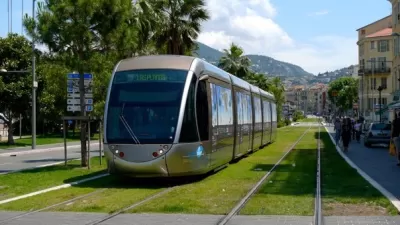
The past decade has been a rough one for American transit ridership. Since 2010, eight of the top ten largest U.S. urban areas have lost ridership, and even those that have gained ridership are losing riders on a per capita basis. In France the opposite is true, over the same period, all ten of the country’s largest cities have seen an increase in transit ridership.
In a blog post for The Transport Politic, Yonah Freemark argues the key driver for these trends is investment. "Most medium and large French cities have invested in tramway services; length of those lines increased from about 115 miles nationwide in 2000 to 515 miles today," Freemark reports. In cities in the United States, transit services aren’t keeping up with population: "Between 2010 and 2018, vehicle-miles provided by New York region transit services actually declined by 1.6 percent even as population increased by 4.6 percent," Freemark writes.
Read the full story: Is transit ridership loss inevitable? A U.S.–France comparison

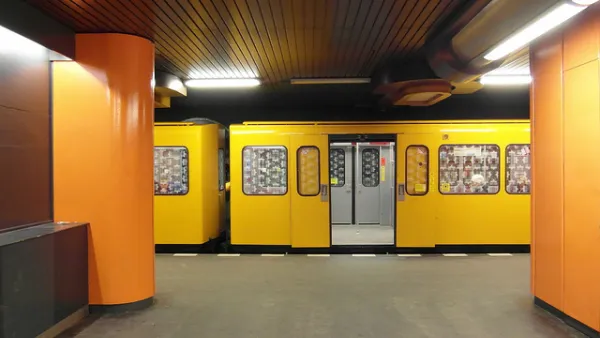
The Free Public Transit Debate
The pros and cons of fare-free transit involve a range of issues, from operations logistics and outcomes to costs and fiscal priorities.

Urban River Revitalization Across the Globe
Urban Times offers a list of 13 urban river renewal projects spanning from Medellin to Manila.
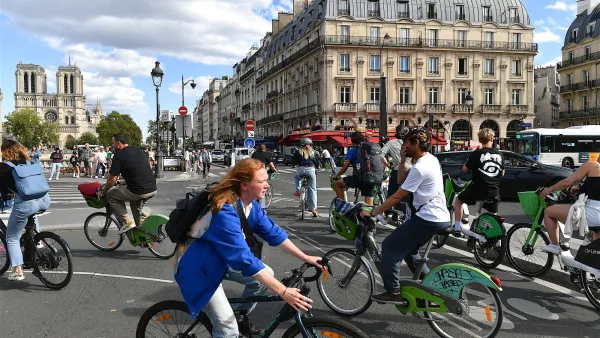
Biking in Paris grew by 240% in 5 years
The city saw a significant rise in bike use thanks to data-driven policy changes.

Planetizen Federal Action Tracker
A weekly monitor of how Trump’s orders and actions are impacting planners and planning in America.

The state-sanctioned urbicide of Austin
People don’t kill cities. Freeways do.

US to reduce Colorado River water deliveries to Mexico
A new Colorado Treaty amendment reduces Mexico’s Colorado River water allocation by 250,000 acre feet.

Nation's most wind-powered state turns to coal as data centers increase energy demand
For the first time in decades, Iowa has increased its generation of coal power.

NYC cools commuters with city's first rain garden above a bus stop
New York City officials say the plants in the rain garden can absorb 16 gallons of rainwater during heavy storms.

Brightline West’s future may rely on $6 billion federal loan
The company has until Nov. 2 to make a $400 million equity investment into its proposed high-speed rail line.

FREE Course: Walkable City 1: Why Walkability?
After describing his path towards focusing on walkability as the essence of good planning, Jeff Speck marches through his five principal reasons for making more walkable places.
Reinventing Malls: Planning Alchemy—Turning Gray Fields Into Gold
The course focuses on the opportunities and imperatives that shape reinvention of mall sites.

Greater Baltimore Committee
Eagle County Government
Harvard University Graduate School of Design
The Architects Foundation
University of Cincinnati Online
The Pocatello Development Authority
The Urban Renewal Agency of the City of Pocatello
Journal of the American Planning Association