It's last sporting tenant departed in 2017, and the District has large redevelopment plans for the site, but the decision to finally raze RFK Stadium has only recently been made official.


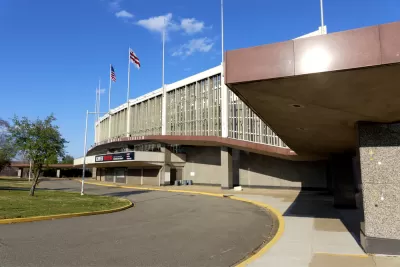
"The District plans to tear down the dilapidated RFK Stadium by 2021, a move officials say is driven by a need to save money," reports Robert McCartney.
District officials also say the NFL team in Washington does not plans to build a new stadium on the site. "RFK, located on the Anacostia River two miles east of the U.S. Capitol, also was home for a time to both the Nationals and Senators baseball teams, as well as the D.C. United soccer team. It also hosted concerts, including performances by the Beatles, Madonna and Foo Fighters." Its run of sports and entertainment events has lasted for 58 years.
"Since D.C. United left in 2017, RFK has attracted few events and is costing the city $2 million a year for maintenance, landscaping, pest control, security and other services," according to McCartney. "Utility bills add another $1.5 million a year."
As noted by McCartney, the demolition will make it easier to invest nearly $500 million to redevelop the site. That project will add, among other amenities, sports fields for children.
FULL STORY: Bye-bye, bouncy seats: District to raze RFK Stadium by 2021

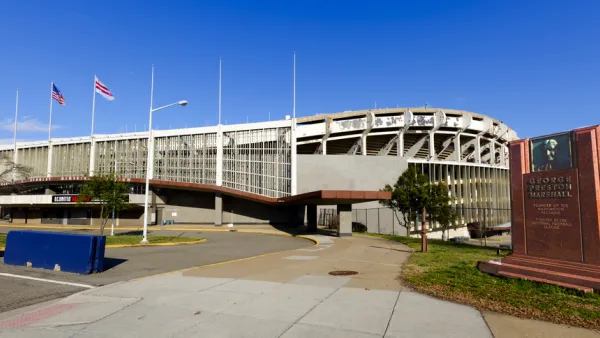
RFK Memorial and Redevelopment Plan Proposed for Old Stadium Site
RFK Stadium in Washington, D.C. lost its last tenant in late 2015, and now D.C. leaders have a new plan for the site.
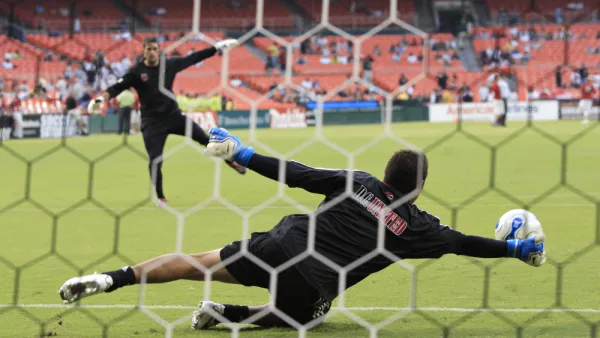
D.C.'s RFK Stadium Losing its Last Tenant—What's Next?
An ongoing planning study by Events DC, commenced by a previous mayoral administration, could conflict with the desire of the current mayor for the site of RFK Stadium
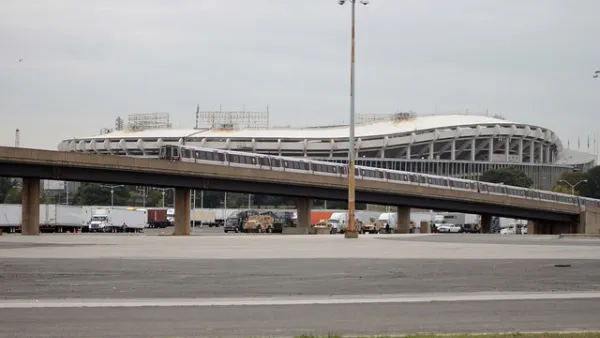
$489.6 Million Redevelopment of Former Sports Stadium Breaks Ground in D.C.
RFK Stadium, former home to professional football, soccer, and baseball teams, is done. A massive redevelopment has begun, starting with new sports fields for kids.

Planetizen Federal Action Tracker
A weekly monitor of how Trump’s orders and actions are impacting planners and planning in America.

The state-sanctioned urbicide of Austin
People don’t kill cities. Freeways do.

US to reduce Colorado River water deliveries to Mexico
A new Colorado Treaty amendment reduces Mexico’s Colorado River water allocation by 250,000 acre feet.

5 New England states march closer to 800 megawatt wind energy project
Securing federal approval for the project may be complicated under the Trump administration, which has historically been hostile towards domestic wind power.

Baltimore to break ground on $50 million Transit Priority Project
The project will bring faster bus trips, safer streets and better bike connections to Baltimore.

Airbnb launches $250 million 'last-dollar financing' housing accelerator, makes first investment in Austin
The company will put $6.4 million towards affordable housing development in Texas’ capital.

FREE Course: Walkable City 1: Why Walkability?
After describing his path towards focusing on walkability as the essence of good planning, Jeff Speck marches through his five principal reasons for making more walkable places.
Reinventing Malls: Planning Alchemy—Turning Gray Fields Into Gold
The course focuses on the opportunities and imperatives that shape reinvention of mall sites.

Eagle County Government
Harvard University Graduate School of Design
Nashville Planning Department
The Architects Foundation
University of Cincinnati Online
The Pocatello Development Authority
The Urban Renewal Agency of the City of Pocatello
Journal of the American Planning Association