The city of Houston will decide their next mayor in November, in a rematch of the two candidates who ran against each other in a tight runoff election in 2015 as well as a host of additional candidates.


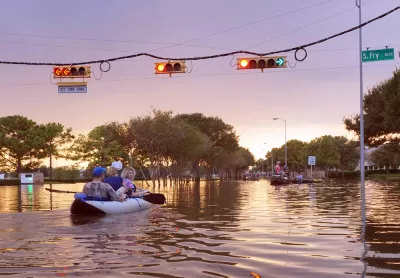
Two of the leading contestants in an election to replace Houston Mayor Sylvester Turner released flood plans this week. The mayor also released a plan that creates new incentives for green stormwater infrastructure.
"Mayoral candidate Bill King on Monday [August 19] laid out a seven-part plan aimed at mitigating future flooding, with proposals to push development back from bayous and have builders pay into a fund used to build detention basins," reports Jasper Scherer in an article for the Houston Chronicle.
"Under King’s plan, the detention fee in most cases would replace the city’s requirement that new construction provide a certain amount of detention capacity," adds Scherer.
King's plan also calls for the city buying land along bayous to prevent future development.
Another leading candidate, Tony Buzbee, paid to publish an announcement of his own flood plan in the conservative blog Big Jolly Times. The post calls for being aggressive and realistic action on the part of the city and business community. Specifically, the plan would reduce drainage fees for businesses that build flood mitigation infrastructure, prioritizing permitting for development projects that make a significant (15 percent of project cost) in flood mitigation, and the launch of a Beuatify Houston project that would recognize businesses that construct permeable surfaces.
On Monday, Mayor Turner also announced a new green development program that offers incentives for the installation of green infrastructure. According to a press release from the Mayor's Office, the program would provide the following incentives for green stormwater infrastructure (GSI):
- Adopt rules that harmonize parking, landscaping, open space, drainage design, detention design and stormwater quality design requirements.
- Defer or reduce property tax bills for developers who use GSI in projects.
- Recognize and award developers who use GSI.
- Provide a fee-based, more consistent and faster plan review process, with lower fees associated with projects that use GSI.
FULL STORY: King, Buzbee unveil flood plans, Turner touts ‘green’ development incentives

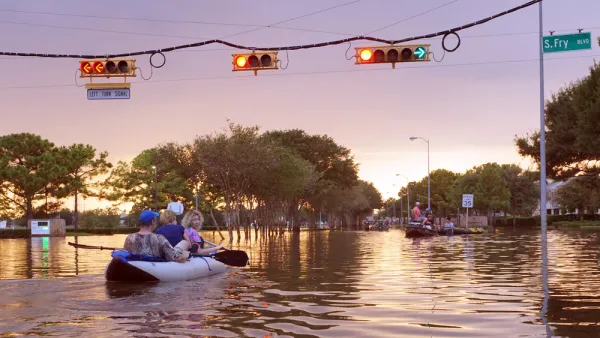
Flooding Less of a Concern as Hurricane Memories Fade
Residents of Houston are less likely to think of flooding as a concern, or to think development should be prohibited in flood-prone areas, as in the years immediately following Hurricane Harvey.
Raising the Alarms as Hurricane Harvey Heads for Houston and the Gulf Coast
Hurricane Harvey was expected to make landfall late Friday or early Saturday. If the damage in human and economic terms is terrible, a lack of infrastructure maintenance and development responsibility will be to blame.
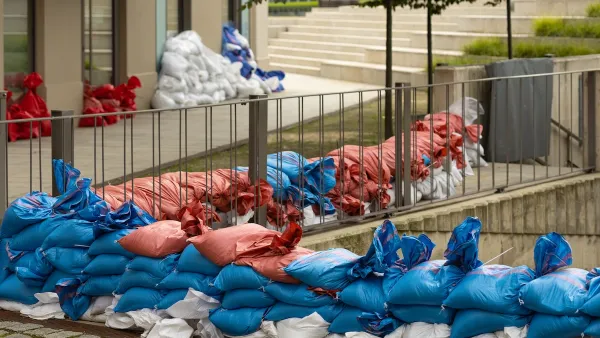
How US Communities Are Building Resilience Against Flooding
Flooding causes over $400 billion in damage in the United States every year.

Planetizen Federal Action Tracker
A weekly monitor of how Trump’s orders and actions are impacting planners and planning in America.

The state-sanctioned urbicide of Austin
People don’t kill cities. Freeways do.

US to reduce Colorado River water deliveries to Mexico
A new Colorado Treaty amendment reduces Mexico’s Colorado River water allocation by 250,000 acre feet.

Baltimore to break ground on $50 million Transit Priority Project
The project will bring faster bus trips, safer streets and better bike connections to Baltimore.

Airbnb launches $250 million 'last-dollar financing' housing accelerator, makes first investment in Austin
The company will put $6.4 million towards affordable housing development in Texas’ capital.

Guerilla urbanists are building DIY bus stop benches in Chicago
A before-and-after of one of the bus stops with a new bench. The new benches are not officially sanctioned or permitted, but the residents who placed them hope they will be the start of a network of DIY benches across the city.

FREE Course: Walkable City 1: Why Walkability?
After describing his path towards focusing on walkability as the essence of good planning, Jeff Speck marches through his five principal reasons for making more walkable places.
Reinventing Malls: Planning Alchemy—Turning Gray Fields Into Gold
The course focuses on the opportunities and imperatives that shape reinvention of mall sites.

Eagle County Government
Harvard University Graduate School of Design
Nashville Planning Department
The Architects Foundation
University of Cincinnati Online
The Pocatello Development Authority
The Urban Renewal Agency of the City of Pocatello
Journal of the American Planning Association