A recent study out of Europe reveals the potential of electric-assist bikes (e-bikes) to transition mobility away from cars.


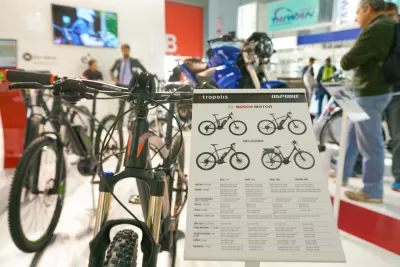
Lloyd Alter shares news of a recent study published in the journal Transportation Research Interdisciplinary Perspectives that makes a substantial case for the potential of e-bikes as a substitute for driving.
A key finding of the study is that e-bike riders get as much exercise as many conventional bike riders, because e-bike riders take longer trips.
"But perhaps even more significant is the dramatic increase in exercise among people who switch from cars to e-bikes," according to Alter, because the transition is much easier than switching from a car to a conventional bike.
One caveat offered by Alter informs the finding about physical activity: The study examines the use of European pedelec e-bikes, which require riders to pedal before the motor kicks in. "Results probably don't apply to overpowered throttle-controlled American e-bikes or scooters."
FULL STORY: Study finds that e-bike riders get as much exercise as riders of regular bikes

Small Modes Are Beautiful!
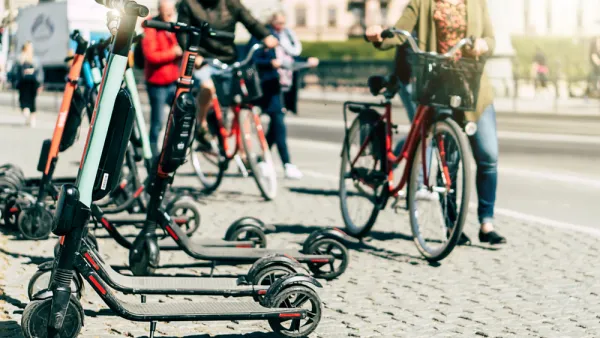
Active modes (walking, bicycling and their variants) and micromodes (e-bikes and e-scooters) can provide large climate emission reductions and other important benefits, if we let them. Small modes are important but often undercounted and undervalued.

Making the Case for E-Bikes
A new white paper lays the groundwork for better e-bike incentive programs.
Opinion: California Clean Transportation Efforts Not Addressing Needs of Low-Income Residents
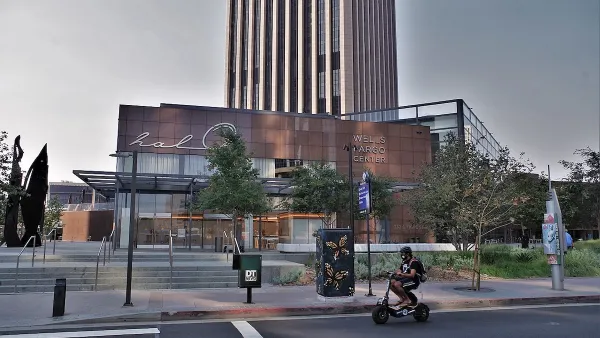
The state’s rebate programs for e-bikes and other light electric vehicles are too underfunded to reach many of the Californians who need them most.

Planetizen Federal Action Tracker
A weekly monitor of how Trump’s orders and actions are impacting planners and planning in America.

The state-sanctioned urbicide of Austin
People don’t kill cities. Freeways do.

US to reduce Colorado River water deliveries to Mexico
A new Colorado Treaty amendment reduces Mexico’s Colorado River water allocation by 250,000 acre feet.

Mamdani overhauls NYC's Vision Zero plan with 100 new policy goals
The overhaul aims to reduce traffic deaths and make streets safer for pedestrians, cyclists and drivers through lower speed limits, new safety infrastructure and more.

Amtrak not solely to blame for New Jersey commuter rail's unreliability, report finds
A new study from the Garden State Initiative found that NJ Transit’s budget grew 20% across a 4 year period, but reliability declined significantly over the same period.

EPA erases limits on planet-warming pollution from power plants
Under Monday’s plan, power plants would still have some limits on how much mercury, arsenic and other contaminants they can emit.

FREE Course: Walkable City 1: Why Walkability?
After describing his path towards focusing on walkability as the essence of good planning, Jeff Speck marches through his five principal reasons for making more walkable places.
Reinventing Malls: Planning Alchemy—Turning Gray Fields Into Gold
The course focuses on the opportunities and imperatives that shape reinvention of mall sites.

Eagle County Government
Harvard University Graduate School of Design
Nashville Planning Department
The Architects Foundation
University of Cincinnati Online
The Pocatello Development Authority
The Urban Renewal Agency of the City of Pocatello
Journal of the American Planning Association