Homeless people who had previously been moved from an I-65 overpass were forced to move again with one-day notice.


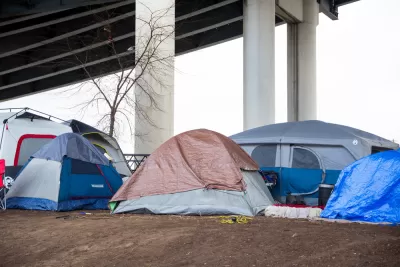
When Louisville police cleared a homeless encampment on Interstate 65, the people who lived there had to find somewhere else to sleep and keep their things. The group of homeless were again forced to move from the alley where they had set up their new camp, when a property that borders the alley got a new owner. "Usually, the city has to follow a 21-day advance notice rule, but Gill said the sudden notice Saturday happened because the camp sits in a space off the alley that is part of a private property," Billy Kobin writes for the Courier-Journal.
Some local organizations sent volunteers to help with the unexpected move, but the unexpected clearing of the camp means people living there had to find new places to stay without the benefit of time to plan. "Regardless of the circumstances leading up to each clearing, Gill said every forced relocation is tough on the individuals, several of whom are struggling with serious, chronic illnesses,” Korbin reports. The removal of this camp is the eighth the city has undertaken since March.
FULL STORY: Homeless forced to leave downtown Louisville alley in latest camp clearing

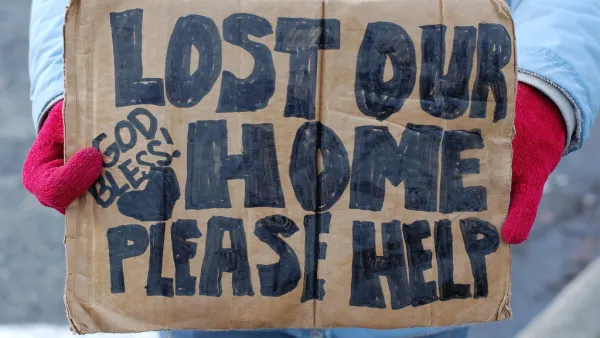
Cities Still Sweeping Away Homeless Camps, Despite Legal Challenges
Denver and Los Angeles kicked the new year off by committing to the enforcement of a sleeping ban and sweeping away a large homeless encampment, respectively.

Amid Opposition, S.F. Homeless Navigation Center Completed
A new facility providing shelter and services to San Francisco’s homeless will open this month, even after a year of community pushback.
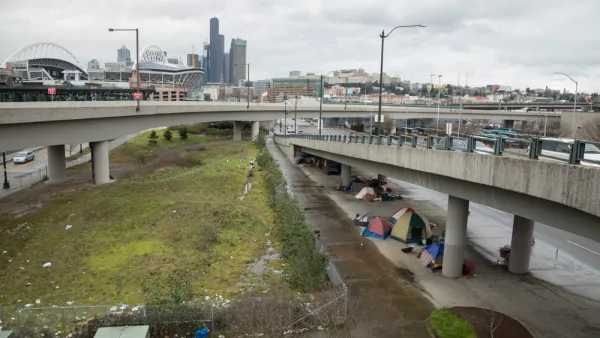
Seattle Regional Homelessness Authority Plan Moves Forward, but Faces Controversy
A proposal for a regional entity to oversee homeless services in King County is running into jurisdictional conflicts.

Planetizen Federal Action Tracker
A weekly monitor of how Trump’s orders and actions are impacting planners and planning in America.

The state-sanctioned urbicide of Austin
People don’t kill cities. Freeways do.

US to reduce Colorado River water deliveries to Mexico
A new Colorado Treaty amendment reduces Mexico’s Colorado River water allocation by 250,000 acre feet.

5 New England states march closer to 800 megawatt wind energy project
Securing federal approval for the project may be complicated under the Trump administration, which has historically been hostile towards domestic wind power.

Baltimore to break ground on $50 million Transit Priority Project
The project will bring faster bus trips, safer streets and better bike connections to Baltimore.

Airbnb launches $250 million 'last-dollar financing' housing accelerator, makes first investment in Austin
The company will put $6.4 million towards affordable housing development in Texas’ capital.

FREE Course: Walkable City 1: Why Walkability?
After describing his path towards focusing on walkability as the essence of good planning, Jeff Speck marches through his five principal reasons for making more walkable places.
Reinventing Malls: Planning Alchemy—Turning Gray Fields Into Gold
The course focuses on the opportunities and imperatives that shape reinvention of mall sites.

Eagle County Government
Harvard University Graduate School of Design
Nashville Planning Department
The Architects Foundation
University of Cincinnati Online
The Pocatello Development Authority
The Urban Renewal Agency of the City of Pocatello
Journal of the American Planning Association