The Reno City Council this week approved a new, 165-page "Sustainability and Climate Action Plan."



"On Wednesday, the Reno City Council unanimously signed off on a comprehensive 165-page plan outlining steps toward making the city more resistant to climate change," reports Daniel Rothberg.
"The report sets concrete goals in areas from food security to emissions," reports Rothberg, with steps for both mitigation and adaptation.
The report sets emissions reductions goals in three increments: 28 percent by 2025, 40 percent by 2030 and 80 percent by 2050. A lot of the hard work of those emissions reductions will be achieved in the city's energy portfolio, but transportation will also have to do its fair share, as the second leading source of emissions in the city. The reports calls for "reducing city fleet emissions, encouraging electric vehicles, and placing an emphasis more walkable neighborhoods," according to Rothberg.
Read the full story: Indy Environment: Reno approves climate action plan with focus on sustainability, lowering emissions
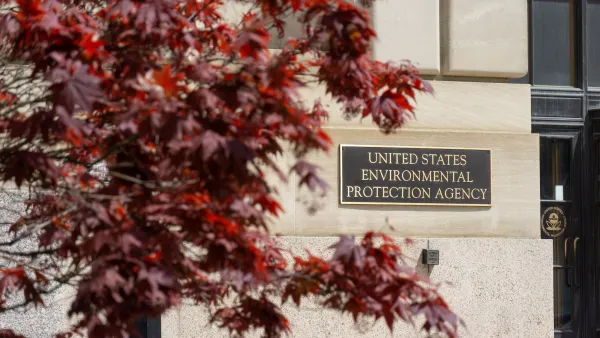
Trump's proposed budget slashes EPA funding by 52%
The budget also reduces funding for FEMA, climate resilience projects, and water infrastructure programs.
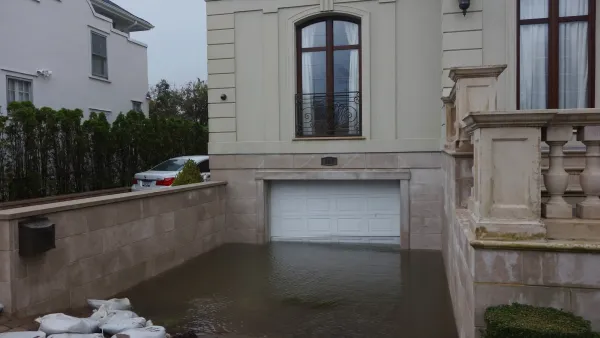
Over 500 NYC ‘Blue Zones’ at Risk of More Destructive Floods
High-risk flood zones cover roughly 20% of the city’s land.
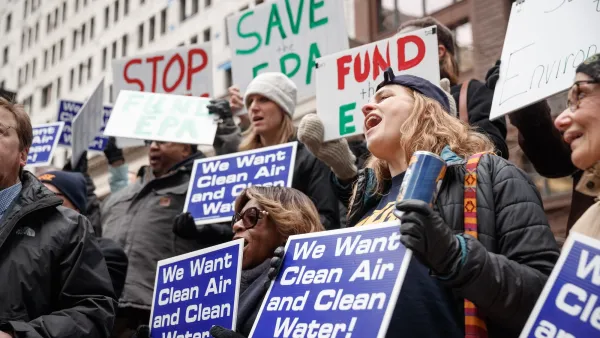
EPA Guts Emissions Regulations
The agency is eliminating the endangerment finding that underpins the agency’s authority to regulate greenhouse gas emissions.

Desperate measures: Advocates weigh draining Lake Powell to fill Colorado River
Draining the reservoir could reduce evaporation losses by a couple hundred thousand acre-feet.

Eastern Nebraska is running out of electricity
Data centers and electrification are straining eastern Nebraska’s grid, throttling economic development.

Malls are becoming the midtowns of the future
Mall and office park redevelopments are a generational opportunity to create new nodes of urbanity.

NYC breaks ground on anti-flooding infrastructure project
New York City's new system will reduce stormwater flows to local sewers by 90%.

One Kentucky town’s secret to affordable housing
The Smoketown Community Land Trust has already built seven affordable homes for community members.

Houston gains petal-shaped cooling infrastructure to make streets more ‘delightful’
The city has installed the pavilions along 15 blocks in Houston.

FREE Course: Walkable City 1: Why Walkability?
After describing his path towards focusing on walkability as the essence of good planning, Jeff Speck marches through his five principal reasons for making more walkable places.
Reinventing Malls: Planning Alchemy—Turning Gray Fields Into Gold
The course focuses on the opportunities and imperatives that shape reinvention of mall sites.

City of Rosemead
Rutgers University, Edward J. Bloustein School of Planning and Public Policy
One Hundred Miles
University of Michigan School for Environment and Sustainability (SEAS)
Hunter College, City University of New York (CUNY)
The Architects Foundation
City of Cambridge
Montrose County
The Pocatello Development Authority