It’s been a tough slog for a bill designed to force landlords to remove lead from all buildings before they can charge tenants for rent.


"A law designed to strengthen the city’s safeguards against lead poisoning should soon finally get the vote backers have waited for after almost two years," reports Catalina Jaramillo.
Jaramillo details the surprisingly difficult path the law has taken to get to the finish line, encountering stiff opposition from landlords in the city. "The bill, which would require all rental units built before 1978 to be free of lead hazards, was set for a vote in June before council let out for the summer. Advocates expected a win. The bill had been in discussion for 18 months."
Landlords oppose the bill because they believe the city's efforts are already working, and the additional regulation is unnecessary. "According to city data [pdf], the number of children with blood lead levels above the city’s threshold for danger fell from 1,413 in 2006 to 369 in 2015," reports Jaramillo.
Now the vote is expected to face a vote in fall of this year, after final details on enforcement are hammered out. "The new lead bill requires landlords to certify all housing built before 1978 is free of lead hazards before obtaining or renewing the rental license required to collect rent," according to the article.
FULL STORY: City Hall is uniting around a lead poisoning law hated by landlords


Philadelphia 'Diversion Program' Prevents Evictions Through Mediation
A program that provides mediation between landlords and tenants has helped a majority of applicants avoid eviction, signaling a promising avenue for renter assistance as landlords seek to recoup COVID-era losses.

Houston Council Will Consider Stricter Apartment Inspection Process
The proposal would reform the inspection process to improve coordination between departments and institute a fine for landlords who don't make requested repairs.
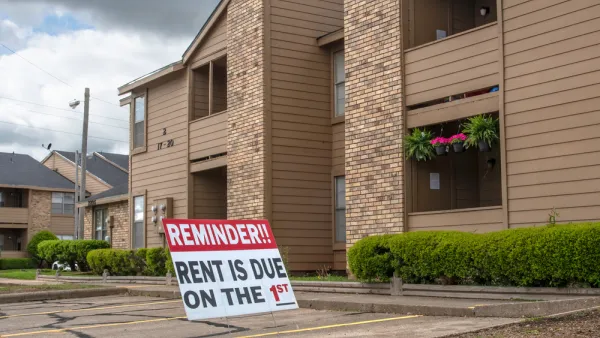
More Insight Into the Effects of the Pandemic for Rental Property Landlords
A pair of recent surveys attempt to shed light on the changing business and property management practices of landlords during the pandemic.

Planetizen Federal Action Tracker
A weekly monitor of how Trump’s orders and actions are impacting planners and planning in America.

The state-sanctioned urbicide of Austin
People don’t kill cities. Freeways do.

US to reduce Colorado River water deliveries to Mexico
A new Colorado Treaty amendment reduces Mexico’s Colorado River water allocation by 250,000 acre feet.

5 New England states march closer to 800 megawatt wind energy project
Securing federal approval for the project may be complicated under the Trump administration, which has historically been hostile towards domestic wind power.

Baltimore to break ground on $50 million Transit Priority Project
The project will bring faster bus trips, safer streets and better bike connections to Baltimore.

Airbnb launches $250 million 'last-dollar financing' housing accelerator, makes first investment in Austin
The company will put $6.4 million towards affordable housing development in Texas’ capital.

FREE Course: Walkable City 1: Why Walkability?
After describing his path towards focusing on walkability as the essence of good planning, Jeff Speck marches through his five principal reasons for making more walkable places.
Reinventing Malls: Planning Alchemy—Turning Gray Fields Into Gold
The course focuses on the opportunities and imperatives that shape reinvention of mall sites.

Eagle County Government
Harvard University Graduate School of Design
Nashville Planning Department
The Architects Foundation
University of Cincinnati Online
The Pocatello Development Authority
The Urban Renewal Agency of the City of Pocatello
Journal of the American Planning Association