The Los Angeles Times published a massively ambitious account of the sea-level threat facing California.


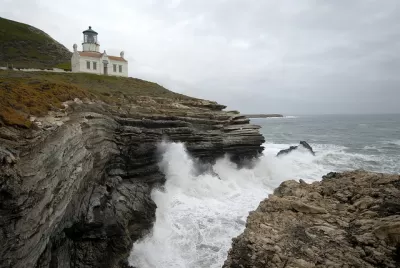
California's golden era of growth and prosperity, which started in the 19th century by lasted throughout much of the 20th century, occurred during a "rare confluence of favorable winds and cooler water," according to the context for a massive new feature on sea-level rise in California, penned by Rosanna Xia.
Now California has to come to terms with reality. "In the last 100 years, the sea rose less than 9 inches in California. By the end of this century, the surge could be greater than 9 feet."
The massive feature includes deep dives on specific case studies along the cost, like in Pacifica, which has already been forced to undertake a controversial strategy of managed retreat. Xia also details the environmental impacts seawalls. While some argue that seawalls can save coastal cities, environmentalists call them a coastal crisis. States like Oregon, North Carolina, and Maine have imposed serious restrictions on them. In San Francisco, the placement and replenishment of seawalls will reflect hard choices about which parts of the city can survive a large storm event, and the ensuing floods. There are more sections on beach replenishment, managed retreat, and a town that has already begun to slip into the ocean.
There's also an interactive game included in this sea-level and climate change extravaganza, which allows users to play at planner and make choices that can either save or doom a town from sea-level rise.
FULL STORY: The California coast is disappearing under the rising sea. Our choices are grim

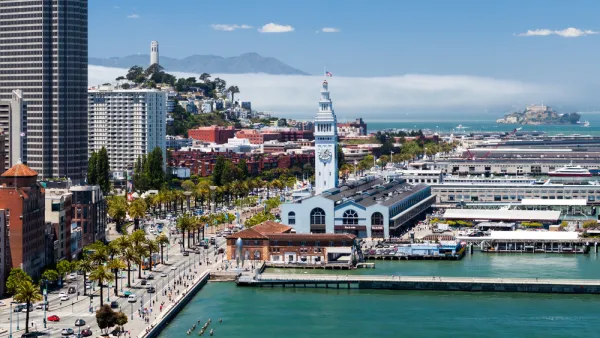
Port of San Francisco, Army Corps of Engineers Planning for Rising Bay Waters
A massive climate adaptation planning effort is underway for the docks (and seawalls and landfill) of the San Francisco Bay.
Report: Embarcadero Needs to Rise 7 Feet to Resist Sea-Level Rise
A bombshell report details the adaptation measures that will be necessary to keep San Francisco's Embarcadero high and dry as the climate changes and sea levels rise.
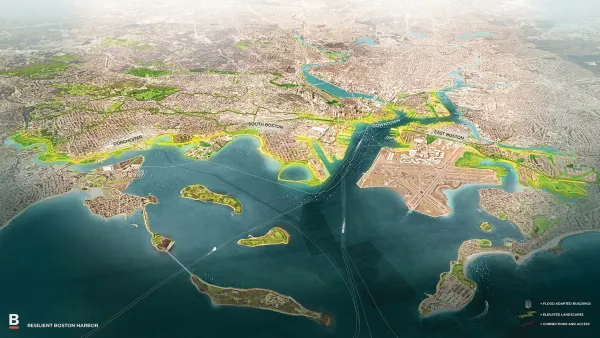
Boston to Leverage Private Developers for a New Climate Resiliency Fund
It's going to take a lot of funding to build the infrastructure to protect coastal cities from rising seas as climate change takes hold. The city of Boston is starting to experiment with revenue sources that can fund the necessary improvements.

Planetizen Federal Action Tracker
A weekly monitor of how Trump’s orders and actions are impacting planners and planning in America.

The state-sanctioned urbicide of Austin
People don’t kill cities. Freeways do.

US to reduce Colorado River water deliveries to Mexico
A new Colorado Treaty amendment reduces Mexico’s Colorado River water allocation by 250,000 acre feet.

5 New England states march closer to 800 megawatt wind energy project
Securing federal approval for the project may be complicated under the Trump administration, which has historically been hostile towards domestic wind power.

Baltimore to break ground on $50 million Transit Priority Project
The project will bring faster bus trips, safer streets and better bike connections to Baltimore.

Airbnb launches $250 million 'last-dollar financing' housing accelerator, makes first investment in Austin
The company will put $6.4 million towards affordable housing development in Texas’ capital.

FREE Course: Walkable City 1: Why Walkability?
After describing his path towards focusing on walkability as the essence of good planning, Jeff Speck marches through his five principal reasons for making more walkable places.
Reinventing Malls: Planning Alchemy—Turning Gray Fields Into Gold
The course focuses on the opportunities and imperatives that shape reinvention of mall sites.

Eagle County Government
Harvard University Graduate School of Design
Nashville Planning Department
The Architects Foundation
University of Cincinnati Online
The Pocatello Development Authority
The Urban Renewal Agency of the City of Pocatello
Journal of the American Planning Association