With so many new mobility options available in cities, mobility as a service (MaaS) platforms have a lot of work to do for a lot of people. Development is still catching up to the scope of the endeavor.


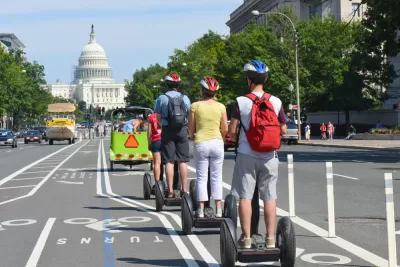
Katie Pyzyk reports on the state of technology devoted to gathering and presenting information on multiple modes of transportation—public transit, bike-share, e-scooters, ride-hailing, taxis—for online platforms.
"Despite interest in single MaaS platforms, only a handful of true MaaS applications are available," according to Pyzyk. After surveying the existing platforms, some privately owned and operated in partnership with public agencies, and others entirely operated by public agencies.
The article digs into the remaining obstacles and challenges for more widespread adoption of MaaS platforms.
Read the full story: There's an app for that: Transit agencies tackle MaaS platform development

A Better Way to Compare Cities
An online tool released three weeks ago by the Chicago Federal Reserve allows a more nuanced comparison between peer cities.
An Online Portal for Making Sense of Toronto Traffic Data
With so many potential sources of data with which to analyze traffic behaviors and real-time conditions, University of Toronto engineers have created an online portal that could one day help drive a system populated with autonomous cars.
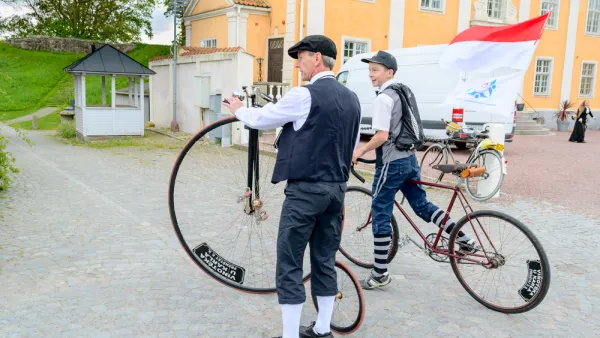
Comparing How People in 12 Global Cities Ride Their Bikes
The workout-tracking app Strava provided generous access to its data to allow a compare and contrast exercise in how people ride bikes in 12 of the most famous cities in the world.

Desperate measures: Advocates weigh draining Lake Powell to fill Colorado River
Draining the reservoir could reduce evaporation losses by a couple hundred thousand acre-feet.

Eastern Nebraska is running out of electricity
Data centers and electrification are straining eastern Nebraska’s grid, throttling economic development.

Malls are becoming the midtowns of the future
Mall and office park redevelopments are a generational opportunity to create new nodes of urbanity.

NYC breaks ground on anti-flooding infrastructure project
New York City's new system will reduce stormwater flows to local sewers by 90%.

One Kentucky town’s secret to affordable housing
The Smoketown Community Land Trust has already built seven affordable homes for community members.

Houston gains petal-shaped cooling infrastructure to make streets more ‘delightful’
The city has installed the pavilions along 15 blocks in Houston.

FREE Course: Walkable City 1: Why Walkability?
After describing his path towards focusing on walkability as the essence of good planning, Jeff Speck marches through his five principal reasons for making more walkable places.
Reinventing Malls: Planning Alchemy—Turning Gray Fields Into Gold
The course focuses on the opportunities and imperatives that shape reinvention of mall sites.

City of Rosemead
Rutgers University, Edward J. Bloustein School of Planning and Public Policy
One Hundred Miles
University of Michigan School for Environment and Sustainability (SEAS)
Hunter College, City University of New York (CUNY)
The Architects Foundation
City of Cambridge
Montrose County
The Pocatello Development Authority