The pilot program seeks to make bike share more inclusive by providing bikes designed to make biking easy and accessible for disabled riders.


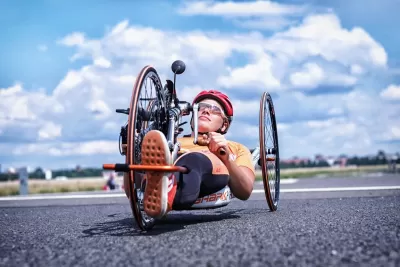
Erin Baldassari reports on a new bike share program in Oakland, California, that will offer adaptive bikes for riders with disabilities. The Ford GoBike pilot program will provide short-term rentals of bikes including handcycles, tricycles, and tandem tricycles.
The program is a partnership between the city, private companies, public agencies, and community organizations. The Bay Area has long focused on making bike share accessible to low-income people, but advocates realized more recently that a need existed for riders with mobility issues.
A working group looked to a similar program in Portland to guide the development of the Oakland program. "Unlike the traditional model, which focuses on commuters with a point-to-point system, where users check out a bike in one location and drop it off in another, [Ginger] Jui said the accessibility program is focused on recreation. That’s because people who use wheelchairs, walkers or other supports may not able to take the devices with them on the trip," writes Baldassari.

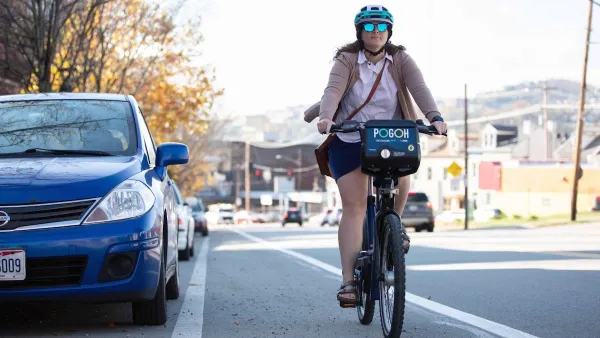
Pittsburgh Launches Adaptive Bike Share Fleet
The new bikes include a recumbent bicycle and a front-loading cargo bike.
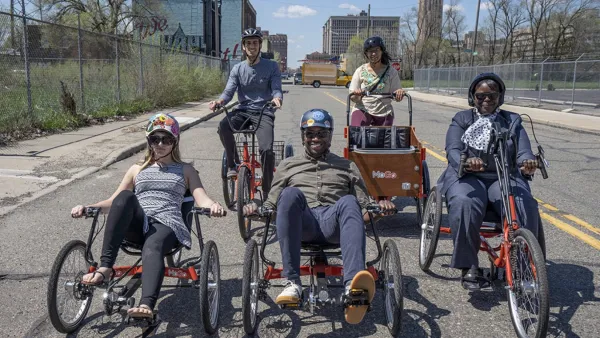
Next Steps After S.F. Bay Area Adaptive Bikeshare Pilot Program
A summer program incorporated adaptive bikes into the region’s bikeshare network as a first step in making the system accessible to more riders.
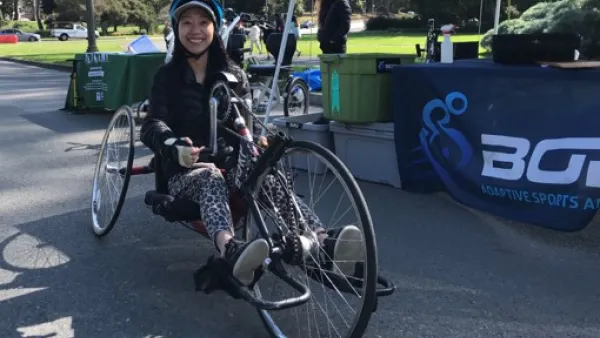
San Francisco Launches Adaptive Cycling Program
The program offers a variety of adaptive bikes at no charge to people with disabilities.

Planetizen Federal Action Tracker
A weekly monitor of how Trump’s orders and actions are impacting planners and planning in America.

The state-sanctioned urbicide of Austin
People don’t kill cities. Freeways do.

US to reduce Colorado River water deliveries to Mexico
A new Colorado Treaty amendment reduces Mexico’s Colorado River water allocation by 250,000 acre feet.

5 New England states march closer to 800 megawatt wind energy project
Securing federal approval for the project may be complicated under the Trump administration, which has historically been hostile towards domestic wind power.

Baltimore to break ground on $50 million Transit Priority Project
The project will bring faster bus trips, safer streets and better bike connections to Baltimore.

Airbnb launches $250 million 'last-dollar financing' housing accelerator, makes first investment in Austin
The company will put $6.4 million towards affordable housing development in Texas’ capital.

FREE Course: Walkable City 1: Why Walkability?
After describing his path towards focusing on walkability as the essence of good planning, Jeff Speck marches through his five principal reasons for making more walkable places.
Reinventing Malls: Planning Alchemy—Turning Gray Fields Into Gold
The course focuses on the opportunities and imperatives that shape reinvention of mall sites.

Eagle County Government
Harvard University Graduate School of Design
Nashville Planning Department
The Architects Foundation
University of Cincinnati Online
The Pocatello Development Authority
The Urban Renewal Agency of the City of Pocatello
Journal of the American Planning Association