Efforts by the U.S. Department of Housing and Urban Development to "purge" undocumented immigrants from public housing would hurt a lot of legal residents and citizens.


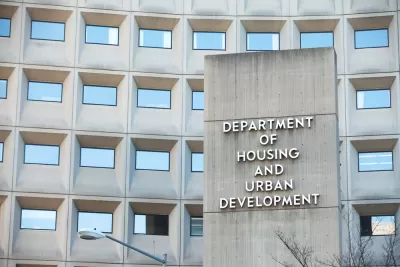
The U.S. Department of Housing and Urban Development (HUD) published a proposed rule on the Federal Register this week that attempts to verify the eligibility status of people receiving housing assistance from the federal government—i.e., tightening regulations against undocumented immigrants.
HUD Secretary has said the rule is necessary to "make certain our scarce public resources help those who are legally entitled to it."
According to analysis of the proposed rule by Tracy Jan for The Washington Post, a lot of people who are legally entitled to public resources will lose assistance as a result of the rule change. In fact, the agency's own analysis, as printed in the proposed rule, admits that "half of current residents living in households potentially facing eviction and homelessness are children who are legally qualified for aid."
"Current rules bar undocumented immigrants from receiving federal housing subsidies but allow families of mixed-immigration status as long as one person — a child born in the United States or a citizen spouse — is eligible. The subsidies are prorated to cover only eligible residents."
The new rule would require every member of the household to be "of eligible immigration status."
"Approximately 25,000 households, representing about 108,000 people, now living in subsidized housing have at least one ineligible member, according to the HUD analysis," according to Yan. 55,000 of that total are children.
Yan points out that the effect of the proposed rule would be contrary to the Trump administration's goals for shortening the waiting lists for housing assistance. A Twitter thread by Diane Yentel, CEO of the National Low Income Housing Coalition, also digs into the effects of the proposed rule, as described HUD's own documentation of the proposed rule.
FULL STORY: HUD says 55,000 children could be displaced under Trump plan to evict undocumented immigrants

Local Public Housing Agencies Resist HUD's Proposed Section 8 Rule
A proposed rule to disqualify all families living with an undocumented person from receiving federal housing aid is available for comment. We know a few people who oppose the rule.

Study Reveals Ineffectiveness of Work Requirements for Housing Assistance
Work requirement programs achieve very little in helping housing assistance recipients find work, according to a recent study.
Secretary Carson Makes the Case for Public Housing Rent Increases
Secretary Ben Carson in his own words, discussing the Department of Housing and Urban Development's recently proposed set of reforms to federal housing assistance policies.

Planetizen Federal Action Tracker
A weekly monitor of how Trump’s orders and actions are impacting planners and planning in America.

The state-sanctioned urbicide of Austin
People don’t kill cities. Freeways do.

US to reduce Colorado River water deliveries to Mexico
A new Colorado Treaty amendment reduces Mexico’s Colorado River water allocation by 250,000 acre feet.

5 New England states march closer to 800 megawatt wind energy project
Securing federal approval for the project may be complicated under the Trump administration, which has historically been hostile towards domestic wind power.

Baltimore to break ground on $50 million Transit Priority Project
The project will bring faster bus trips, safer streets and better bike connections to Baltimore.

Airbnb launches $250 million 'last-dollar financing' housing accelerator, makes first investment in Austin
The company will put $6.4 million towards affordable housing development in Texas’ capital.

FREE Course: Walkable City 1: Why Walkability?
After describing his path towards focusing on walkability as the essence of good planning, Jeff Speck marches through his five principal reasons for making more walkable places.
Reinventing Malls: Planning Alchemy—Turning Gray Fields Into Gold
The course focuses on the opportunities and imperatives that shape reinvention of mall sites.

Eagle County Government
Harvard University Graduate School of Design
Nashville Planning Department
The Architects Foundation
University of Cincinnati Online
The Pocatello Development Authority
The Urban Renewal Agency of the City of Pocatello
Journal of the American Planning Association