The White House is planning to establish a new climate panel, headed by a well-known climate denier, to question the findings of the president's own intelligence agencies that climate change does indeed pose a national security risk.


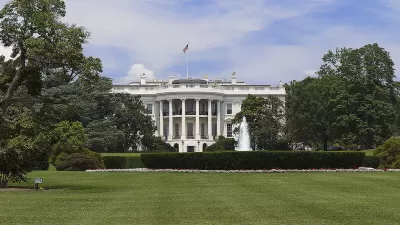
"The White House is working to assemble a panel to assess whether climate change poses a national security threat, according to documents obtained by The Washington Post, a conclusion that federal intelligence agencies have affirmed several times since President Trump took office," report Juliet Eilperin Missy Ryan.
- The Defense Department issued a report last month "detailing how a changing climate is a national security threat and makes the military’s job around the world harder," reported Alex Ward for Vox (via Planetizen).
- "For the third time during the current U.S. Administration, climate change was included in the annual 2019 Worldwide Threat Assessment of the US Intelligence Community [pdf] released by the Director of National Intelligence, Dan Coats," according to the nonpartisan Center for Climate and Security
"The proposed Presidential Committee on Climate Security, which would be established by executive order, is being spearheaded by William Happer," an emeritus professor of physics at Princeton University who currently serves as a National Security Council senior director, add Eilperin and Ryan.
Happer's form of climate denial is different than, say, President Trump's, who famously called it a Chinese hoax and dismissed the findings last November of 13 federal agencies in the Fourth National Climate Assessment. Rather, Happer denies that carbon dioxide is harmful, and likened it to being "maligned like 'Jews under Hitler,'” writes
One expert put it simply in an interview with the reporters, calling the proposed panel "an effort to undermine the consensus within the national intelligence community that climate change needs to be addressed to avert serious consequences."
-
Defense Department Calls Climate Change a National Security Threat, January 21, 2019
-
Climate Report Written by Federal Government Warns of Dire Impact on Economy, November 27, 2018

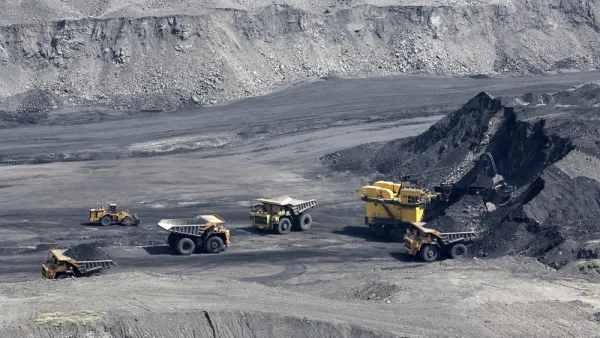
Coal Miners Are Going Back to Work, Proclaims Trump Upon Signing Executive Order
Flanked by coal miners, President Trump signed an executive order on Tuesday that begins the roll back of his predecessor's signature environmental rule, the Clean Power Plan, and other environmental regulations to facilitate energy production.
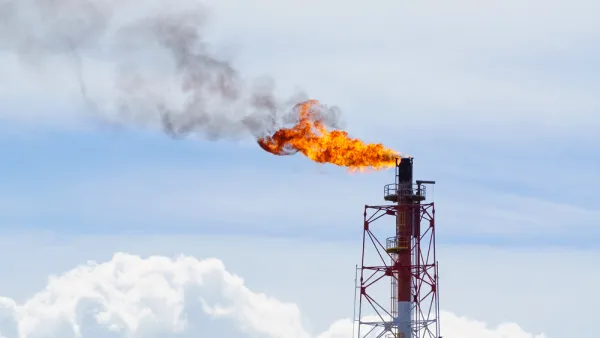
Big Oil Not Happy With Methane Regulation Rollback
The Trump administration's rollback on August 29 of an Obama-era regulation to reduce methane emissions in the production and distribution of oil and natural gas did not sit well with large oil and gas companies who see value in reducing emissions.
Defense Department Calls Climate Change a National Security Threat
The new “Report on Effects of a Changing Climate to the Department of Defense” isn't the environmental win that it could be.

The state-sanctioned urbicide of Austin
People don’t kill cities. Freeways do.

US to reduce Colorado River water deliveries to Mexico
A new Colorado Treaty amendment reduces Mexico’s Colorado River water allocation by 250,000 acre feet.

New Jersey’s second-largest city bans standalone data centers
Jersey City will continue to allow co-location facilities, such as those meant for research institutions that store their own data.

Amtrak not solely to blame for New Jersey commuter rail's unreliability, report finds
A new study from the Garden State Initiative found that NJ Transit’s budget grew 20% across a 4 year period, but reliability declined significantly over the same period.

EPA erases limits on planet-warming pollution from power plants
Under Monday’s plan, power plants would still have some limits on how much mercury, arsenic and other contaminants they can emit.

Phoenix announces new on-demand transit service, more frequent RAPID buses
Both new services will launch in October, and are part of Phoenix's Project Effective Access Solutions for Easing Congestion.

FREE Course: Walkable City 1: Why Walkability?
After describing his path towards focusing on walkability as the essence of good planning, Jeff Speck marches through his five principal reasons for making more walkable places.
Reinventing Malls: Planning Alchemy—Turning Gray Fields Into Gold
The course focuses on the opportunities and imperatives that shape reinvention of mall sites.

Eagle County Government
Harvard University Graduate School of Design
Nashville Planning Department
The Architects Foundation
University of Cincinnati Online
The Pocatello Development Authority
The Urban Renewal Agency of the City of Pocatello
Journal of the American Planning Association