In preparation for tonight's State of the Union address, consider the role of "transportation" and "infrastructure" in previous State of the Union addresses dating back to 1999.


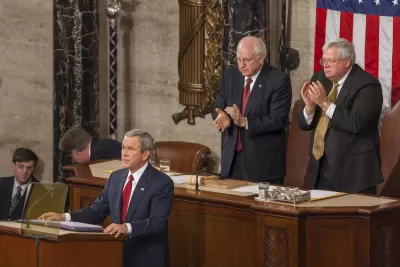
Jeff Davis dug through 20 years of State of the Union addresses, spanning four presidential tenures, for references to transportation and infrastructure.
The record for fewest mentions of either word goes to George W. Bush, who failed to use either word in addresses from 2001, 2003, 2004, 2005, or 2006. Bush used of the words in 2002 ion reference to the USA Freedom Corps, not in reference to any domestic policy. Border security was the context for Bush's mention of infrastructure in 2007, and Afghanistan was the location of new roads touted by Bush in 2008.
Davis also mentions an amusing anecdote from Bill Clinton's 2000 State of the Union that he describes as a Freudian slip: "he kept trying to promote plans to make communities more 'livable' but kept saying 'liberal' instead."
FULL STORY: Transportation and Infrastructure in the State of the Union Address, 1999-2018

U.S. EPA Rolling Back Science-Based Regulation Under Cover of COVID
Contentious policy revisions at the Environmental Protection Agency roll back data-guided policies under the Trump administration.
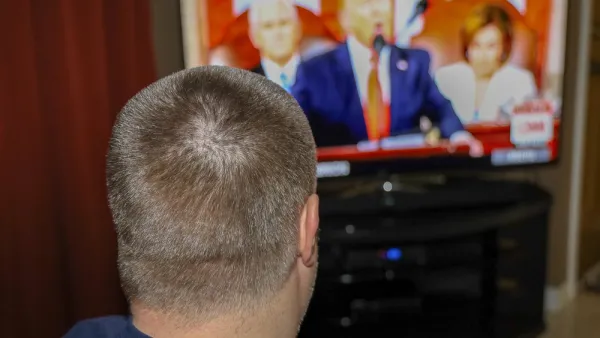
Trump's State of the Union: More on Infrastructure in Democrats' Response
The president spoke briefly about infrastructure in his third State of the Union address last Tuesday, urging Congress to pass the bipartisan America’s Transportation Infrastructure Act of 2019. Michigan Gov. Gretchen Whitmer had a lot more to say.
Trump Selects Elaine J. Chao, former Labor Secretary, as Transportation Secretary
Elaine Chao served all eight years as President George W. Bush's former Secretary of Labor and also under his father's administration as Deputy Secretary of Transportation. She is married to Senate majority leader Mitch McConnell (R-Ky.).

Planetizen Federal Action Tracker
A weekly monitor of how Trump’s orders and actions are impacting planners and planning in America.

The state-sanctioned urbicide of Austin
People don’t kill cities. Freeways do.

US to reduce Colorado River water deliveries to Mexico
A new Colorado Treaty amendment reduces Mexico’s Colorado River water allocation by 250,000 acre feet.

Mamdani overhauls NYC's Vision Zero plan with 100 new policy goals
The overhaul aims to reduce traffic deaths and make streets safer for pedestrians, cyclists and drivers through lower speed limits, new safety infrastructure and more.

Amtrak not solely to blame for New Jersey commuter rail's unreliability, report finds
A new study from the Garden State Initiative found that NJ Transit’s budget grew 20% across a 4 year period, but reliability declined significantly over the same period.

EPA erases limits on planet-warming pollution from power plants
Under Monday’s plan, power plants would still have some limits on how much mercury, arsenic and other contaminants they can emit.

FREE Course: Walkable City 1: Why Walkability?
After describing his path towards focusing on walkability as the essence of good planning, Jeff Speck marches through his five principal reasons for making more walkable places.
Reinventing Malls: Planning Alchemy—Turning Gray Fields Into Gold
The course focuses on the opportunities and imperatives that shape reinvention of mall sites.

Eagle County Government
Harvard University Graduate School of Design
Nashville Planning Department
The Architects Foundation
University of Cincinnati Online
The Pocatello Development Authority
The Urban Renewal Agency of the City of Pocatello
Journal of the American Planning Association