The sober view of self-driving cars doesn't allow much optimism.


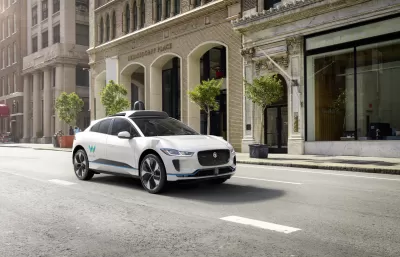
"[L]ooking back on 2018—which included lawsuits, wake-up calls about limitations and the first known pedestrian fatality from a self-driving car—does anything but sell the promise of having feasible self-driving cars on the road anytime soon," according to an article by Justin T. Westbrook.
"Contrary to what our tech overlords in Silicon Valley (and, to be fair, Detroit too) have been saying, we will not have fully driverless cars in a couple years. Or even several years," adds Westbrook. "If anything, this last year has only proven that self-driving cars won’t be viable on a massive scale for decades."
The survey of the year's news in autonomous vehicles that follows includes the first pedestrian struck and killed by a self-driving car in autonomous mode, which led to a cascading series of developments in the industry. Pretty much all the major players in the industry had their bad news cycles this year, but the result of all these rough patches reveals a pretty big mess.
Read the full story: 2018 Was a Hard Reality Check For Autonomous Cars

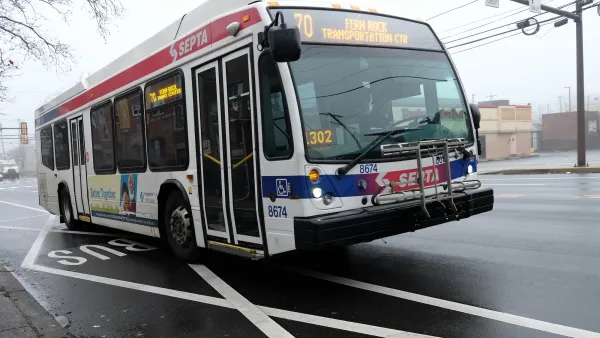
Pennsylvania lawmaker wants to ban fully self-driving buses
State Rep. Ben Waxman's proposed bill would require autonomous buses to have a licensed driver on board.
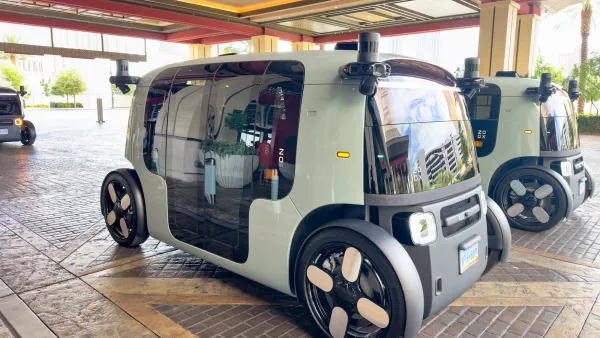
Amazon's steering wheel- and brake pedal-less Zoox robotaxis receive nation's first go-ahead for paid public rides
The NHTSA is giving a temporary permit to some autonomous cars that don't meet current safety standards as it develops a new framework for self-driving vehicles.
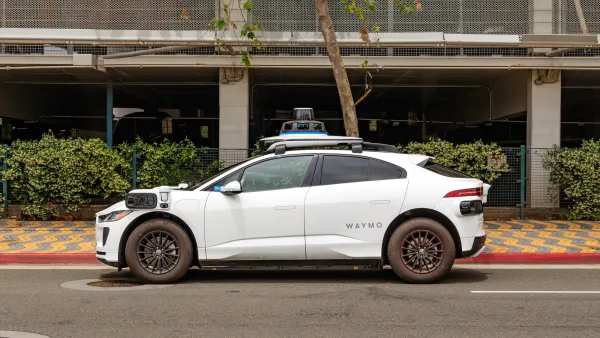
Austin Waymos rack up nearly $10k in parking tickets
The robotaxis have been cited for parking in tow zones and double parking, among other violations.

Planetizen Federal Action Tracker
A weekly monitor of how Trump’s orders and actions are impacting planners and planning in America.

California plans to bury El Niño’s downpour
If the state plays its cards right, it may be able to store a billion acre-feet of El Niño’s water in aquifers.

Chicago breaks ground on $3 billion megadevelopment
The new neighborhood, titled Foundry Park, will one day host 3,700 residences.

California High-Speed Rail Authority CEO resigns after $600,000 scandal
Under Ian Choudri, the authority used taxpayer dollars to fund first class flights and trips to nightclubs.

Want to study the Missouri River? Soon, you may need unanimous approval from 10 states
Legislation would require 10 governors’ permission to study or build projects moving water outside the basin.

Desperate measures: Advocates weigh draining Lake Powell to fill Colorado River
Draining the reservoir could reduce evaporation losses by a couple hundred thousand acre-feet.

FREE Course: Walkable City 1: Why Walkability?
After describing his path towards focusing on walkability as the essence of good planning, Jeff Speck marches through his five principal reasons for making more walkable places.
Reinventing Malls: Planning Alchemy—Turning Gray Fields Into Gold
The course focuses on the opportunities and imperatives that shape reinvention of mall sites.

City of Rosemead
Rutgers University, Edward J. Bloustein School of Planning and Public Policy
One Hundred Miles
Hunter College, City University of New York (CUNY)
The Architects Foundation
University of Cincinnati Online
City of Cambridge
Montrose County
The Pocatello Development Authority