Once a darling of investors and urbanists alike, pedal-driven dockless bikeshare is getting eclipsed by e-scooters and e-bikes.


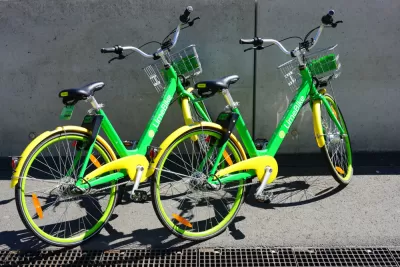
"It wasn't much more than a year ago," Angie Schmitt writes, "that dockless bikes — the kind you rent for a half-hour or so to pedal to your destination — were the new tech innovation that were going to transform urban mobility and make millions for their venture capital investors. But cities around the country have already started switching from the heavy bikes to the Next Big Thing: pedal-assist e-bikes and e-scooters."
Micro-mobility firms claim that scooters and their like are simply more popular than traditional bikes. Schmitt lists off a number of cities where dockless pedal bikeshare has all but disappeared lately, or is on the process of doing so.
Some companies cite regulatory pressures as their rationale behind favoring scooters and similar modes. "Many cities put caps on the number of total vehicles a company can provide. And companies are responding by shifting to the more-popular modes."
It should be noted that this apparent die-off only applies to dockless bike share. Its docked cousin is still showing strong annual growth.
FULL STORY: Is Pedal Dockless Bike Share Going Extinct?

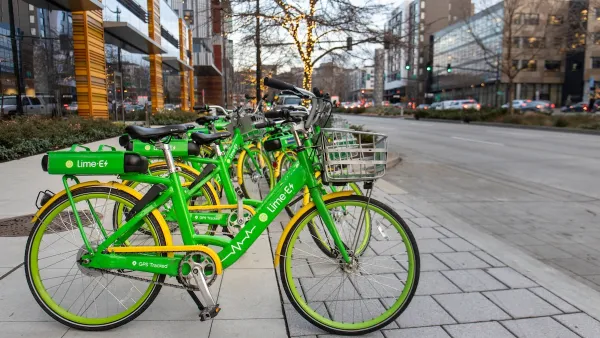
Seattle Sees Strong Bike Share, Scooter Ridership
The city’s shared bikes and e-scooters provided half as many trips as a $2 billion tunnel.
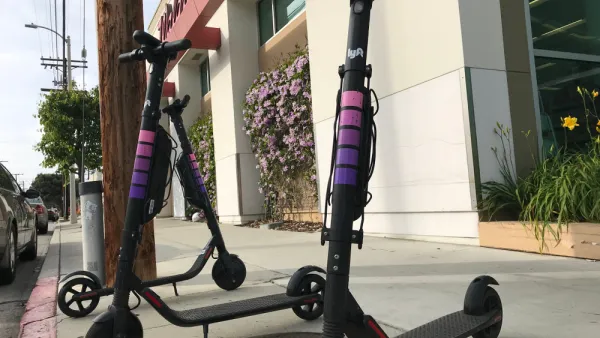
Lyft Pulls Micromobility From Los Angeles Area
The company will no longer provide shared bikes and scooters in the L.A. region, citing a ‘lack of longterm commitment’ from cities.
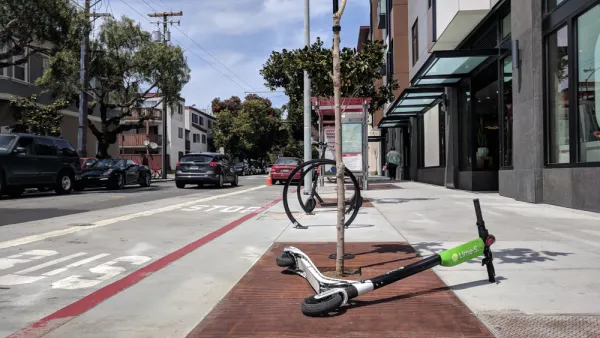
Scooter Companies Convene Advisory Groups to Promote Safety
Both Bird and Lime have organized boards of experts to conduct research and advise the companies as their micromobility ventures grow.

Planetizen Federal Action Tracker
A weekly monitor of how Trump’s orders and actions are impacting planners and planning in America.

The state-sanctioned urbicide of Austin
People don’t kill cities. Freeways do.

US to reduce Colorado River water deliveries to Mexico
A new Colorado Treaty amendment reduces Mexico’s Colorado River water allocation by 250,000 acre feet.

Baltimore to break ground on $50 million Transit Priority Project
The project will bring faster bus trips, safer streets and better bike connections to Baltimore.

Airbnb launches $250 million 'last-dollar financing' housing accelerator, makes first investment in Austin
The company will put $6.4 million towards affordable housing development in Texas’ capital.

Guerilla urbanists are building DIY bus stop benches in Chicago
A before-and-after of one of the bus stops with a new bench. The new benches are not officially sanctioned or permitted, but the residents who placed them hope they will be the start of a network of DIY benches across the city.

FREE Course: Walkable City 1: Why Walkability?
After describing his path towards focusing on walkability as the essence of good planning, Jeff Speck marches through his five principal reasons for making more walkable places.
Reinventing Malls: Planning Alchemy—Turning Gray Fields Into Gold
The course focuses on the opportunities and imperatives that shape reinvention of mall sites.

Eagle County Government
Harvard University Graduate School of Design
Nashville Planning Department
The Architects Foundation
University of Cincinnati Online
The Pocatello Development Authority
The Urban Renewal Agency of the City of Pocatello
Journal of the American Planning Association