A grant program under the direction of Georgia Tech, with support from Georgia Power and the Atlanta Regional Commission, among others, has awarded grants for the development of "smart community" technology.


"The next generation of transportation technology is to be developed in Chamblee and Gwinnett County, which on Tuesday were awarded cash grants and year-long technical support from a Georgia Tech research team," reports David Pendered. "They were among the four winners of the first Georgia Smart Communities Challenge."
"Chamblee intends to study the use of shared autonomous vehicles," according to Chamblee. Much of the potential benefit from autonomous vehicles is predicated on the idea of shared vehicles fleets.
Gwinnett County will take a different approach to transportation technology, studying and implementing technology "to improve safety and mobility along a 20-mile section of Peachtree Industrial Boulevard," according to Pendered.
Each grant is worth $50,000, along with $25,000 of researcher support. Chatham County and Albany won the other two awards, but their work will focus on sea level rise and housing, respectively.
Read the full story: Chamblee, Gwinnett County win grants to devise smart transportation technology

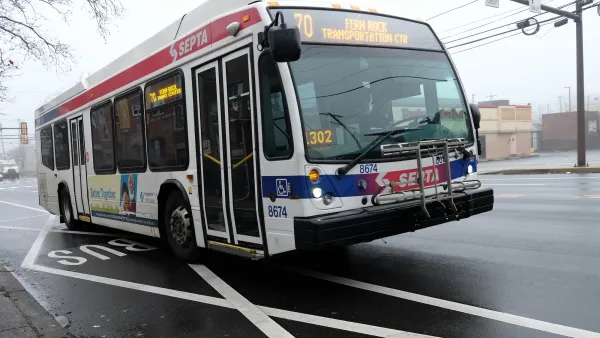
Pennsylvania lawmaker wants to ban fully self-driving buses
State Rep. Ben Waxman's proposed bill would require autonomous buses to have a licensed driver on board.

Amazon's steering wheel- and brake pedal-less Zoox robotaxis receive nation's first go-ahead for paid public rides
The NHTSA is giving a temporary permit to some autonomous cars that don't meet current safety standards as it develops a new framework for self-driving vehicles.
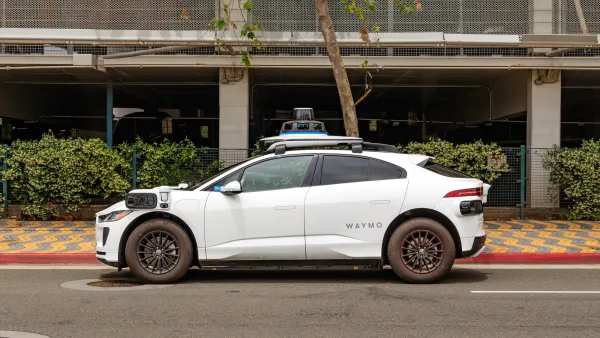
Austin Waymos rack up nearly $10k in parking tickets
The robotaxis have been cited for parking in tow zones and double parking, among other violations.

Planetizen Federal Action Tracker
A weekly monitor of how Trump’s orders and actions are impacting planners and planning in America.

California plans to bury El Niño’s downpour
If the state plays its cards right, it may be able to store a billion acre-feet of El Niño’s water in aquifers.

Chicago breaks ground on $3 billion megadevelopment
The new neighborhood, titled Foundry Park, will one day host 3,700 residences.

Satanic place names
From streams and lakes to valleys and canyons, I mapped more than 1,000 places named after the Devil.

California High-Speed Rail Authority CEO resigns after $600,000 scandal
Under Ian Choudri, the authority used taxpayer dollars to fund first class flights and trips to nightclubs.

Want to study the Missouri River? Soon, you may need unanimous approval from 10 states
Legislation would require 10 governors’ permission to study or build projects moving water outside the basin.

FREE Course: Walkable City 1: Why Walkability?
After describing his path towards focusing on walkability as the essence of good planning, Jeff Speck marches through his five principal reasons for making more walkable places.
Reinventing Malls: Planning Alchemy—Turning Gray Fields Into Gold
The course focuses on the opportunities and imperatives that shape reinvention of mall sites.

City of Rosemead
Rutgers University, Edward J. Bloustein School of Planning and Public Policy
One Hundred Miles
Hunter College, City University of New York (CUNY)
The Architects Foundation
University of Cincinnati Online
City of Cambridge
Montrose County
The Pocatello Development Authority