A suite of restrictions under consideration in Madrid would eliminate short-term rentals from 95 percent of the city.



Madrid, Spain is considering a series of regulations that would make 95 percent of the tourist rentals in the city illegal. The regulations are each tailored to different parts of the city. "Different restrictions will be applied to four different zones of the city, with the most restrictive places on the Centro district that includes the areas of Malasaña, Chueca, Sol, La Latina and Lavapiés," Fiona Govan writes for the Local ES.
"The new regulations will prohibit tourist flats from being rented out more than 90 days a year," adds Govan. Officials hope these regulations slow the upward pressure Airbnb is putting on rents. Among the regulations Madrid is considering is one to keep tourist separate from renters. "Tourist flats in the Central zone will require a separate entrance to the street from permanent residents in the block, effectively ruling out all but a few ground floor properties," Govan reports.
Madrid is the latest Spanish city to push back on tourist rentals. Valencia, Palma, and Barcelona have both put in place policies to limit apartment rentals to tourists.
FULL STORY: Madrid prepares to ban almost all Airbnb-style rentals


Barcelona to Phase out All Short-Term Rentals
The city plans to stop issuing new or renewal licenses by 2029.
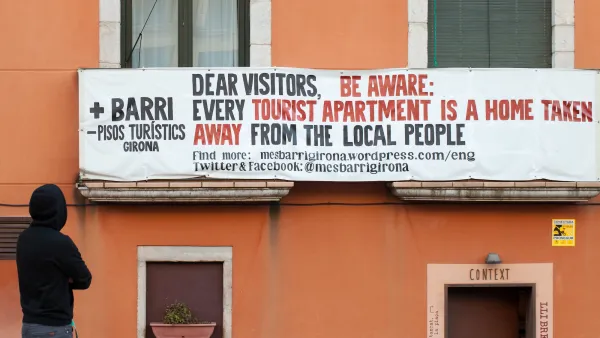
Spain Fines Airbnb $75 Million After Crackdown on Unlicensed Rentals
The government took action after residents in tourist centers protested, blaming tourist rentals for a growing housing crisis.

Spain Moves to Ban 66,000 Airbnbs
The national government is requiring the short-term rental operator to remove thousands of illegal listings from its site as part of an effort to stem a growing housing crisis.

The state-sanctioned urbicide of Austin
People don’t kill cities. Freeways do.

US to reduce Colorado River water deliveries to Mexico
A new Colorado Treaty amendment reduces Mexico’s Colorado River water allocation by 250,000 acre feet.

New Jersey’s second-largest city bans standalone data centers
Jersey City will continue to allow co-location facilities, such as those meant for research institutions that store their own data.

Amtrak not solely to blame for New Jersey commuter rail's unreliability, report finds
A new study from the Garden State Initiative found that NJ Transit’s budget grew 20% across a 4 year period, but reliability declined significantly over the same period.

EPA erases limits on planet-warming pollution from power plants
Under Monday’s plan, power plants would still have some limits on how much mercury, arsenic and other contaminants they can emit.

Phoenix announces new on-demand transit service, more frequent RAPID buses
Both new services will launch in October, and are part of Phoenix's Project Effective Access Solutions for Easing Congestion.

FREE Course: Walkable City 1: Why Walkability?
After describing his path towards focusing on walkability as the essence of good planning, Jeff Speck marches through his five principal reasons for making more walkable places.
Reinventing Malls: Planning Alchemy—Turning Gray Fields Into Gold
The course focuses on the opportunities and imperatives that shape reinvention of mall sites.

Eagle County Government
Harvard University Graduate School of Design
Nashville Planning Department
The Architects Foundation
University of Cincinnati Online
The Pocatello Development Authority
The Urban Renewal Agency of the City of Pocatello
Journal of the American Planning Association