Inclusive transit oriented development is a top priority with Sound Transit's new surplus land policy.


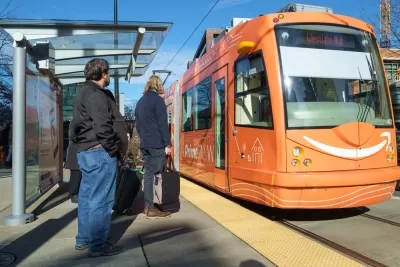
"As suburban poverty levels rise in most US metro areas, Seattle’s Sound Transit has adopted a policy that enable affordable housing to be developed on surplus properties near transit stations," reports Robert Steuteville.
In a press release announcing the newly adopted policy, Sound Transit CEO Peter Rogoff calls it, "one of the most forward-leaning TOD programs in the country."
"The policy will guide the use of property that remains as surplus after voter-approved transit investments are complete for projects that provide housing for families of various sizes and income levels and increase access to social and economic opportunities," according to the press release.
Much of the plan's ambition is tied to the scale of transit investment ongoing in the Seattle region. "Consistent with regional growth plans, the updated policy focuses urban growth at transit centers and commits Sound Transit to work with local communities and stakeholders to develop projects on surplus property, while also encouraging TOD in nearby areas," writes Steuteville.
Steuteville also lists three affordable development projects considered early opportunities for the new policy.
FULL STORY: Seattle transit policy targets affordable housing

King County, Sound Transit Announce $83 Million for Transit Oriented Development
A new regional transit oriented development initiative in Seattle will focus on affordable housing and walkable communities. The Executive's Transit Station Housing and Development Initiative will partner King County and Sound Transit.

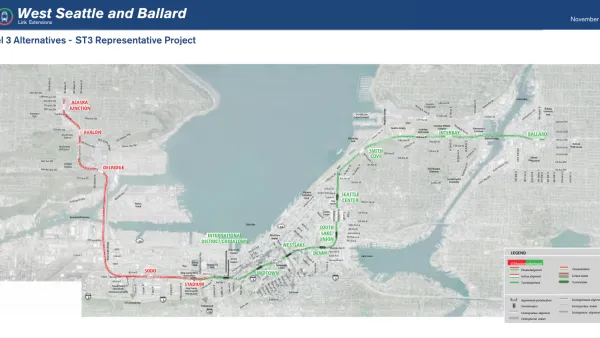
West Seattle Link Expansion Could Cost $7 Billion
Sound Transit is moving forward with a proposed route despite severe cost overruns, throwing other major rail projects into question.
Checking in on the Progress of the Sound Transit 3 Plan
The Seattle area's $53.8 billion transit expansion plan is moving along in fits and starts.

Planetizen Federal Action Tracker
A weekly monitor of how Trump’s orders and actions are impacting planners and planning in America.

The state-sanctioned urbicide of Austin
People don’t kill cities. Freeways do.

US to reduce Colorado River water deliveries to Mexico
A new Colorado Treaty amendment reduces Mexico’s Colorado River water allocation by 250,000 acre feet.

Baltimore to break ground on $50 million Transit Priority Project
The project will bring faster bus trips, safer streets and better bike connections to Baltimore.

Airbnb launches $250 million 'last-dollar financing' housing accelerator, makes first investment in Austin
The company will put $6.4 million towards affordable housing development in Texas’ capital.

Guerilla urbanists are building DIY bus stop benches in Chicago
A before-and-after of one of the bus stops with a new bench. The new benches are not officially sanctioned or permitted, but the residents who placed them hope they will be the start of a network of DIY benches across the city.

FREE Course: Walkable City 1: Why Walkability?
After describing his path towards focusing on walkability as the essence of good planning, Jeff Speck marches through his five principal reasons for making more walkable places.
Reinventing Malls: Planning Alchemy—Turning Gray Fields Into Gold
The course focuses on the opportunities and imperatives that shape reinvention of mall sites.

Eagle County Government
Harvard University Graduate School of Design
Nashville Planning Department
The Architects Foundation
University of Cincinnati Online
The Pocatello Development Authority
The Urban Renewal Agency of the City of Pocatello
Journal of the American Planning Association