In 1997, Milwaukee Road Depot in central Minneapolis was filled with parking lots and little else. Today, it's a mix of shops, housing, offices, and entertainment venues.


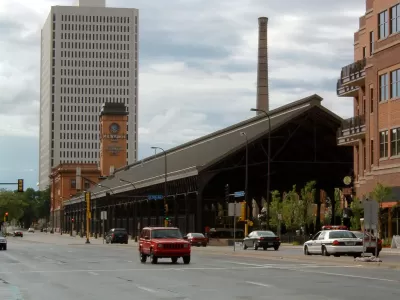
Peter Callaghan tells the story of how developer Gary Holmes spearheaded an effort to transform a disused rail terminal in downtown Minneapolis from a sea of parking to a thriving mixed-use district. A click-and-drag feature lets readers compare a 1997 photo of the parcel with one from March 2018.
"The first, taken 21 years ago, features an empty but historic rail terminal and a remnant of what had once been a row of freight houses — structures overwhelmed in the photo by acres and acres of parked cars, filling what had once been a busy rail yard."
"The second photo, taken in 2018, demonstrates what's happened in the two decades since. Of those 16-plus acres shown in the first picture, only one small parcel is not yet developed, though it will be soon."
Read the full story: How The Depot saved downtown Minneapolis

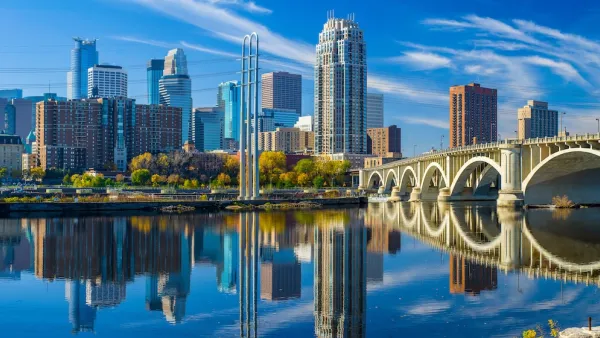
Looking Back on 60 Years of Land Development in the Twin Cities
In 1960, about 12 percent of the Twin Cities metro's land was already developed. By 2020, about 34 percent had been developed. Many factors influenced how the region has changed since 1960.
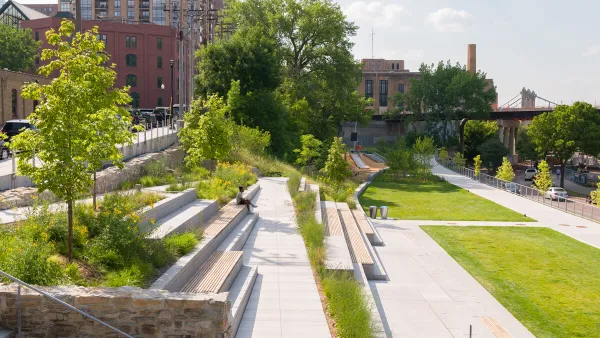
New Minneapolis Park Connects City to the Mississippi River
The newly built Water Works Park and Pavilion incorporates elements of historic mills and provides amenities long absent from the city's waterfront.

Why a 'Marginally Useful' Minneapolis Freeway Segment Should Be Removed
Two ramps that have minimal impact on traffic could make way for apartments, commercial spaces, or much-needed parks.

Planetizen Federal Action Tracker
A weekly monitor of how Trump’s orders and actions are impacting planners and planning in America.

Amtrak, CN end decades-long dispute with eight-year agreement
The new operating agreement establishes an updated framework for the companies to work together, including processes to resolve disputes.

Judges permit Denver to divert 77,000 acre feet from the Colorado River for reservoir expansion
Overuse and climate change have caused the Colorado River’s water levels to plummet.

NYC DOT wants faster, more permanent street upgrades
The city is examining ways to build more concrete infrastructure without getting entangled in 'decades-long' projects.

'Something we’ve never seen before:' rising utility rates could strain city finances nationwide
Data centers, climate change and other factors have caused utility rates in the United States to increase by 38% since 2020.

Trump to overrule local leaders, lease millions of acres of America’s Pacific Island territories’ seafloors to mining companies
International law says that the Indigenous people of America’s territories have a right to prior and informed consent regarding projects that impact their countries.

FREE Course: Walkable City 1: Why Walkability?
After describing his path towards focusing on walkability as the essence of good planning, Jeff Speck marches through his five principal reasons for making more walkable places.
Reinventing Malls: Planning Alchemy—Turning Gray Fields Into Gold
The course focuses on the opportunities and imperatives that shape reinvention of mall sites.

KFH Group Inc.
Greater Baltimore Committee
Eagle County Government
The Architects Foundation
University of Cincinnati Online
The Pocatello Development Authority
The Urban Renewal Agency of the City of Pocatello