A case study emerging from the Brookings Institution’s Community of Practice on Regional Housing Solutions.


Margaret Kaplan, community development director of the Minnesota Housing Finance Agency, writes the latest installment of a series of articles on the Brookings Institutions website that highlights innovative strategies and tools designed to help increase and diversify the supply of quality rental housing in opportunity and priority reinvestment areas.
Kaplan is sharing information about Minnesota’s Consolidated Request for Proposals—"an initiative that brings together multiple funding partners to advance state and regional housing priorities" and has funded $298.9 million in investment from Minnesota Housing and partners in the past years, "resulting in $883 million in housing development activity for the creation or preservation of 5,074 affordable housing opportunities."
Kaplan shares more of the history of the Consolidated Request for Proposals since its creation in 1994, it's key characteristics, and the changes implemented over the years.
FULL STORY: The state’s role in financing regional housing priorities: Minnesota’s Consolidated RFP

Minnesota Investing $346 Million in Affordable Housing
A $988 million bonding bill approved by Minnesota state legislators earlier this year is paying off in funding for affordable housing projects around the state.
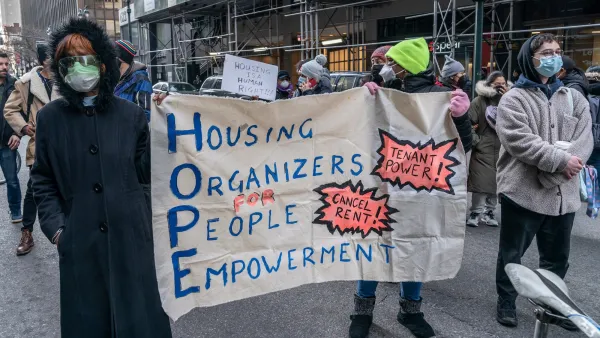
NYC 'Rental Ripoff' report calls for crackdown on negligent landlords
The report outlines strategies for empowering renters and transferring properties from 'low-road' landlords to those who focus on improved tenant outcomes.

Oakland Drafts First Revision of General Plan Since 1998
The public has until April 23 to comment on the sweeping plan that addresses land use, transportation, and infrastructure.

Planetizen Federal Action Tracker
A weekly monitor of how Trump’s orders and actions are impacting planners and planning in America.

The state-sanctioned urbicide of Austin
People don’t kill cities. Freeways do.

US to reduce Colorado River water deliveries to Mexico
A new Colorado Treaty amendment reduces Mexico’s Colorado River water allocation by 250,000 acre feet.

5 New England states march closer to 800 megawatt wind energy project
Securing federal approval for the project may be complicated under the Trump administration, which has historically been hostile towards domestic wind power.

Baltimore to break ground on $50 million Transit Priority Project
The project will bring faster bus trips, safer streets and better bike connections to Baltimore.

Airbnb launches $250 million 'last-dollar financing' housing accelerator, makes first investment in Austin
The company will put $6.4 million towards affordable housing development in Texas’ capital.

FREE Course: Walkable City 1: Why Walkability?
After describing his path towards focusing on walkability as the essence of good planning, Jeff Speck marches through his five principal reasons for making more walkable places.
Reinventing Malls: Planning Alchemy—Turning Gray Fields Into Gold
The course focuses on the opportunities and imperatives that shape reinvention of mall sites.

Eagle County Government
Harvard University Graduate School of Design
Nashville Planning Department
The Architects Foundation
University of Cincinnati Online
The Pocatello Development Authority
The Urban Renewal Agency of the City of Pocatello
Journal of the American Planning Association