Bike safety could become part of the second-grade curriculum districtwide.


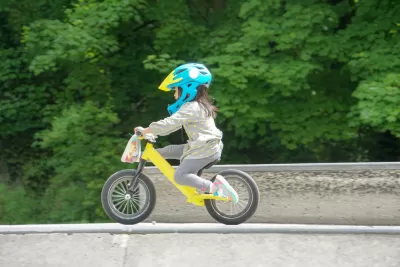
Three elementary schools in San Francisco are part of a pilot program to teach bike riding and traffic safety to kids.
At a launch event last week, students were given bikes, helmets, and locks—donated by the local Rotary Club chapter—as well as training on how to use them. Going forward, the physical education curriculum will include riding lessons as well as safety instructions.
San Francisco already provides bike education for middle and high school, the Examiner notes—but for many younger students with limited access to safe infrastructure, their next P.E. class could be their first time riding a bike.
If all goes to plan, the program will expand throughout the San Francisco Unified School District in time for the 2019-20 schoolyear. It is jointly run by the district's Physical Education Department and Sustainability Office, with support from the city's Municipal Transportation Agency.
FULL STORY: SF elementary school students gear up for new curriculum with 100 free bicycles, riding lessons

Bay Area Leads the Nation in Reducing Solo Commuters
According to the Census Bureau's American Community Survey on commuting to work, one subregion in the Bay Area can claim accolades for having achieved the largest drop in solo-commuting from 2006, scoring the third lowest drive-alone rate in 2013.

San Francisco Leans in Hard to Embrace its Transit ‘Superfans’
Bay Area transit nerds show their love in some unique ways.
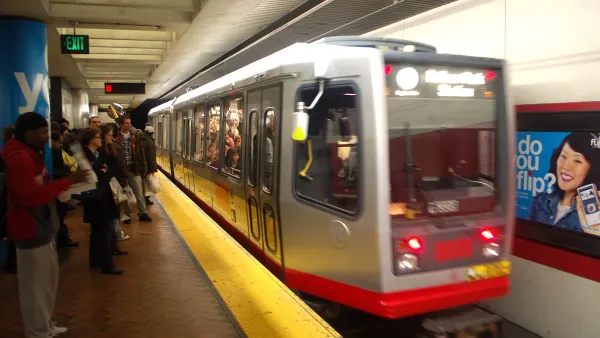
California Revives $750M Loan to Save Bay Area Transit
The state approved a $750 million loan as a stopgap measure to fund regional transit agencies until a 2026 ballot measure that could bring more permanent funding.

Planetizen Federal Action Tracker
A weekly monitor of how Trump’s orders and actions are impacting planners and planning in America.

The state-sanctioned urbicide of Austin
People don’t kill cities. Freeways do.

US to reduce Colorado River water deliveries to Mexico
A new Colorado Treaty amendment reduces Mexico’s Colorado River water allocation by 250,000 acre feet.

5 New England states march closer to 800 megawatt wind energy project
Securing federal approval for the project may be complicated under the Trump administration, which has historically been hostile towards domestic wind power.

Baltimore to break ground on $50 million Transit Priority Project
The project will bring faster bus trips, safer streets and better bike connections to Baltimore.

Airbnb launches $250 million 'last-dollar financing' housing accelerator, makes first investment in Austin
The company will put $6.4 million towards affordable housing development in Texas’ capital.

FREE Course: Walkable City 1: Why Walkability?
After describing his path towards focusing on walkability as the essence of good planning, Jeff Speck marches through his five principal reasons for making more walkable places.
Reinventing Malls: Planning Alchemy—Turning Gray Fields Into Gold
The course focuses on the opportunities and imperatives that shape reinvention of mall sites.

Eagle County Government
Harvard University Graduate School of Design
Nashville Planning Department
The Architects Foundation
University of Cincinnati Online
The Pocatello Development Authority
The Urban Renewal Agency of the City of Pocatello
Journal of the American Planning Association