For the next several months, nine sites will be the focus of efforts to design for resilience as sea levels rise. Proposals involve "threading nature back into an urbanized terrain."


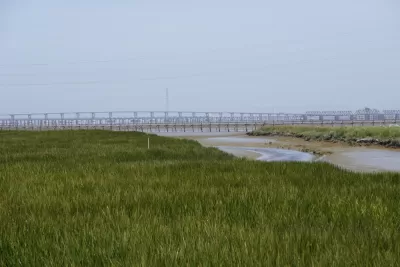
Resilient by Design's Bay Area Challenge has put ten multidisciplinary teams to work conceptualizing "a region where cities and nature are entwined more closely than ever before." Their impetus: the need to design places that can handle rising seas.
As John King writes, "The challenge, which is being funded by local governments and the Rockefeller Foundation, is modeled on New York and New Jersey’s rebuilding effort after Hurricane Sandy in 2012."
The Bay Area effort, by contrast, isn't a response to "calamitous damage." It's a bid to prepare for a gradual threat, and invites participants to reimagine how cities interact with nature. Many of the designs, King says, involve "threading nature back into an urbanized terrain, so to speak."
The challenge began with a competition last year, with the ten winning teams each receiving $250,000 for their projects. The final proposals are expected in May. "The months ahead will be spent burrowing into the specific locations, and reaching out to the surrounding communities to make sure there's widespread participation in the final proposals."
FULL STORY: Design competition tackles sites around Bay Area to address rising waters

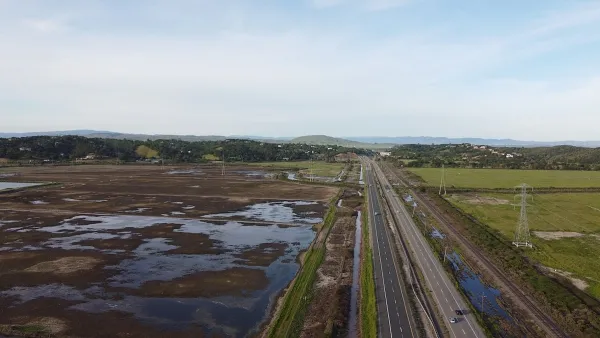
Sinking Into Wetlands, This Northern California Highway Needs a Rescue
A plan to elevate the roadway and restore adjacent wetlands could take decades to complete.
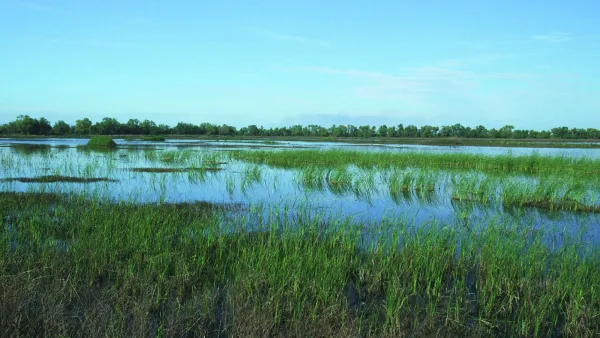
Bay Area Developments at Risk From Sea Level Rise
A controversial proposed housing development in Newark exemplifies the struggle between increasing housing supply and protecting vulnerable shoreline communities from flooding.
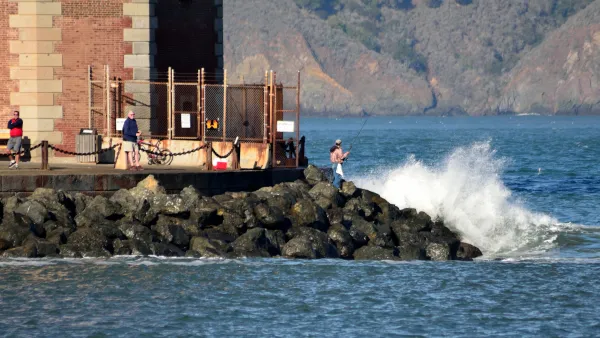
Making the Bay Area Resilient By Design
The Resilient By Design Bay Area Challenge has produced nine designs to address sea-level rise and flooding around the San Francisco Bay Area.

The state-sanctioned urbicide of Austin
People don’t kill cities. Freeways do.

US to reduce Colorado River water deliveries to Mexico
A new Colorado Treaty amendment reduces Mexico’s Colorado River water allocation by 250,000 acre feet.

New Jersey’s second-largest city bans standalone data centers
Jersey City will continue to allow co-location facilities, such as those meant for research institutions that store their own data.

Amtrak not solely to blame for New Jersey commuter rail's unreliability, report finds
A new study from the Garden State Initiative found that NJ Transit’s budget grew 20% across a 4 year period, but reliability declined significantly over the same period.

EPA erases limits on planet-warming pollution from power plants
Under Monday’s plan, power plants would still have some limits on how much mercury, arsenic and other contaminants they can emit.

Phoenix announces new on-demand transit service, more frequent RAPID buses
Both new services will launch in October, and are part of Phoenix's Project Effective Access Solutions for Easing Congestion.

FREE Course: Walkable City 1: Why Walkability?
After describing his path towards focusing on walkability as the essence of good planning, Jeff Speck marches through his five principal reasons for making more walkable places.
Reinventing Malls: Planning Alchemy—Turning Gray Fields Into Gold
The course focuses on the opportunities and imperatives that shape reinvention of mall sites.

Eagle County Government
Harvard University Graduate School of Design
Nashville Planning Department
The Architects Foundation
University of Cincinnati Online
The Pocatello Development Authority
The Urban Renewal Agency of the City of Pocatello
Journal of the American Planning Association