The issue of wind and solar energy development has always been a hot button in the California desert, and the Trump Administration just pressed it.



"The Trump administration threatened Thursday to undo a hard-fought conservation plan to protect millions of acres of California’s Mojave Desert from industrial development," reports Carolyn Lochhead.
The plan in question is the Desert Renewable Energy Conservation Plan (DRECP). The Bureau of Land Management approved the land use element of the plan in 2016, after years of controversy between conflicting approaches to environmentalism. The plan mediates the need for renewable energy in a green economy, and the need to protect habitat for endangered species like the desert tortoise on the other hand. The article includes more details on the final version of the CRECP.
Now, "the federal Bureau of Land Management said it is considering re-examining the plan to comply with an executive order by President Trump last year to increase energy development on public lands," according to Lochhead.
The news about the potential changes to the DRECP brought a swift rebuke from U.S. Senator Diane Feinstein (D - CA). "Scrapping the plan now is a complete waste of time and money, and I oppose this," Feinstein said in a statement.
FULL STORY: Trump administration signals move against California desert protection plan

Key Wins for Conservation in 2024
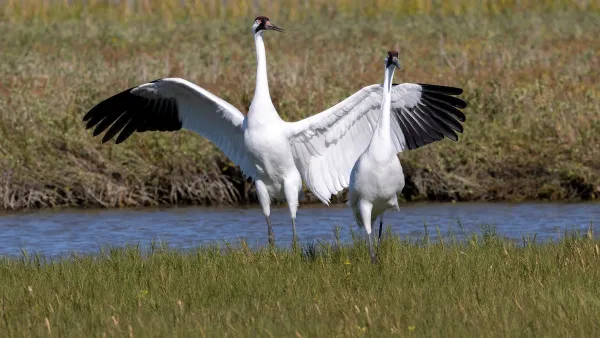
The year brought some important victories to advocates for public lands, national monuments, and the reclamation of Indigenous history.
Rural Nevada Counties Struggle to Keep up with Solar Projects
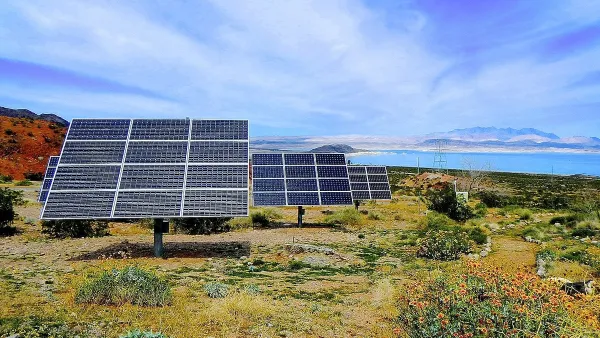
Local officials are calling for state regulations that would require federal land managers to enter agreements with local jurisdictions before moving forward with major renewable energy projects.

BLM Allocates Funding to Study Renewables Impact on Public Lands
The large-scale study will assess how proposed solar farms and other renewable energy projects could impact animals, plants, and habitats.

The state-sanctioned urbicide of Austin
People don’t kill cities. Freeways do.

US to reduce Colorado River water deliveries to Mexico
A new Colorado Treaty amendment reduces Mexico’s Colorado River water allocation by 250,000 acre feet.

New Jersey’s second-largest city bans standalone data centers
Jersey City will continue to allow co-location facilities, such as those meant for research institutions that store their own data.

Amtrak not solely to blame for New Jersey commuter rail's unreliability, report finds
A new study from the Garden State Initiative found that NJ Transit’s budget grew 20% across a 4 year period, but reliability declined significantly over the same period.

EPA erases limits on planet-warming pollution from power plants
Under Monday’s plan, power plants would still have some limits on how much mercury, arsenic and other contaminants they can emit.

Phoenix announces new on-demand transit service, more frequent RAPID buses
Both new services will launch in October, and are part of Phoenix's Project Effective Access Solutions for Easing Congestion.

FREE Course: Walkable City 1: Why Walkability?
After describing his path towards focusing on walkability as the essence of good planning, Jeff Speck marches through his five principal reasons for making more walkable places.
Reinventing Malls: Planning Alchemy—Turning Gray Fields Into Gold
The course focuses on the opportunities and imperatives that shape reinvention of mall sites.

Eagle County Government
Harvard University Graduate School of Design
Nashville Planning Department
The Architects Foundation
University of Cincinnati Online
The Pocatello Development Authority
The Urban Renewal Agency of the City of Pocatello
Journal of the American Planning Association