The large-scale study will assess how proposed solar farms and other renewable energy projects could impact animals, plants, and habitats.


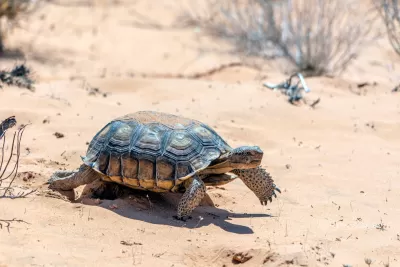
The Bureau of Land Management (BLM) announced $4.9 million in funding to support studies of the impacts of renewable energy projects on local ecosystems and wildlife.
As Greg Haas reports for KLAS, “The information collected could help the BLM decide the best places for projects as they come up for environmental review, and could help to fast-track some permits by doing wildlife studies ahead of time.”
Patrick Donnelly, Great Basin director at the Center for Biological Diversity, says that in addition to data collection, “We need strong new planning tools to give federal officials the authority to prioritize certain low conflict projects while denying projects that harm endangered species.”
Eight of the 10 largest proposed U.S. solar projects are in Nevada. “Those projects will eventually produce more than a quarter of the 25 gigawatts of electricity the Biden administration intends to permit on public lands by the end of 2025.”
FULL STORY: $4.9 million set aside for wildlife, plant studies ahead of solar, wind projects on public lands

BLM To Rescind Public Lands Rule
The change will downgrade conservation, once again putting federal land at risk for mining and other extractive uses.
Key Wins for Conservation in 2024
The year brought some important victories to advocates for public lands, national monuments, and the reclamation of Indigenous history.
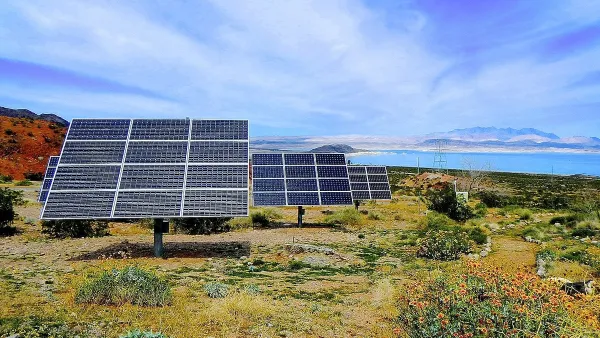
Rural Nevada Counties Struggle to Keep up with Solar Projects
Local officials are calling for state regulations that would require federal land managers to enter agreements with local jurisdictions before moving forward with major renewable energy projects.

Planetizen Federal Action Tracker
A weekly monitor of how Trump’s orders and actions are impacting planners and planning in America.

The state-sanctioned urbicide of Austin
People don’t kill cities. Freeways do.

US to reduce Colorado River water deliveries to Mexico
A new Colorado Treaty amendment reduces Mexico’s Colorado River water allocation by 250,000 acre feet.

Baltimore to break ground on $50 million Transit Priority Project
The project will bring faster bus trips, safer streets and better bike connections to Baltimore.

Airbnb launches $250 million 'last-dollar financing' housing accelerator, makes first investment in Austin
The company will put $6.4 million towards affordable housing development in Texas’ capital.

Guerilla urbanists are building DIY bus stop benches in Chicago
A before-and-after of one of the bus stops with a new bench. The new benches are not officially sanctioned or permitted, but the residents who placed them hope they will be the start of a network of DIY benches across the city.

FREE Course: Walkable City 1: Why Walkability?
After describing his path towards focusing on walkability as the essence of good planning, Jeff Speck marches through his five principal reasons for making more walkable places.
Reinventing Malls: Planning Alchemy—Turning Gray Fields Into Gold
The course focuses on the opportunities and imperatives that shape reinvention of mall sites.

Eagle County Government
Harvard University Graduate School of Design
Nashville Planning Department
The Architects Foundation
University of Cincinnati Online
The Pocatello Development Authority
The Urban Renewal Agency of the City of Pocatello
Journal of the American Planning Association