No, this post is not about the Russia investigation nor #MeToo, but the state of climate policy in the U.S. after President Trump's first year. Surprisingly, it's not as bad as one might think, no thanks to Trump though.


James Brasuell's blog post on President Trump's State of the Union address on Tuesday dealt many aspects of urban planning, including infrastructure, immigration reform, and dismantling the federal bureaucracy.
Brad Plumer, a reporter on The New York Times's climate team, wrote the first piece for Wednesday's "Climate Fwd:" newsletter, on what an "update on the state of American climate policy after one year of the Trump administration...would it look like."
Yes, Trump has clearly been successful in undoing much of his predecessor's accomplishments on climate policy, including dismantling the clean power plan and withdrawing from the Paris climate agreement, making a clear case for "American Alone" despite his claims to the contrary at the World Economic Forum in Davos on Jan. 26.
See the Times' updated deregulation tracker for the full list, and many here on Planetizen.
But here's the good news for those who believe climate change isn't a hoax.
Mr. Trump hasn’t been able to halt many of the most important trends around the country toward lower emissions. Plenty of states, like California and New York, are still pressing ahead with their own local climate policies. The coal industry, responsible for a quarter of the nation’s emissions, continues to shrink, edged out of the energy market by less expensive natural gas despite Mr. Trump’s efforts to save it.
On top of that, the cost of wind and solar continues to drop rapidly as technology advances. Even after Mr. Trump’s recent tariffs on solar imports, more utilities are turning to renewable energy as the lowest-cost source of new power. Electric vehicles are making inroads. Other countries are still crafting an international climate treaty without the United States.
More good news — U.S. energy-related carbon dioxide emissions fell last year, but the bad news is that this year they will rise, according to the Energy Information Administration.
It’s fair to say that those two broad dynamics — the Trump administration’s regulatory rollbacks and the stubborn march of clean energy — have fought each other to a standstill.
Sadly, this post ends on a pessimistic note. Plumer warns us that "we’ve reached the point on climate change where a holding pattern is no longer sufficient to give us a decent shot at stabilizing global temperatures this century and avoiding irreversible changes to Earth’s weather patterns."
That’s what makes climate change unlike other policy issues. There’s an unforgiving timeline dictated by physics, and the rate of change matters as much as the direction. In that context, even a temporary impasse can be hugely consequential.
Read the full story: The State of the Climate, One Year Into the Trump Era
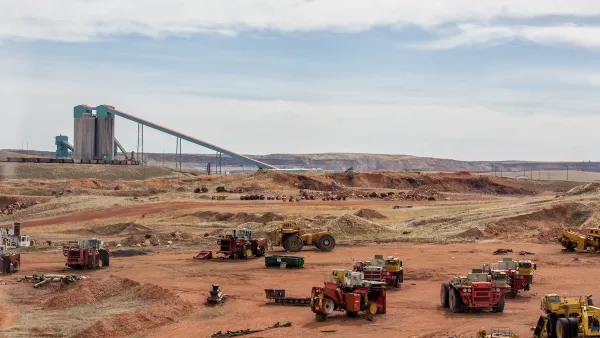
A Win for ‘Keep it in the Ground’
Coal mining in Wyoming will take a major hit as a result of a U.S. Department of Interior plan to cease future leasing of coal mines in the nation's most productive coal mining basin. The decision casts a spotlight on the presidential election.

U.S. Carbon Emissions Increased Last Year After a Three-Year Decline
The sobering news comes from the Rhodium Group, a research firm that tracks CO2 emissions. The preliminary estimate is the third in two months to show an increase in 2018, attributing it to an improved economy and Trump's regulation rollbacks.
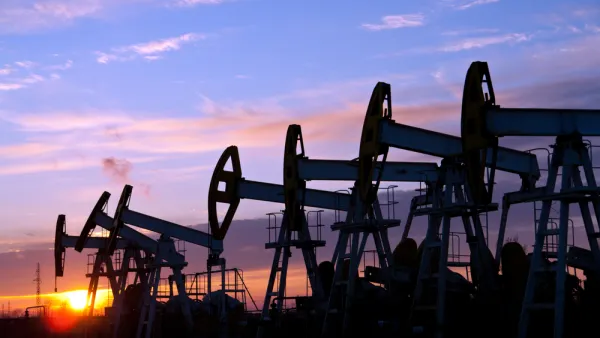
Global Reverberations from EPA Rollback of Fuel Economy Standards
Relaxed U.S. fuel economy standards, as Environmental Protection Administration chief Scott Pruitt announced on April 2, would have effects extending far beyond the United States.

Planetizen Federal Action Tracker
A weekly monitor of how Trump’s orders and actions are impacting planners and planning in America.

California plans to bury El Niño’s downpour
If the state plays its cards right, it may be able to store a billion acre-feet of El Niño’s water in aquifers.

Desperate measures: Advocates weigh draining Lake Powell to fill Colorado River
Draining the reservoir could reduce evaporation losses by a couple hundred thousand acre-feet.

Chicago voters approve permanent festival grounds, penalty for vacant property owners
Currently, major summer and fall festivals take over public parks for weeks at a time, drawing criticism from nearby residents

NYC votes to cut outdoor dining red tape, speed up permitting
New York City also voted to allow the Department of Transportation to begin work on urgent projects before notifying elected officials.

California appears to reject Prop. 45
The proposition would have expanded the projects that qualify for a streamlined environmental review, effectively paring down the California Environmental Quality Act.

FREE Course: Walkable City 1: Why Walkability?
After describing his path towards focusing on walkability as the essence of good planning, Jeff Speck marches through his five principal reasons for making more walkable places.
Reinventing Malls: Planning Alchemy—Turning Gray Fields Into Gold
The course focuses on the opportunities and imperatives that shape reinvention of mall sites.

City of Rosemead
Rutgers University, Edward J. Bloustein School of Planning and Public Policy
One Hundred Miles
Hunter College, City University of New York (CUNY)
The Architects Foundation
University of Cincinnati Online
City of Cambridge
Montrose County
The Pocatello Development Authority