CES has wrapped up in Las Vegas, but not before event offered numerous experts a chance to prognosticate about the timeline for autonomous vehicles to arrive on the market.



Amir Efrati provides a dispatch from CES in Las Vegas, where the "hype machine" from the auto industry turned it down a notch this year compared to previous years.
What live demonstrations of autonomous vehicle technology at CES made clear was that self-driving cars for urban streets won’t be available for sale to the public for at least several years. Even then, their capabilities will be limited.
Efrati rounds up a series of key observations to build a case to support that assertion, focusing on the surprises and obstacles on the road that still challenge self-driving cars, the technology companies dueling it out for market supremacy, and the shifting goal post in terms of expectations for autonomous vehicles in the near and mid-term future.
Read the full story: What We Learned About Autonomous Cars at CES [paywall]

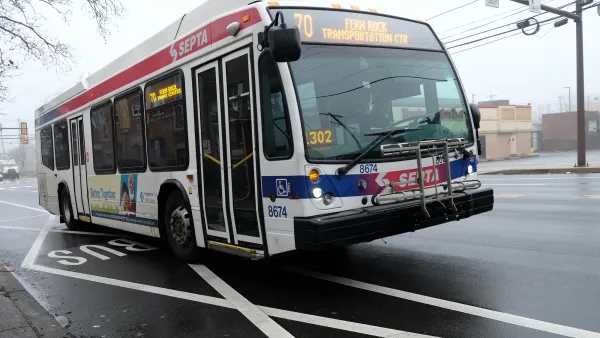
Pennsylvania lawmaker wants to ban fully self-driving buses
State Rep. Ben Waxman's proposed bill would require autonomous buses to have a licensed driver on board.
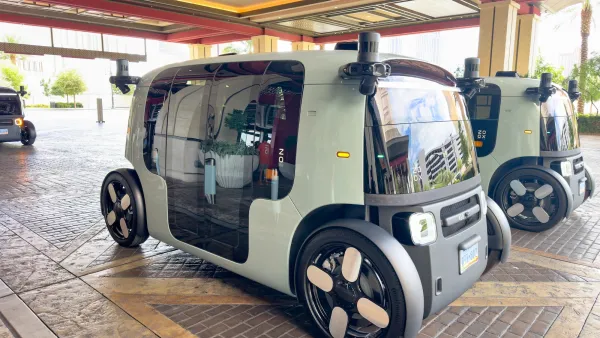
Amazon's steering wheel- and brake pedal-less Zoox robotaxis receive nation's first go-ahead for paid public rides
The NHTSA is giving a temporary permit to some autonomous cars that don't meet current safety standards as it develops a new framework for self-driving vehicles.
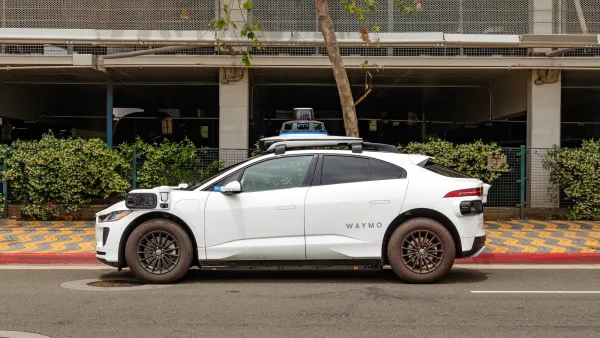
Austin Waymos rack up nearly $10k in parking tickets
The robotaxis have been cited for parking in tow zones and double parking, among other violations.

Planetizen Federal Action Tracker
A weekly monitor of how Trump’s orders and actions are impacting planners and planning in America.

Amtrak, CN end decades-long dispute with eight-year agreement
The new operating agreement establishes an updated framework for the companies to work together, including processes to resolve disputes.

Judges permit Denver to divert 77,000 acre feet from the Colorado River for reservoir expansion
Overuse and climate change have caused the Colorado River’s water levels to plummet.

NYC DOT wants faster, more permanent street upgrades
The city is examining ways to build more concrete infrastructure without getting entangled in 'decades-long' projects.

'Something we’ve never seen before:' rising utility rates could strain city finances nationwide
Data centers, climate change and other factors have caused utility rates in the United States to increase by 38% since 2020.

Trump to overrule local leaders, lease millions of acres of America’s Pacific Island territories’ seafloors to mining companies
International law says that the Indigenous people of America’s territories have a right to prior and informed consent regarding projects that impact their countries.

FREE Course: Walkable City 1: Why Walkability?
After describing his path towards focusing on walkability as the essence of good planning, Jeff Speck marches through his five principal reasons for making more walkable places.
Reinventing Malls: Planning Alchemy—Turning Gray Fields Into Gold
The course focuses on the opportunities and imperatives that shape reinvention of mall sites.

Harvard University Graduate School of Design
KFH Group Inc.
Greater Baltimore Committee
The Architects Foundation
University of Cincinnati Online
The Pocatello Development Authority
The Urban Renewal Agency of the City of Pocatello