The non-profit Ability360 worked with members of its community, not only to advocate for a new light rail station, but to design a station that would fit the disabled community's needs.


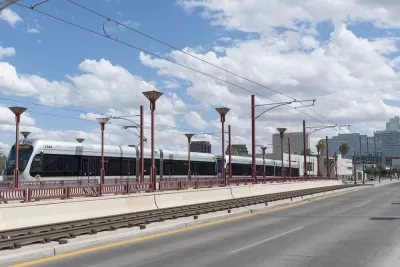
Ability360's Washington Street Center serves hundreds of people with a wide range of disabilities. Now that center will be served by a train station designed with the input of the people who use the center.
"Beginning in 2013, the Ability360 community began pressing Phoenix’s Valley Metro to install an infill station at the site, lobbying the transit agency as well as local political leaders," Angie Schmitt reports for Streetsblog USA. To serve the center well, access had to be a priority, so Ability360 along with Participatory Planning group Placeit! held workshops to bring in members of the community to get their perspectives.
The final design will differ from other Valley Metro stations in a number of ways. "The new station will have a wider platform, to allow wheelchair users to maneuver around each other. There won’t be any sudden changes of grade for people crossing the street or boarding the train. At the request of the community, it will also have ample shade."
FULL STORY: In Phoenix, a Light Rail Station Designed For, and By, People With Disabilities

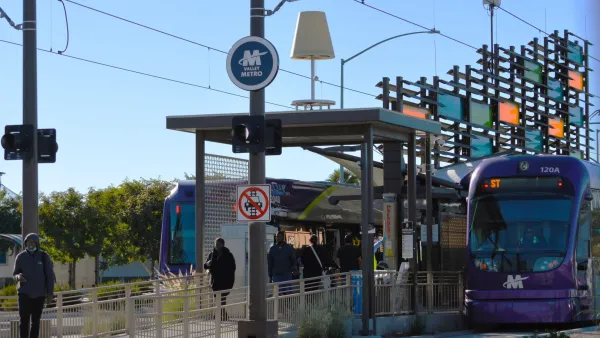
Phoenix Nixes Light Rail Plans, Shifts Focus to Expanding Transit in West Phoenix
The city is shelving plans for a proposed light rail expansion, opting instead to explore other alternatives for bringing rapid transit to West Phoenix.

Phoenix Light Rail Extension Opens
The South Central line extends 5.5 miles of rail into South Phoenix neighborhoods, bringing the city’s total light rail network to 35 miles.

Phoenix Announces Opening Date for Light Rail Extension
The South Central extension will connect South Phoenix to downtown and other major hubs starting on June 7.

Planetizen Federal Action Tracker
A weekly monitor of how Trump’s orders and actions are impacting planners and planning in America.

The state-sanctioned urbicide of Austin
People don’t kill cities. Freeways do.

US to reduce Colorado River water deliveries to Mexico
A new Colorado Treaty amendment reduces Mexico’s Colorado River water allocation by 250,000 acre feet.

Baltimore to break ground on $50 million Transit Priority Project
The project will bring faster bus trips, safer streets and better bike connections to Baltimore.

Airbnb launches $250 million 'last-dollar financing' housing accelerator, makes first investment in Austin
The company will put $6.4 million towards affordable housing development in Texas’ capital.

Guerilla urbanists are building DIY bus stop benches in Chicago
A before-and-after of one of the bus stops with a new bench. The new benches are not officially sanctioned or permitted, but the residents who placed them hope they will be the start of a network of DIY benches across the city.

FREE Course: Walkable City 1: Why Walkability?
After describing his path towards focusing on walkability as the essence of good planning, Jeff Speck marches through his five principal reasons for making more walkable places.
Reinventing Malls: Planning Alchemy—Turning Gray Fields Into Gold
The course focuses on the opportunities and imperatives that shape reinvention of mall sites.

Eagle County Government
Harvard University Graduate School of Design
Nashville Planning Department
The Architects Foundation
University of Cincinnati Online
The Pocatello Development Authority
The Urban Renewal Agency of the City of Pocatello
Journal of the American Planning Association